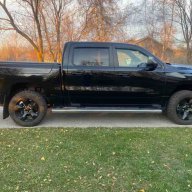


Ran low on gas on the interstate and the only gas station for miles didn't have premium..............
.

Ahhh. That'll happen


Disclaimer: Links on this page pointing to Amazon, eBay and other sites may include affiliate code. If you click them and make a purchase, we may earn a small commission.
Ran low on gas on the interstate and the only gas station for miles didn't have premium..............
.
Engine Knock Explained
10 bucks hardly even buys lunch these days, when you are buying 100 litres of fuel 10 more or 10 less not much of a difference i think.
Obviously when gas was 1.50$/litre its painfull but like they say, with great power comes great responsibility and high fuel consumption.


10 bucks hardly even buys lunch these days, when you are buying 100 litres of fuel 10 more or 10 less not much of a difference i think.
Obviously when gas was 1.50$/litre its painfull but like they say, with great power comes great responsibility and high fuel consumption.
 Next truck if still can't afford a Diesel will be a Hemi... now I know!

I agree with this on many things but with fuel there is really no gain from any octane over 89 without tune and both having ethanol. If it makes you feel good by all means enjoy but it only helps with placebo effect not reality from what I have found. 89 works awesome for me I spent the money I saved over the years on the regear and that actually makes a real noticeable difference unlike the couple octane. No reason to get mad at anyone for wanting to save money for other things. $10 extra a fill or more on 100,000 miles of fuel is a lot of money.There have been at least 3 other threads I have said the same thing.
People...
I'm by NO means "well off" and work hard for every penny I get. Which don't go nearly far enough.
With that said, if you can't afford an extra $10 a tank for 93 then perhaps you should consider a Prius
Or, buy a DS tuner and run the 93 oct HF tune. Problem solved. You gotta run 93 then hehe
I agree with this on many things but with fuel there is really no gain from any octane over 89 without tune and both having ethanol. If it makes you feel good by all means enjoy but it only helps with placebo effect not reality from what I have found. 89 works awesome for me I spent the money I saved over the years on the regear and that actually makes a real noticeable difference unlike the couple octane. No reason to get mad at anyone for wanting to save money for other things. $10 extra a fill or more on 100,000 miles of fuel is a lot of money.
I agree with this on many things but with fuel there is really no gain from any octane over 89 without tune and both having ethanol. If it makes you feel good by all means enjoy but it only helps with placebo effect not reality from what I have found. 89 works awesome for me I spent the money I saved over the years on the regear and that actually makes a real noticeable difference unlike the couple octane. No reason to get mad at anyone for wanting to save money for other things. $10 extra a fill or more on 100,000 miles of fuel is a lot of money.
It runs better with 89 octane, not sure why you would want to put 87 octane in it? octane effects spark, timing, engine knock. I'm sure you had some engine chatter when using the cheap gas.
a little off topic but kinda makes you consider that by using 87 vs 89 for the life of the truck at 20 cents difference per gal where I live x (150k miles/15mpg) = 200000 cents or $2000. More than enough to pay for the lifetime power train warranty. So by this beer logic I would buy the lifetime for the added peace of mind and use the extra to go higher octane on days I want extra performance.

Many high-performance engines are designed to operate with a high maximum compression, and thus demand fuels of higher octane. A common misconception is that power output or fuel efficiency can be improved by burning fuel of higher octane than that specified by the engine manufacturer. The power output of an engine depends in part on the energy density of the fuel being burnt. Fuels of different octane ratings may have similar densities, but because switching to a higher octane fuel does not add more hydrocarbon content or oxygen, the engine cannot develop more power.
However, burning fuel with a lower octane rating than that for which the engine is designed often results in a reduction of power output and efficiency. Many modern engines are equipped with a knock sensor (a small piezoelectric microphone), which sends a signal to the engine control unit, which in turn ******* the ignition timing when detonation is detected. Retarding the ignition timing reduces the tendency of the fuel-air mixture to detonate, but also reduces power output and fuel efficiency. Because of this, under conditions of high load and high temperature, a given engine may have a more consistent power output with a higher octane fuel, as such fuels are less prone to detonation. Some modern high performance engines are actually optimized for higher than pump premium (93 AKI in the US). The 2001 - 2007 BMW M3 with the S54 engine is one such car. Car and Driver magazine tested a car using a dynamometer, and found that the power output increased as the AKI was increased up to approximately 96 AKI.
Most fuel filling stations have two storage tanks (even those offering 3 or 4 octane levels): those motorists who purchase intermediate grade fuels are given a mixture of higher and lower octane fuels. "Premium" grade is fuel of higher octane, and the minimum grade sold is fuel of lower octane. Purchasing 91 octane fuel (where offered) simply means that more fuel of higher octane is blended with commensurately less fuel of lower octane, than when purchasing a lower grade. The detergents and other additives in the fuel are often, but not always, identical.