

RamDiver
Senior Member
- Joined
- Jan 23, 2022
- Posts
- 5,594
- Reaction score
- 11,798
- Location
- Marlborough, Ontario Canada
- Ram Year
- 2021 DS
- Engine
- Hemi 5.7
Maybe I'm misunderstanding what you wrote, but you can't really measure a voltage drop across a fuse. A fuse is not a resistor, it is a conductor. It would be the same thing as trying to measure a voltage drop across 1/2 inch of a power cable.
Regards,
Dusty
2019 Ram 1500 Billet Silver Laramie Quad Cab 2WD, 5.7 Hemi, 8HP75, 3.21 axle, 33-gallon fuel tank, 18” wheels. Build Date: 3 June 2018. Now at 130131 miles.
Did you read the PDF in my post above?
Actually, a fuse does have a resistive value; there will be a voltage drop across the fuse directly related to the current and can be calculated using Ohm's law.
A fuse is basically a calibrated conductor. Different sizes of conductors will be capable of carrying a specific amount of current before they fry and cease to conduct.
We know the voltage from the measurement across the fuse, and the resistance is known from the fuse manufacturer.
I= E/R
where I=current in Amps
where E=volts
where R= resistance in ohms
The fuse voltage drop chart above was derived using the relative resistive value of various fuses, and the voltage drop was calculated based on different currents.
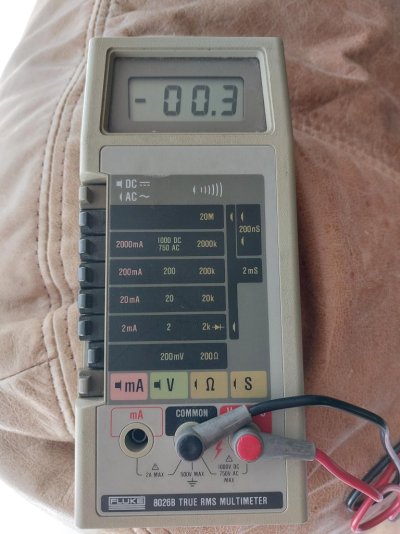
For instance, reading 1mV across a 1 amp fuse translates to 8mA of current flow.
.
Last edited: