
Payload help, Your thoughts?

Disclaimer: Links on this page pointing to Amazon, eBay and other sites may include affiliate code. If you click them and make a purchase, we may earn a small commission.

2003F350

Senior Member
Joined
Feb 23, 2013
Posts
1,692
Reaction score
1,758
Location
Michigan
Ram Year
2022
Engine
6.7 CTD
I will disagree with the statement about not using the gross weight of the trailer to determine tongue weight. This has been discussed ad nauseum for decades. My take on it is that IF the trailer is capable of being loaded to that weight, PLAN to load it to that weight. Because stuff adds up quickly and before you know it, you've hit that max target and are now overloaded on the truck. It may just be enough to slightly break payload or it could be enough to exceed the rear axle rating. If you don't need the buffer you don't have to use it but it's there if you do. If you don't have it, well....
This is where I'm at, and I have personal reasons for it.

My mom used to go to dog shows and show dogs in them. They have a 38' Cedar Creek fifth wheel that they've had for a while, they used to leave it sit in a campground all summer until she got into dog shows. The camper has like a 13,500 GVWR.

They went to a show in Gettysburg PA, and on the way dad saw a sign that said something about RVs could use the truck scale to check their weights.

Between dog supplies, X-pens, food, clothes, water (a lot of fairgrounds don't have water hookups), etc. for a week-long show, along with camping equipment, they were overweight of the trailer by something like 1500 lbs. Dad didn't say he got a ticket, but if he hadn't had his F450 pulling it he probably would have, because at the time he'd have been overweight on his old truck (a GMC 3500 dually). After that trip he made her scale WAY back on all the crap in the trailer. He'd never run it over a scale, everything they piled in it whenever they brought it home from the campground was individually light, and F450's don't squat very easily, so he didn't have a reason to think he was overweight.

So yes, you absolutely SHOULD plan for that trailer to be loaded to its max weight, and basically ignore the dry weights that are advertised. Because if you load up every available nook and cranny of the trailer with stuff, there's a strong chance you can get there pretty darn quick. Remember that MOST (not all) RVs only have around 2k-3k of payload, and everything you put in it goes against that payload. Even 'packing light' can get you 1500 lbs of stuff.
 

Fake-Account27

Senior Member
Joined
Oct 4, 2019
Posts
194
Reaction score
187
Location
Maryland
Ram Year
2018
Engine
Diesel
it's a Grand Design Imagine XLS 22MLE. 26ft long
You have a lot of posts already but I think you are fine for your 1500. Get a good WDH, load light for the first few trips. You may want a 2500 series truck later, or a higher payload 1500 series truck, but you are fine to start out.
 

dhay13

Senior Member
Joined
Apr 12, 2015
Posts
3,439
Reaction score
3,188
Ram Year
2018
Engine
2500 6.4L Hemi 4.10's 'Off-Road'
My son had a 2670MK and i towed it with my 2013 1500 3.55's. It towed it ok and I think i was within all of my limits but i didn't scale it. i would not have wanted to go any heavier with the 1500. we did weigh it later with the 2500 and it was 8100lbs fully loaded. Based on that experience and the fact the one you are looking at is lighter i'd say you should be ok with it but i would still weigh it and as said, if you think you might go bigger in the near future, just get the 2500 now. My son ended up buying a 2500 gasser and it towed so much nicer that it did with the 1500. I went with him on a trip from Pittsburgh, PA to Baytown, TX and it was such a relaxing drive. I would not have wanted to go that far with the 1500
 

rneal55555

Member
Navy Badge
Joined
Feb 19, 2018
Posts
44
Reaction score
49
Location
Milton, NH
Ram Year
2017
Engine
5.7
No, he's NOT overthinking it. Today's 1500's aren't built like the 1500s of years past - that way of thinking gets people in trouble. I wish people would stop with the 'oh I used to do it for years back in the day!' because we AREN'T 'back in the day' anymore. Oh and a 1500 on the farm isn't out on the road where a mis-step could take out several other people.

In years past, half-ton trucks were built basically the same as 3/4 or 1-ton trucks, just with softer springs and a little lighter axles. Today, EVERYTHING about them is lighter, chasing down mileage and safety requirements. The frames, axles, springs, EVERYTHING is built lighter. It is ALWAYS something to consider.

That said, OP, there are a LOT of threads discussing this, and one of the first things you're going to be told is that you don't give us NEARLY enough information to really help you. The best way to know where you're at? Go hit up a CAT scale and get your REAL weights, loaded like you're going to go for a trip.

What kind of trailer is it? You seem to know EXACTLY what the hitch weight is, is this an RV with an advertised hitch weight? If so I'll guarantee it's wrong, BEFORE you put any weight in it. Then you have to factor in that any weight added to the trailer, a portion of it typically affects the hitch weight (making it heavier). RV companies tend to advertise their hitch 'dry weight,' but it isn't even really a dry weight because they take that weight BEFORE any options are added to the trailer. The REAL dry weight of the hitch is likely to be considerably heavier - some guys have purchased trailers with a dry hitch weight advertised around 700 lbs and the real weight was over 800 - that's a big difference when it comes to hitch weights.

Now, all that said, is your truck going to detonate the minute you pull out on the road? No. Are you going to have issues? Probably not but I can't say. Are you probably going to have your hands full being close to your payload? Oh absolutely, and anyone who tells you otherwise either doesn't know what they're talking about, are flat-out lying, or have YEARS of experience and have learned to anticipate when things could go sideways.
What you say about the old trucks is true but park two old ones (a 1500 & 2500) next to two new ones also a (1500 & 2500) the new trucks are all larger than their counterparts, but it is more an upgrading of the 3/4 and 1 tons than a down grading of the 1/2 tons.
 

62Blazer

Senior Member
Joined
Dec 11, 2019
Posts
1,763
Reaction score
2,741
Location
Midwest
Ram Year
2016
Engine
6.4
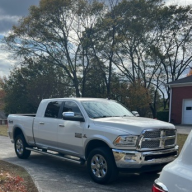
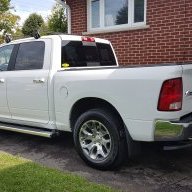
Thanks for everyone who has chimed in. Let's see if I can clear up some info. The tongue weight is the weight of my 26ft camper fully loaded with water and cargo. (usually don't travel with full water) My camper dry weight is around 5600lbs. Fully loaded around 6800lbs. My WDH weighs in about 89lbs. I've been looking at the 2025 Ram 1500 with a 1600lbs payload weight. Max tow is 10,100lbs. Here is a pic of my camper with my current 2017 Laramie. I'm doing fine with what I have right now, but we only tow 5 or 6 weekends a year with it within a 3hr drive. But in a few years, we will be looking at stretching our legs out and going on more longer trips. I've looked at the 2500's but don't know if I can swallow the 80k for a 2500 truck. But the extra 1k payload would be awesome. I'm just preplanning my future purchase and want to make sure I am crossing my T's and dotting my I's. The other huge issue is my truck is a daily driver to and from work 14miles each way.View attachment 562034
That's simply not that big of a trailer. You are talking 6,800 lbs. max weight, and you state it would be lighter when actually travelling. You are looking at a truck that is rated at 10,100 lbs. towing. Get the magnifying glass out and individual wheel scales that measure every dead bug stuck on the front grille, but let's get real here. You are way under the capacity of the truck. I won't deny that a 2500 might be "better", but there is a difference between "better" and "required". A 2500 is not "required" for this load.
The only thing I would consider is the chance you may want to upgrade to a bigger camper down the road.
In regards to $80k for a 2500, that is probably for one with the Cummins engine which is around a $10k option. A 2500 with the 6.4 Hemi would be plenty and it's just the heavier 2500 chassis and suspension that helps towing. Again, not saying a Cummins 2500 would be a "better" option, it is by no means required.
 

nlambert182

Senior Member
Joined
Dec 28, 2022
Posts
2,653
Reaction score
4,609
Location
Huntsville, AL
Ram Year
2018
Engine
6.7 Cummins
I agree with you except for the tow rating number. It is 100% irrelevant with a camper. You can never reach that tow rating with static weight. It really shouldn't even be part of the conversation unless we're talking cargo trailers. It's a misleading number.
 

nlambert182

Senior Member
Joined
Dec 28, 2022
Posts
2,653
Reaction score
4,609
Location
Huntsville, AL
Ram Year
2018
Engine
6.7 Cummins
If you're truly overloading... those springs aren't doing a thing for you except mask the fact that it's still overloaded. That weight is still sitting on the same 1500 axle with the same weight rating. If you get the load properly distributed you shouldn't have headlights pointed to the sky. If you do.... there's a bigger issue at play.
 

mtofell

Senior Member
Joined
Mar 18, 2014
Posts
3,055
Reaction score
3,085
Ram Year
2014
Engine
Hemi 6.4
I will disagree with the statement about not using the gross weight of the trailer to determine tongue weight. This has been discussed ad nauseum for decades. My take on it is that IF the trailer is capable of being loaded to that weight, PLAN to load it to that weight.
So, this assumes all the non-lunatics like us here (that eat, sleep, breathe the concept of payload, etc. :) ) would be aware of a trailer's max and stop when they get there? That's quite a leap of faith.

Why should I be effectively penalized into buying more truck than I need just because a manufacturer chose to put big axles on my RV? This is like telling me I must buy and plug in three refrigerators since I "could" put two kids in every bedroom of my 5 bedroom home but I only have two kids and chose the house I did because I liked the floor plan.
 

2003F350

Senior Member
Joined
Feb 23, 2013
Posts
1,692
Reaction score
1,758
Location
Michigan
Ram Year
2022
Engine
6.7 CTD
So, this assumes all the non-lunatics like us here (that eat, sleep, breathe the concept of payload, etc. :) ) would be aware of a trailer's max and stop when they get there? That's quite a leap of faith.
Why should I be effectively penalized into buying more truck than I need just because a manufacturer chose to put big axles on my RV? This is like telling me I must buy and plug in three refrigerators since I "could" put two kids in every bedroom of my 5 bedroom home but I only have two kids and chose the house I did because I liked the floor plan.

Apples to oranges.

MOST RVs today only have about 2-3k between their 'dry weight' and their GVWR. That's not true of all of them - there are some out there with heavier axles that are built lighter, but they are usually either toyhaulers that are very nose-heavy to begin with, OR they're just plain overbuilt - which aren't many anymore. Heck I've come across some (starting to become a LOT) where the combined axle ratings don't even equal the GVWR of the trailer, because they're planning on a certain amount of that GVWR being hitch weight and therefore supported by something other than the axles.

And it's actually pretty easy to get to 2-3k of stuff in an RV, depending on how long you're going for and if you plan on buying food/drinks when you get there or bringing them with you, and if you load the fresh water tank or not. If you've got a 40 gallon tank full, that's over 325 lbs. Some bigger trailers have 60 gallon tanks, so you're up to 500 lbs, and that's just water. Now figure in canned food, food in the fridge, clothes for 2-6 people depending on your family, bedding, drinks, camp chairs, grill, generator if you need it...that adds up REALLY quick, even if it doesn't feel like it. And the only way to know for sure is to hit a scale before you load it, and then again after.

Getting 2 kids into every bedroom takes a bit more time, and you're not moving that 5 bedroom house down the road.
 

nlambert182

Senior Member
Joined
Dec 28, 2022
Posts
2,653
Reaction score
4,609
Location
Huntsville, AL
Ram Year
2018
Engine
6.7 Cummins
So, this assumes all the non-lunatics like us here (that eat, sleep, breathe the concept of payload, etc. :) ) would be aware of a trailer's max and stop when they get there? That's quite a leap of faith.

Why should I be effectively penalized into buying more truck than I need just because a manufacturer chose to put big axles on my RV? This is like telling me I must buy and plug in three refrigerators since I "could" put two kids in every bedroom of my 5 bedroom home but I only have two kids and chose the house I did because I liked the floor plan.
You kind of made my point for me. It is on the owner to be responsible with their load. It's no different than a trucker being responsible for how much weight they're hauling. The only difference is that RVs are not required to pass a DOT inspection so irresponsible owners ignore weight.

If you are already close (or over) on max payload at dry weight then when you load it up you could very well already be over max rear axle rating too. With enough truck you have a buffer whereas if you overload the trailer OR take it to it's full GVWR the truck still has the capacity to handle it.

A lot of RV'ers scale their rigs periodically to make sure they aren't overweight because things accumulate quickly. Over on an RV forum I'm on, this discussion is held daily and quite often there are a few folks who tell others they'll never reach GVWR, so get the trailer that's too big for the truck. More often than not, those folks come back later down the road and say they had to upgrade trucks. Me personally, I scale mine once in the spring each year as part of my preparation to go camping. I also pay attention to everything that gets put in, and I often do an inventory and remove anything we're not using to try and help keep the weight in check.

RV manufacturers rarely add axles too big for the trailer. MOST of the time, the axles are underrated because (as 2003F350) mentioned, they plan on a % of that weight being transferred to the hitch. That's where the 15% (TT tongue weight) and 18-22% (5th wheel pin weight) come into play. The axles are never meant to take the full GVWR.


Comparing a house to an RV isn't a thing, but since you mention it.... We bought our current 3 bedroom house because there are 4 of us. My wife, me, and my two sons. Last month we unexpectedly took on two more kids in a 3 bedroom house. I already have 2 teenagers. I had to convert an upstairs office (add-on after the fact) to a bedroom for my oldest and move 2 toddlers into his room. So we now have 5 people in a 3 bedroom house.

The point is, we are over max capacity of what the house was meant to hold. This happens quite often with RV'ing as well. The grill goes out, so you upgrade from a small table top charcoal grill to a larger/heavier portable gas grill, you upgrade TVs to larger TVs, you have to change the couch and switch to a residential model because they're cheaper, you toss in a few extra camping chairs for friends, you upgrade the mattress from an RV one to a residential one, you add a 2nd A/C, etc... Those little 5lb incremental increases add up quickly.
 
Last edited:

Sherman Bird

Senior Member
Joined
Jun 28, 2019
Posts
3,079
Reaction score
6,665
Location
Houston, Texas
Ram Year
1998
Engine
5.2
No, he's NOT overthinking it. Today's 1500's aren't built like the 1500s of years past - that way of thinking gets people in trouble. I wish people would stop with the 'oh I used to do it for years back in the day!' because we AREN'T 'back in the day' anymore. Oh and a 1500 on the farm isn't out on the road where a mis-step could take out several other people.

In years past, half-ton trucks were built basically the same as 3/4 or 1-ton trucks, just with softer springs and a little lighter axles. Today, EVERYTHING about them is lighter, chasing down mileage and safety requirements. The frames, axles, springs, EVERYTHING is built lighter. It is ALWAYS something to consider.

That said, OP, there are a LOT of threads discussing this, and one of the first things you're going to be told is that you don't give us NEARLY enough information to really help you. The best way to know where you're at? Go hit up a CAT scale and get your REAL weights, loaded like you're going to go for a trip.

What kind of trailer is it? You seem to know EXACTLY what the hitch weight is, is this an RV with an advertised hitch weight? If so I'll guarantee it's wrong, BEFORE you put any weight in it. Then you have to factor in that any weight added to the trailer, a portion of it typically affects the hitch weight (making it heavier). RV companies tend to advertise their hitch 'dry weight,' but it isn't even really a dry weight because they take that weight BEFORE any options are added to the trailer. The REAL dry weight of the hitch is likely to be considerably heavier - some guys have purchased trailers with a dry hitch weight advertised around 700 lbs and the real weight was over 800 - that's a big difference when it comes to hitch weights.

Now, all that said, is your truck going to detonate the minute you pull out on the road? No. Are you going to have issues? Probably not but I can't say. Are you probably going to have your hands full being close to your payload? Oh absolutely, and anyone who tells you otherwise either doesn't know what they're talking about, are flat-out lying, or have YEARS of experience and have learned to anticipate when things could go sideways.
The psychology (wishful thinking) alluded to here is akin to Russian Rolette. "I've played Russian Roulette for years, and never had the gun go off!".
The famous last words of Benny, the Bugler? "They'll never shoot me! I'm just the bugler!".

Living in the past can be fatal. Remembering the examples and lessons from the past can ensure a happy and healthy future. Conclusion bias is VERY dangerous!
 

max2bob

Member
Joined
May 31, 2022
Posts
38
Reaction score
63
Location
montana
Ram Year
2014
Engine
hemi 392
i have the same trailer as the op . as stated above things add up rather quickly , when i run over the scales fully loaded i am usually right at or a tad over on payload and my payload rating is right at 3000lbs. grand design 22mle
1741180775453.png
 

Gero

Senior Member
Joined
Apr 22, 2018
Posts
623
Reaction score
731
Location
Ontario
Ram Year
2017
Engine
Hemi 5.7
You'll be fine.
As other have mentioned, a good wdh and set-up properly + verified with the scale will be key. We took it a step further and added timbrens and LT tires. We only have 1400lb payload and exceed that a littlr but we are under gawr and gcwr.

1000008109.jpg
 

nlambert182

Senior Member
Joined
Dec 28, 2022
Posts
2,653
Reaction score
4,609
Location
Huntsville, AL
Ram Year
2018
Engine
6.7 Cummins
The psychology (wishful thinking) alluded to here is akin to Russian Rolette. "I've played Russian Roulette for years, and never had the gun go off!".
The famous last words of Benny, the Bugler? "They'll never shoot me! I'm just the bugler!".

Living in the past can be fatal. Remembering the examples and lessons from the past can ensure a happy and healthy future. Conclusion bias is VERY dangerous!
My opinion, of course... but I think a lot of folks didn't do their due diligence up front and ended up with an improperly sized truck/camper combo. I did it with my first 5th wheel, except my error was so egregious that I couldn't ignore it and had to course correct immediately.

So... rather than admit to making a mistake and correcting it with the right truck, or buying the right sized trailer, they try to "beef up" their truck to make it work. Then, if there's no immediate catastrophic event they begin telling new folks that it's ok to do the same thing. I think it's more a way to justify to themselves that they didn't make a mistake when others who have done similar things agree with them.

But the numbers don't lie. That old adage of "rather have it and not need it then need it and not have it" applies in towing more than just about anywhere else. You'll never hear anyone complaining of having too much truck. (Not that I am saying the OP "needs" more truck... but a general statement.
 
Last edited:

2003F350

Senior Member
Joined
Feb 23, 2013
Posts
1,692
Reaction score
1,758
Location
Michigan
Ram Year
2022
Engine
6.7 CTD
My opinion, of course... but I think a lot of folks didn't do their due diligence up front and ended up with an improperly sized truck/camper combo. I did it with my first 5th wheel, except my error was so egregious that I couldn't ignore it and had to course correct immediately.

So... rather than admit to making a mistake and correcting it with the right truck, or buying the right sized trailer, they try to "beef up" their truck to make it work. Then, if there's no immediate catastrophic event they begin telling new folks that it's ok to do the same thing. I think it's more a way to justify to themselves that they didn't make a mistake when others who have done similar things agree with them.

But the numbers don't like. That old adage of "rather have it and not need it then need it and not have it" applies in towing more than just about anywhere else. You'll never hear anyone complaining of having too much truck. (Not that I am saying the OP "needs" more truck... but a general statement.
This is part of it too. Truck dealer says 'yeah it'll pull whatever you want!' because they don't truly understand how the math works and want to make a sale. The RV dealer says 'yeah your truck can pull it!' because they want to make a sale and work off the dry weights (had one try to tell me I could pull a front-living fifth wheel with my Power Wagon...uhh no). If either of them understood the math, they'd be doing their customers a greater service. But you end up with people that don't have enough truck for too much trailer, throw airbags or Timbrens (which are just squishy bump stops) to stiffen things up, and say 'there, I'm safe now' when the reality is they probably aren't...but statistics are in their favor so they probably won't have an issue.

For instance, we got our TT shortly after I got my Power Wagon (I would have never owned it if she hadn't sworn we 'weren't going to camp anymore'), so we purposefully looked for a lightweight camper due to the softer springs. And...it was ENOUGH truck, it wasn't uncomfortable to pull except in bad cross winds, didn't have much sway once it was set up right, etc. I half-joked that her F150 could do it in a pinch...and the truth is it COULD have, it had enough power and the payloads weren't that different. But it would have been maxing out that little truck and wouldn't have been fun to drive. Fast forward to my new truck, a full 2500 CTD, and even in stiff crosswinds it keeps it well under control. We could even step up to more camper...but we're going to wait until we decide if I'm getting a new truck or not (I've already got almost 36000 miles on this one and I haven't even had it 2 full years).

It is ALWAYS better to have more truck than you need when towing, within reason. I was looking at either a new 3/4 ton or a new 1 ton...and the next will be a 1 ton, no questions asked. Why? Because the price difference between the two, similarly equipped, is about $1500-2k, and the 1 ton is rated a LOT higher for capacities, meaning if we get a bigger trailer or fifth wheel, I won't have to spend that money (or more) anyway just to be safe - I'll already be there.
 

Sherman Bird

Senior Member
Joined
Jun 28, 2019
Posts
3,079
Reaction score
6,665
Location
Houston, Texas
Ram Year
1998
Engine
5.2
This is part of it too. Truck dealer says 'yeah it'll pull whatever you want!' because they don't truly understand how the math works and want to make a sale. The RV dealer says 'yeah your truck can pull it!' because they want to make a sale and work off the dry weights (had one try to tell me I could pull a front-living fifth wheel with my Power Wagon...uhh no). If either of them understood the math, they'd be doing their customers a greater service. But you end up with people that don't have enough truck for too much trailer, throw airbags or Timbrens (which are just squishy bump stops) to stiffen things up, and say 'there, I'm safe now' when the reality is they probably aren't...but statistics are in their favor so they probably won't have an issue.

For instance, we got our TT shortly after I got my Power Wagon (I would have never owned it if she hadn't sworn we 'weren't going to camp anymore'), so we purposefully looked for a lightweight camper due to the softer springs. And...it was ENOUGH truck, it wasn't uncomfortable to pull except in bad cross winds, didn't have much sway once it was set up right, etc. I half-joked that her F150 could do it in a pinch...and the truth is it COULD have, it had enough power and the payloads weren't that different. But it would have been maxing out that little truck and wouldn't have been fun to drive. Fast forward to my new truck, a full 2500 CTD, and even in stiff crosswinds it keeps it well under control. We could even step up to more camper...but we're going to wait until we decide if I'm getting a new truck or not (I've already got almost 36000 miles on this one and I haven't even had it 2 full years).

It is ALWAYS better to have more truck than you need when towing, within reason. I was looking at either a new 3/4 ton or a new 1 ton...and the next will be a 1 ton, no questions asked. Why? Because the price difference between the two, similarly equipped, is about $1500-2k, and the 1 ton is rated a LOT higher for capacities, meaning if we get a bigger trailer or fifth wheel, I won't have to spend that money (or more) anyway just to be safe - I'll already be there.
Champagne taste on a beer budget is OK for home decor or some other thing that has no potentially dire circumstances. "It'll never happen to me", and "That only happens to others" are also myopic self-talk Horse $hit.
 

HarryN

Member
Joined
Jul 17, 2024
Posts
68
Reaction score
75
Location
Pleasanton, CA
Ram Year
In the market
Not your scenarios of course, but if you start running numbers like:
- 1 000 lbs of people and stuff in the cab area
- 1 000 lbs of cap, fuel and stuff the back
- 5 000 lb trailer

Which is very easy to hit with a few passengers when retired and closer to my scenario.

Then even a 2500 starts to be just barely enough to stay within the legal numbers, and a 3500 srw is worth considering for the next truck.

I agree about the pricing challenge, but for instance a 2025 engine / transmission are completely different in terms of strength than a 1500 version. I am making the "assumption" that a heavier duty setup will result in fewer issues since it will be under less stress, but that is TBD.
 

nlambert182

Senior Member
Joined
Dec 28, 2022
Posts
2,653
Reaction score
4,609
Location
Huntsville, AL
Ram Year
2018
Engine
6.7 Cummins
There are a lot of valid points in this thread to take into consideration both on the side of getting a bigger truck and using what you have.

To be clear on my stance, in this particular case using what the OP has said, I think he has enough truck today. I don't think stepping up to a 2500/3500 is necessary as long as all numbers are accurate. Will they tow better? 100%. Will that 1500 likely tow it well enough to get the job done? More than likely yes. Is it going to blow up? Probably not. I think if he wants to stick with a 1500 for now, it will work in the beginning, so my suggestion would be to start out with it and then after careful monitoring and towing practice, determine down the road if something bigger is warranted. I would suggest going into it with the expectation that a bigger truck "might" be warranted in the future.

All that said, I don't believe in modifying a truck to try and up its capacity simply because the truck was already designed for a certain purpose. The best way to use it (in my opinion) is as it was intended. If it's time to modify, then it's time to step up in truck size or down in trailer size. Seems to be a realist approach, or at least one that has never caused problems for those who tow within their limits.
 
Back
Top