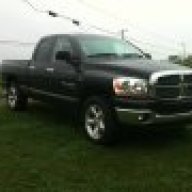


The Beginning (Towing)

Disclaimer: Links on this page pointing to Amazon, eBay and other sites may include affiliate code. If you click them and make a purchase, we may earn a small commission.

RangerGress

Senior Member
Joined
Mar 9, 2014
Posts
106
Reaction score
34
Location
Savannah, GA
Ram Year
2014
Engine
3.0l turbo diesel
Don't upgrade the truck brakes. The primary advantage in a big brake kit for a modern car or truck is that it allows the owner to tell his buddies how he has a big brake kit. For all but the most extreme use, modern brakes are fine.

I tow a lot too. I looked up the Equalizer hitch that was mentioned but it look to me like it was primarily anti-sway and not weight distribution. What am I missing?

Re. hooking up your weight distro hitch. In order to do any good your weight distro bars need to be really tight. This means, after truck is hitched to trailer, use the tongue jack to lift the front of the trailer several inches, and then putting some elbow grease into getting the bars really tight. It takes some gumption to get 100lbs on each bar.....and that only moves 200lbs from rear to front which isn't a helova lot.

If you attach the weight distro bars w/o bothering to jack up the tongue a bit, you're unlikely to get the bars tight enough to do any good.

Other trailer issues.

1) Test your trailer brakes before driving off. There should be a button or lever on the brake controller that engages the brakes. Engage the trailer brakes to test that they feel like working that day.

2) Be totally **** about tire pressures. Truck and trailer tires will be under a lot of load. Every day of a trip, check tire pressures.

3) Trailer tires suck. They don't last very long. Get uprated tires if you possible can because they'll be much less stressed and therefore last longer. Always have 2 spare trailer tires.

4) Trailer axles suck. They are weak which allows the geometry of the wheels to get wonky. This creates funny wear patterns and your tires get thrashed in a hurry. Also, when trailer tire camber is off you get a reduced traction patch. This makes the tire lock up easily under braking and the next thing you know you've flat spotted to the cords.

5) Inspect tires and bearings every stop. Just give the tires a quick eyeball and then put your hand on the wheel hub to check for a hot (failing) bearing. Look for tires cording or a bubble in the carcass.

6) On the road, train yourself to keep your eyes and attention well ahead. You will need to predict trouble far more in advance then you've had to before.

7) Be **** about the brake controller's adjustment. Too little and the trailer doesn't help you stop enough. Too much and you flat spot tires. This gets trickier with a cargo trailer because it's weight can vary all over, but less of an issue for a camper.

8) A key to trailer sway it tongue weight. Too little tongue weight will cause sway. This can get spooky if you do the intuitive thing and back off the gas or touch the brakes. That's how trailers wreck tow vehicles. If your trailer starts swaying, stay on the gas and touch the controller's trailer brake lever.

9) Every time something big and faster goes by, prepare for it to first push you away and then suck you in. The gentle countersteering you need to do will become automatic after a while.

10) On dual axle trailers, if you lose a tire, you almost certainly will not feel it. The most you can hope for is that you might catch a piece of rubber flying off in your mirror, or a passerby will alert you to the problem. Once one tire goes, the other will quickly follow. When you do get home with your spare installed, replace not only the flat, but it's overloaded buddy that took all the strain when the flat fell apart. Usually Murphy ensures that the tire that goes is the one on the right so passersby don't see it and therefore you get no warning. A good solution can be a TPMS system, but if you find an aftermarket one that is reliable, pls tell me so I can buy what you found. Mine sucks.
 

MegaMouseGW

Senior Member
Joined
Aug 5, 2013
Posts
1,552
Reaction score
172
Location
South Louisianna
Ram Year
2007
Engine
SRT 10 Viper Motor and Tranny
Hi ya'll

Well, me & the wife went out TT (tow trailer) hunting today.

We originally wanted to buy used but she saw one she just had to have.

So, we brought home this:

#50952 - 2014 Dutchmen Aspen Trail 3130QBS for sale in Souderton PA - Indian Valley Camping Center

2014 Dutchmen Aspen Trail 3130QBS
Dry weight: 6,916#
Hitch weight: 827#
Length: 34'

We got the PRO Weight Dist Hitch.
At the site we couldn't get the ideal linkage on the chains because of the truck behind slightly out of level with the trailer.

The 37 mile tow home was... pretty easy.

I was pleasantly surprise at the ride height of the truck.
It actually looked like I had installed a leveling kit on the rear.
Brought it down slightly less than the front.

Very little sway here & there. Mostly 1-2 bounds/rebounds when hitting dips/bumps on the way home. Sometimes 3.


Braking: Installed was a "Voyager" brake controller. It was set up and I had absolutely NO problem stopping the truck/trailer. Even at the ol' surprise red light.

Now, performance...
I kept it in Tow/Haul all the way home.
Hit some pretty steep hills on the way and lowest it went was 45mph.
I kept it pretty much 65 or less.
I'm excited to see what my future performance upgrades are going to do!


As it stands right now this is what is next:

1) Tachometer. It bothered me my stock tach wasn't working.
So I'm going to buy/install a tach tomorrow.

2) Tuner. I'm seriously leaning toward the $400 Diablo tuner. It has been mentioned the shifting points that is provided with the Super Chips. I feel I don't need the shifting points as much as I need the 30hp/35ftlb torque the Diablo tuner provides vs' the SC's hp gain of (iirc) 18hp? and about the same torque. They are roughly the same $ so that's not an issue.
I plan on making my decision tomorrow and ordering it.
My latest query on the tuner is whether the Diablo can disable the MDS as I have read the SC's can do.

3) CAI. Looking at the enclosed S&B CAI from a link I found on the CAI thread where I incorrectly referred to the Dodge having a MAF :D
I'm not sure what the HP gain will be but if I understand correctly throttle response will improve.

4) Rotor/Brakes? I "?" this one because as I said above, I had no difficulty stopping the TT/Truck and didn't feel like it was struggling at all to do so. So, I'm not sure if I should upgrade the brakes/rotors at this time.

5) Airbag/Helper spring. IF I cannot get a better ride/height out of setting up the WDH better I will be looking into the helper spring or airbag setup.

6) Exhaust. THIS is the area of improvement I'm both anxious and apprehensive about improving. Anxious because I think the truck can do better and sound better - though, towing, definitely lets the truck roar a lot more than I'm used to haha - than the stock exhaust.
I'm apprehensive however, because of the debate I've seen over the exhausts on these trucks.


So guys, I really need some guidance here if you can.

I got my trailer. I got the $. I just need to make informed decisions!

thanks for all the help so far guys
There is so much info/specs to digest and retain in such a short time.

I would check out the brake kits I linked earlier in this post. First they are not a "big Brake kit", they are designed and setup for towing. The problem that a lot of people do not know about until it is too late is the stock brakes will get extremely hot if used too much. The ones I got for my truck and the wifes truck are designed to shed a ton of heat. Heat is the brake killer. It can turn even the best brakes out there into crap. Even race cars use slotted, drilled and vented brake rotors which I will always say is the minimum for anyone towing. Good quality brake shoes are also a must. No matter what anyone says you will appreciate having some better brakes on your truck that MIGHT be overkill, if and when the trailer brakes fail (have seen the aftermath of travel trailer brake failure on a steep hill. Poor truck was totaled.) When towing NEVER take chances, always put safety in toe top priority when the family is involved.
 

RangerGress

Senior Member
Joined
Mar 9, 2014
Posts
106
Reaction score
34
Location
Savannah, GA
Ram Year
2014
Engine
3.0l turbo diesel
I've been racing BMW's for 7 years in the 3rd largest race class in the nation. None of use use drilled nor slotted rotors. All modern front rotors are vented so that's a non-issue. With few very high end exceptions, drilled rotors just add failure points so they are really just about bling. Old school rotors were slotted because old pad materials would glaze and the slot would scrape that off. Modern decent quality pads don't glaze. You will still see slotted rotors on high end race cars, but that's 90% brake mfr marketing and 10% because they don't care how fast they burn thru their brake pads for the tiniest chance of better braking due to a more homogenous pad surface.

Don't worry about your rotors. Get OEM or better quality pads instead of buying them on ebay. Don't ride your brakes going downhill. You'll be fine.
 

MegaMouseGW

Senior Member
Joined
Aug 5, 2013
Posts
1,552
Reaction score
172
Location
South Louisianna
Ram Year
2007
Engine
SRT 10 Viper Motor and Tranny
Ranger towing and racing are totally different beasts. In racing you have a lot of constant airflow over the brakes thus they shed heat very quickly that way. In towing you do not have that airflow. Thus the reason for drilled, slotted, and vented brake rotors. OEM brakes, unless you specifically get a towing package from the factory, are junk. A good set of pads designed for the demands of towing are a must. There is a big difference between pads meant for normal everyday driving, racing, and towing. Same with rotors. A bit of research will enlighten you if you would search the internet.
 

MegaMouseGW

Senior Member
Joined
Aug 5, 2013
Posts
1,552
Reaction score
172
Location
South Louisianna
Ram Year
2007
Engine
SRT 10 Viper Motor and Tranny
I was doing some looking myself and found several interesting things:

When deciding what brake pads are best for your vehicle, there are many factors to consider. The type of driving, weight of your vehicle and what is recommended by the manufacturer. Premium semi metallic brake pads are perfect for all light, medium to heavy duty cars, trucks, and SUV's. This type of pad is highly recommended for heavy work trucks, towing applications, performance vehicles, European vehicles and any vehicles experiencing warped brake rotor/discs due to excessive heat. These pads are manufactured with a high temperature fade resistance and a high friction level. They are simply the best pads for handling high heat and providing noise free braking. Ceramic brake pads are ideal for medium to light duty US Domestic, Japanese/Korean, Cars, Trucks and SUV's. These Pads are designed to wear longer and have less brake dust than the semi metallic pads. Ceramic pads are NOT recommended for heavy cars, trucks, SUV's or performance vehicles because they do not have a high temperature fade resistance and could warp rotors because of the heat factor. Both types of pads will give you great stopping performance and the information provided hopefully will help you make the correct decision.

Brake Pad Comparisons - OEM Brake Pads versus Aftermarket Brake Pads

Ceramic vs Metallic Brake Pads - Difference and Comparison | Diffen

Brake Rotors Brake Discs Drilled Slotted Rotors

Happy reading. All of the above link say almost exactly what I have been saying.
 

RangerGress

Senior Member
Joined
Mar 9, 2014
Posts
106
Reaction score
34
Location
Savannah, GA
Ram Year
2014
Engine
3.0l turbo diesel
We may have to agree to disagree.

Racers become pretty good at figuring out what really works vs. what just sounds nice and looks cool. Marketing dept. foolishness washes right off of us because we're at the limit of our equipment every lap. Brakes are brakes, the differences in the application doesn't change the physics or engineering any. Besides, we tow all over the country to races so we're reasonably familiar with the demands of towing.

Heat shouldn't warp rotors, our rotors get red hot all the time, they're dirt cheap cast iron blanks and we run them until their start cracking. In fact, rotors don't normally warp at all. Usually the problem is pad deposits on the rotor, and that can be fixed with series of hard braking efforts.
-Warped- Brake Disc and Other Myths

Re. pad types. Most everything one reads on this is marketing foolishness. It's very hard to separate fact from fiction on daily driver pads. As long as you don't ride the pads braking a load on a steep descent, they will have plenty of time to cool down. If someone is especially anxious about getting quality brake pads, I suppose they could go to an outfit that makes lots of race pads like Hawk and ask them what they make for trucks. If they don't have a pad for your truck, ask them what they put in their 1 ton trucks that they use to pull their trailers to events. Or contact an racing outfit that is also sells aftermarket parts like Bimmerworld, Turner, and Pelican Parts. Those guys sell brake pads and they lay awake at night worrying about how to get a little more braking performance. Ask them what they use in their trucks. They probably don't sell what they use, heck, they may well have oem pads, but you will know for sure that you are talking to folks that live or die on brakes, know brakes better than any of us, and therefore what they use on their trucks is probably worth using.

Subject change. One thing worth mentioning to the OP is changing brake fluid. Brake fluid absorbs water. That water lower's the boiling point of the fluid. Boiling brake fluid means air in the brake lines and that's a problem. So if there's any long steep descents in the plan, change your brake fluid every couple years.
 

Ocelot

Senior Member
Joined
Apr 18, 2012
Posts
822
Reaction score
199
Ram Year
2022
Engine
5.7 Non-Etorque
The Equalizer brand hitch is absolutely weight distribution. It looks different because it doesn't have chains, but that's what makes it so much easier. The weight bars ride on L-brackets and are under alot of force. Similar to chains, but without them.

Ray
 

MegaMouseGW

Senior Member
Joined
Aug 5, 2013
Posts
1,552
Reaction score
172
Location
South Louisianna
Ram Year
2007
Engine
SRT 10 Viper Motor and Tranny
Subject change. One thing worth mentioning to the OP is changing brake fluid. Brake fluid absorbs water. That water lower's the boiling point of the fluid. Boiling brake fluid means air in the brake lines and that's a problem. So if there's any long steep descents in the plan, change your brake fluid every couple years.

I deleted the portions above your brake fluid recommendation, mainly because I do a lot of towing myself. From my small utility trailer to a 20 foot car hauler. Myths aside if you had read what I linked then you would know there is a ton of differences between different brake types. Ok that is all I will say. Read the links and learn something.

Now as far as brake fluid goes I will agree totally with you. I went to a full synthetic brake fluid myself (stuff is not cheap nor is it easy to find), and have not had any problems with it at all. Yes the normal fluid will attract water, but if the cap is not removed often that should not be a problem. As far as changing it out every couple years, I am on the fence about that. I have not changed mine out since I swapped to full synthetic for 6 years.
Biggest worry is the fluid boiling and that is the reason for going with a set of rotors that are designed to shed the heat fast. The faster the heat can be radiated out of the rotor the better. The biggest difference between the slab style of rotors and ones that are vented, slotted, and drilled is the surface area. The more surface area you have the faster that heat can be dissipated from the rotor. A regular rotor will not shed heat very well or fast due to it not having a lot of surface area. Basic thermodynamics, the more surface area there is the faster something will cool down.
 

RangerGress

Senior Member
Joined
Mar 9, 2014
Posts
106
Reaction score
34
Location
Savannah, GA
Ram Year
2014
Engine
3.0l turbo diesel
The Equalizer brand hitch is absolutely weight distribution. It looks different because it doesn't have chains, but that's what makes it so much easier. The weight bars ride on L-brackets and are under alot of force. Similar to chains, but without them.

Ray

With the bars bending, how do you get the bars shoved up into those L brackets? I have each of my bars bending up pretty hard, call it >150lbs, and w/o the chain and lever design, I'm not sure how I'd get them shoved up into place.
 

RangerGress

Senior Member
Joined
Mar 9, 2014
Posts
106
Reaction score
34
Location
Savannah, GA
Ram Year
2014
Engine
3.0l turbo diesel
I deleted the portions above your brake fluid recommendation, mainly because I do a lot of towing myself. From my small utility trailer to a 20 foot car hauler. Myths aside if you had read what I linked then you would know there is a ton of differences between different brake types. Ok that is all I will say. Read the links and learn something.

Now as far as brake fluid goes I will agree totally with you. I went to a full synthetic brake fluid myself (stuff is not cheap nor is it easy to find), and have not had any problems with it at all. Yes the normal fluid will attract water, but if the cap is not removed often that should not be a problem. As far as changing it out every couple years, I am on the fence about that. I have not changed mine out since I swapped to full synthetic for 6 years.
Biggest worry is the fluid boiling and that is the reason for going with a set of rotors that are designed to shed the heat fast. The faster the heat can be radiated out of the rotor the better. The biggest difference between the slab style of rotors and ones that are vented, slotted, and drilled is the surface area. The more surface area you have the faster that heat can be dissipated from the rotor. A regular rotor will not shed heat very well or fast due to it not having a lot of surface area. Basic thermodynamics, the more surface area there is the faster something will cool down.

I followed the links and found articles written by marketing dept's, not technical articles by folks that really know brakes and have no dog in the fight.

Since OEM front rotors are already vented, as I mentioned before, buying the rotors and pads you linked to because they are also vented, isn't an upgrade. There is a superior vent design that used helical vent ribs instead of straight, but your rotor doesn't seem to have them.

What your rotors do have is holes, which add failure points. That's why racers don't used drilled rotors because they have a bad habit of catastrophic failure. Drilled rotors, with few exotic exceptions, are an immediate indicator that someone cares more about bling then about reliable brakes. Consider the significance of that. The mfr and retailer are selling a rotor design known to fail premature under stress, and calling it an upgrade. Slots, as mentioned before are for old-school pads that glaze. For all practical purposes, all they do for modern pads is make them wear faster.

Consider this conversation like one on car suspensions. Folks are always looking for a good shock upgrade, springs, coilovers and sway bars, and they read lots of marketing crap that fills them full of bad ideas. Having no clue what they are doing, they buy new suspension bits based on marketing pap and what their buddies say is good. The way to do it right is to call up a shop that is oriented not so much on selling, but on competing. This is because competition is about what really works, and marketing is about nice prose, lies, and pretty girls. Get a recommendation from a shop like that and you can probably trust it.

Re. brake fluid. There's types that have higher boiling points, and types that don't attract water as much. Off the top of my head I don't recall any universal advantage to synthetics. There may well be, I just don't know because I've only paid attention to brake fluids in terms of their specs, but no whether or not they were synthetic. Since you're concerned about boiling points and don't change fluid often, I'd evaluate brake fluids by their "wet boiling point", which is the reduced boiling point after they've sucked in some moisture, which is inevitable. One thing to be wary of tho is that the various types don't all mix well.

Re. Thermodynamics. It's been a while, but en route to a BSME I took 3 semesters of thermo and 3 of heat xfer. I didn't get any A's, but the classes were brutally hard and I was one of the 10% that ultimately survived and graduated.

We should walk away from this because we're not going to convince each other. Luck to you sir.
 

Ocelot

Senior Member
Joined
Apr 18, 2012
Posts
822
Reaction score
199
Ram Year
2022
Engine
5.7 Non-Etorque
With the bars bending, how do you get the bars shoved up into those L brackets? I have each of my bars bending up pretty hard, call it >150lbs, and w/o the chain and lever design, I'm not sure how I'd get them shoved up into place.

With the trailer hooked to the ball, you jack up the trailer with the tongue jack. As the back of the truck and the trailer tongue goes up, so to the angle of the bars.

When high enough, you just slide the bars onto the L-brackets. Then when you lower the trailer jack back down, the force is applied to the bars.
With the bars in place the back of the truck won't sag as low as it did without the bars.

They also give you a special lever wrench thing that can be used to pry the bars up onto the L-brackets.

Ray
 

RangerGress

Senior Member
Joined
Mar 9, 2014
Posts
106
Reaction score
34
Location
Savannah, GA
Ram Year
2014
Engine
3.0l turbo diesel
With the trailer hooked to the ball, you jack up the trailer with the tongue jack. As the back of the truck and the trailer tongue goes up, so to the angle of the bars.

When high enough, you just slide the bars onto the L-brackets. Then when you lower the trailer jack back down, the force is applied to the bars.
With the bars in place the back of the truck won't sag as low as it did without the bars.

They also give you a special lever wrench thing that can be used to pry the bars up onto the L-brackets.

Ray
Ah so. Well, I already use the tongue jack to get the chain connected. Then the chain hook mechanism puts prob 2" more lift in the chain when a person lifts up on the bar. Maybe with the Equalizer you trade the additional weight distro of that 2" of lift for the anti-sway functionality that is absent in a conventional weight distro hitch. I can see how that would be a good trade for folks with a big trailer that collects a lot of wind, but one that really isn't that heavy.
 
OP
OP
WulfGang

WulfGang

Senior Member
Joined
Mar 19, 2014
Posts
441
Reaction score
76
Location
PA
Ram Year
2006
Engine
Hemi 5.7
On the PRO Hitch I have, it has the bars and chains.

Once connected, lower the truck/trailer back down.

Are the bars supposed to be parallel with the deck or at an upward angle?

I looked at a picture again today of the truck/trailer hooked up right after we bought it and the trailer squats the rear of the truck to about the same level as the front.

Looks like it's actually pretty level.

I'll (hopefully) have time tomorrow to hook up the WDH just for practice and I'll snap a pic
 

Ocelot

Senior Member
Joined
Apr 18, 2012
Posts
822
Reaction score
199
Ram Year
2022
Engine
5.7 Non-Etorque
Ah so. Well, I already use the tongue jack to get the chain connected. Then the chain hook mechanism puts prob 2" more lift in the chain when a person lifts up on the bar. Maybe with the Equalizer you trade the additional weight distro of that 2" of lift for the anti-sway functionality that is absent in a conventional weight distro hitch. I can see how that would be a good trade for folks with a big trailer that collects a lot of wind, but one that really isn't that heavy.

The bars come in different weights like 6000 lb, 10,000 lb, etc. They give just as much lift as the chains. Potentially more depending on how you set the hitch head angle.

When it's set up initially, you measure front and rear wheel wells before the trailer, with the trailer but without the weight bars, and with the weight bars. Once it's set, the sag on the rear and the front will be the same and your good. the bars are so strong that it's possible to actually put too much WD and have the front of the truck sag.

The nice thing is that once it's all properly set up the first time, it's quick and easy forever after that. There isn't any trade of weight vs sway control.

I had a little experience with the chain version and like the Equalizer a lot better. You get the same WD with much better sway control then you get with the add-on friction sway bars on the chain set up.

The regular chain setup is just fine though and used by many. Plus, the Equalizer is more expensive. I don't think I've ever seen anyone on the RV forums want to switch back to the chains after using the Equalizer though.

Ray
 
OP
OP
WulfGang

WulfGang

Senior Member
Joined
Mar 19, 2014
Posts
441
Reaction score
76
Location
PA
Ram Year
2006
Engine
Hemi 5.7
Where I got my TT/Hitch the EQ was $300 more than the PRO.

They said most go with the PRO but the EQ WAS a better hitch.
 
OP
OP
WulfGang

WulfGang

Senior Member
Joined
Mar 19, 2014
Posts
441
Reaction score
76
Location
PA
Ram Year
2006
Engine
Hemi 5.7
Tuesday morning we set out.

Towed 250mi in 5.5hrs. This included a few stops.
Tonight we towed back in 5 hrs. This also included a few stops.

I was impressed with the HEMI's ability.
The transmission, not so much. If I had a 5spd stick with this baby we'd be set.
A few times easing the pedal down made it kick into the "wrong" gear and sent my RPM to 2800ish. Let off of it easy and it went into the "right" gear at 2300ish RPM.

I was running my DS Trinity on the 93oct tune. I'm not sure the tranny shift points are productive for towing. I liked the way the engine felt like it opened up better but my shift points/gear selection need help.

I'm completely satisfied with the WDH setup. I had very little sway here and there and it handled the bumps in the road with ease.

The rear of the truck when hooked up is only riding 1" lower than the front height stock.

Honest assessment though, I feel like I have the bare minimum, or slightly more so, to tow my setup.

Wind gusts were our WORST enemy. Every time I tried to get above 60mph the wind was just playing with us. I felt much safer at 60mph steady.

If I had to "advise" someone looking for a TT/Truck setup, I would advise them to either upgrade the truck or go smaller/lighter on the TT.

Avg'd about 10mpg.

In case anyone is interested about the tow terrain it was highway 380N>81N (up through Scranton) getting off on Hwy 6 @ Clarks Summit and then taking that all the way to Coudersport.

Going up, the truck took the hills (7% grades, there bouts) @ minimum 40mph @ 2900RPM max.

I found on the return trip it was better to run in "OD OFF" setting @ 60mph at 2400RPM instead of how we drove up in "TOW/HAUL".

The "wrong gear" issue I mentioned happened one time going up and one time going back.


Seriously considering upgrading to a newer/better RAM because the cab room SUCKS in this thing.
 

mikedickbek

Junior Member
Joined
Jan 12, 2013
Posts
10
Reaction score
1
Ram Year
2007
Engine
Hemi
I second what a previous poster stated in regard to ensuring your TT brakes are working before each trip.
I was pulling in WA state going over Stevens Pass. I blew the rear center (rubber) brake line on my RAM, and was left with only the TT brakes when trying to stop. Luckily, they were set up right, and I was able to continue a few miles to my destination on the other side of the pass.
It is not fun having to rely on brakes that are mounted on your trailer, but if you HAVE to, make sure they are working before you set out.
 
OP
OP
WulfGang

WulfGang

Senior Member
Joined
Mar 19, 2014
Posts
441
Reaction score
76
Location
PA
Ram Year
2006
Engine
Hemi 5.7
Thanx Mike

Yeah, the TT brakes and the HEMI are possibly the BEST thing this combo has going for it!

:D
 
Back
Top