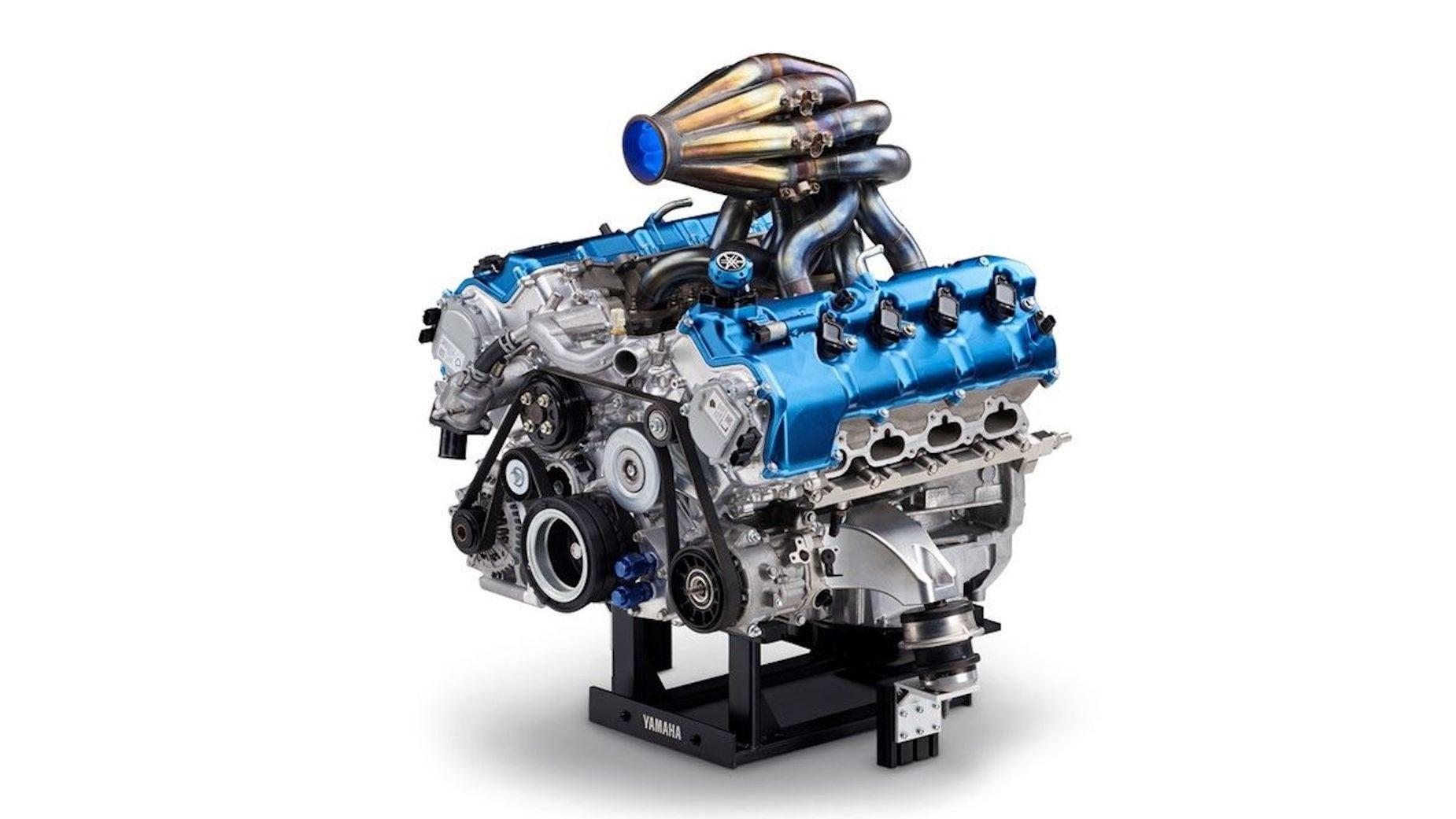
Thoughts on Hydrogen power

Disclaimer: Links on this page pointing to Amazon, eBay and other sites may include affiliate code. If you click them and make a purchase, we may earn a small commission.

seabrook

Senior Member
Joined
Nov 14, 2018
Posts
877
Reaction score
734
Location
seabrook
Ram Year
Black 2018 Night
Engine
5.7 3.92 anti slip
yea i read that i think h2 is the future for sure! really i think we’ll hays mix of pure electric (once the novelty is gone very few people wit go this route) hybrids i think will have the majority of sales then traditional motors running on h2 of course i’m talking 30 years from now. i also think the h2 will be derived from gasoline h2 is a pain to deal with in large amounts. at the plant if you have a bad actor you only make what you can use right then- large quantities of bad actors lowers your operating safety percentage
 

ramffml

Senior Member
Joined
Jul 12, 2019
Posts
3,620
Reaction score
7,560
Location
ramforum
Ram Year
2019
Engine
hemi 5.7
Takes huge amount of power to make hydrogen.

It does, but this would be less of a problem using Nukes or giant solar farms in the middle of the desert to generate hydrogen. In other words, some sources of energy would never work directly in a car, but would easily be a great source for converting to h2 even if the process itself is inefficient.
 

Docwagon1776

Senior Member
Joined
Mar 16, 2012
Posts
4,667
Reaction score
9,985
Location
Midwest
Ram Year
2012, 2021
Engine
5.7, 6.4
It probably makes more sense for the Japanese market then many others. The Japanese gov't is spending significant amounts of money to expand the retail level hydrogen infrastructure, as well as subsidize purchases of the vehicles. Given the relatively small geographical footprint and population density of Japan it's much easier to roll out that infrastructure to a large enough percentage of the population to an impactful level.

On the supply/production side Japan already imports an enormous amount of LNG, which is one of the easier sources of hydrogen. That's an advantage in that they already have all that infrastructure in place.

I don't know that it makes as much sense in a nation like US or Canada where the population is much more spread out and refining capacity is more geared toward other products.
 

RLJ10X

Senior Member
Joined
Jun 17, 2014
Posts
1,940
Reaction score
1,686
Location
Southern Indiana
Ram Year
2011
Engine
5.7 Hemi
I don't understand why we don't just continue to clean up gasoline. Look at the strides that were made with diesel.

Electric vehicles are fine until you have to cover 1000 in 14 hours.
 

Docwagon1776

Senior Member
Joined
Mar 16, 2012
Posts
4,667
Reaction score
9,985
Location
Midwest
Ram Year
2012, 2021
Engine
5.7, 6.4
I don't understand why we don't just continue to clean up gasoline. Look at the strides that were made with diesel.

Electric vehicles are fine until you have to cover 1000 in 14 hours.

Going to ULSD also increased the cost substantially, and modern diesels are significantly more complicated and costly. There is still *some* meat on the gasoline bone, but also at signficant expense and reworking of the vehicles that use it. We could go to 98 octane gas as standard, for example. That wouldn't do much for cars not tuned/programmed for it, but a motor set up to run 98 getting 98 would be cleaner and more efficient than a 89 octane motor. You'd have to have a mandate for motors to be set up to run on it going foward, just like the ULSD, and let the older vehicles filter out via attrition before you'd see much difference. Having one type of gas be 'universal' for the country would also effectively increase refining capacity. But we'll likely never do it because of the cost probably not being worth the result.

But, everywhere isn't here. The Japanese market doesn't really care about 1000 miles in 14 hours for the obvious reasons. They are already geared for an easier switch to hydrogen (or electric) due to their imports and lack of internal energy resources. Different markets will want different solutions.
 

HEMIMANN

Senior Member
Joined
Dec 7, 2020
Posts
9,487
Reaction score
25,032
Location
Minneapolis, MN
Ram Year
2017 2500 Laramie Crew Cab
Engine
6.4L HEMI
We used to work with Ford Power Products, and one of their research areas was hydrogen engines. Never heard this leaving more than the research stage, due to so many impractical application issues and expenses. Now I'm retired and don't have much access to all the insider info anymore.

The fuel cell guys were always looking for efficient ways to store hydrogen. Lithium metal hydride was one area of focus, derived from the technology used for thermonuclear bombs.
 

MADDOG

Living in a Firepit
Staff member
Administrator Moderator Community Manager Supporting Member Air Force
Joined
Dec 26, 2011
Posts
15,174
Reaction score
11,403
Location
Arizona
Ram Year
2024
Engine
6.4L HEMI
I had high hopes for the hydrogen fuel cell technology GM has been working at, on and off, for decades.

GM has run into a few roadblocks that seemed insurmountable at the time, but they are moving forward. They still have to:

1. A viable distribution network. Compared to the current carbon fuel network, hydrogen distribution is almost non-existent.
2. Hydrogen synthesis & costs. To make hydrogen you need either a gasification process or an electrolysis process, both of which require a large amount of electricity.
3. The economic power of existing fossil fuel producers. Those large corporations certainly won't be contributing to the research and development of hydrogen power. It seems that becoming the economic power in this market would make a lot of sense as the opportunity, desire and need is there.

Anyway, I'm still hopeful but it sure has taken a LOT of time for something to be commercially implemented.

 

HEMIMANN

Senior Member
Joined
Dec 7, 2020
Posts
9,487
Reaction score
25,032
Location
Minneapolis, MN
Ram Year
2017 2500 Laramie Crew Cab
Engine
6.4L HEMI
Heck, NASA had fuel cells on Apollo rockets. All it took was brilliant minds and gobs of taxpayer money from the cold war. Each launch was over $1 billion in 60's monetary value. Today we scoff when a $165 million Mars rover crashes.
 

Jupp Mueller

Junior Member
Joined
May 29, 2020
Posts
7
Reaction score
22
Location
Goleta, CA
Ram Year
2019
Engine
Hemi 6.4
The physics just don't work with hydrogen. Watch this video: https://www.youtube.com/watch?v=3IPR50-soNA

The tanks that are needed are gigantic. Think making a Prius into a 2 seater because the rest of the space needed for the tank. These tanks are at 10000psi. Yes 10000psi. With that you get about 300 miles of range.

None of this is going to ever improve - it's physics there can't be much done about this.

Battery efficiency on the other hand will keep constantly improving over the years, with exciting tech like solid state batteries having the potential to improve efficiency dramatically.
 

MoParts

Member
Joined
Jan 1, 2022
Posts
43
Reaction score
21
Location
Boulder Creek, CA
Ram Year
2018
Engine
Cummins 6.7 HD
Stupidest idea ever. You have to put 50% more energy in vs charging a battery to do the same work. Plus, once hydrogen gets loose it doesn't like to burn, it likes to explode at the drop of a hat. No thanks.
 

Manxdriver

Junior Member
Joined
Dec 27, 2021
Posts
3
Reaction score
16
Location
Bucks County, PA
Ram Year
2021
Engine
5.7
I work as a cryogenics tech, and a large part of my job is in the H2 powered vehicle sector.
It’s actually EXTREMELY safe. The fuel tank is engineered carbon fiber and will withstand a shot from a Barrett .50. The only dangers I have see are from drive-offs. That’s where the operator(always forklift, never seen one involving a road vehicle) drives away before disconnecting. The system is equipped with automatic line closure devices that slam the line closed . No problem.
The real issue is infrastructure(refuel stations). Currently, the company I work for operates 25 fueling stations in the Los Angeles basin. With a range of around 250 miles, you can drive to Palm Springs, or San Diego, and have legs enough to return.
Look how fast electric charge stations popped up EVERYWHERE. H2 is coming!
 

MoParts

Member
Joined
Jan 1, 2022
Posts
43
Reaction score
21
Location
Boulder Creek, CA
Ram Year
2018
Engine
Cummins 6.7 HD
What about damage to the fuel lines in the car in an accident? You know people often run their cars ragged, right? How safe is one of these cars after being barely maintained for 100K miles? 200K?

Even if you hand-wave away the safety issues we are already connected to a struggling electrical grid. How does using 50% more energy to do the same work make any sense at all? Especially with coal/gas generating a large fraction of that energy?
 

PoMansRam

Senior Member
Joined
Apr 30, 2018
Posts
2,089
Reaction score
2,554
Location
East Aurora NY
Ram Year
2019
Engine
Hemi
Takes huge amount of power to make hydrogen.
It certainly does. Part of my job for the past 25yrs is "making" hydrogen. Not only do we make it, we refrigerate it to the point it condenses into a liquid at around -423F. In liquid form it's trucked around the country in vacuum insulated tanker trailers and offloaded into customer's vacuum insulated storage tanks. One (empty) tanker trailer for this purpose is $2.5 million dollars. They're built like bunkers and typically only hold ~7000-9000lbs of liquid H2. Liquid H2 is very light anyway.. That amount of liquid gasses off into nearly 2 million cubic feet of gas.

Currently there's three ways to mass produce H2 gas:

1) You extract it out of natural gas (steam-methane reforming)
2) Zap it out of water (electrolysis)
3) Buy crude forms of H2 gas from neighboring refineries and chemical plants and pipe it in.

Either which way, you're consuming mass quantities of electricity, fossil fuels and resources in general, then increase the electricity needs many times more if you need to liquefy the H2 gas which requires a cryogenic air sep plant and tons of specialized refrigeration equipment.

My particular plant has been in service since 1980 and we've never been able to keep up with demand.
 
Last edited:

chri5k

Senior Member
Supporting Member
Joined
May 24, 2019
Posts
2,170
Reaction score
3,533
Location
USA
Ram Year
2016
Engine
Diesel
Not sure what killed the research on the gasoline powered fuel cell to make electricity. It is twice as efficient as using combustion to power a generator to make electricity. A cell big enough for a car is about 10cm on a side. Would be a great companion to a plug-in electric vehicle. Long trips could be made using a the fuel cell to augment the battery and it uses existing gasoline infrastructure. Also, seems like a great way to make the transition from gasoline to electricity. Consumers that need gasoline for ICE engines would still have it available for the foreseeable future while fixing one of the main sticking points for EV's.

EDIT: Seems like the research is still going on. These guys posted interesting gasoline fuel cell work in 2020. https://www.sciencedaily.com/releases/2020/06/200608092956.htm
 
Last edited:

Docwagon1776

Senior Member
Joined
Mar 16, 2012
Posts
4,667
Reaction score
9,985
Location
Midwest
Ram Year
2012, 2021
Engine
5.7, 6.4
The physics just don't work with hydrogen. Watch this video: https://www.youtube.com/watch?v=3IPR50-soNA

The tanks that are needed are gigantic. Think making a Prius into a 2 seater because the rest of the space needed for the tank. These tanks are at 10000psi. Yes 10000psi. With that you get about 300 miles of range.

You know the Mirai is already an existing product, is a 4 door with interior dimensions pretty samey-same as the Corolla, right?
 

mtwofeathers

Senior Member
Joined
Aug 24, 2020
Posts
260
Reaction score
180
Location
Kingman Arizona
Ram Year
2007
Engine
Diesel 5.9
Takes huge amount of power to make hydrogen.
They said the same for electric trucks and cars back in 1832. But gasoline was cheaper to make at the time. In 1900, about a third of all cars on US roads were electric. Of course no one from back then are around to remind us. Civilization is repeating the history of electric powered vehicle. But science is farther along in using electricity. We almost had a society that may have been stuck with DC electric. That is actually happening now in many applications.
An electric taxi is involved in the first recorded US motor-vehicle fatality in New York, on September 13, 1899.

Henry Ford was talking with Edison on developing a 100 mile electric car. It was abandoned later.
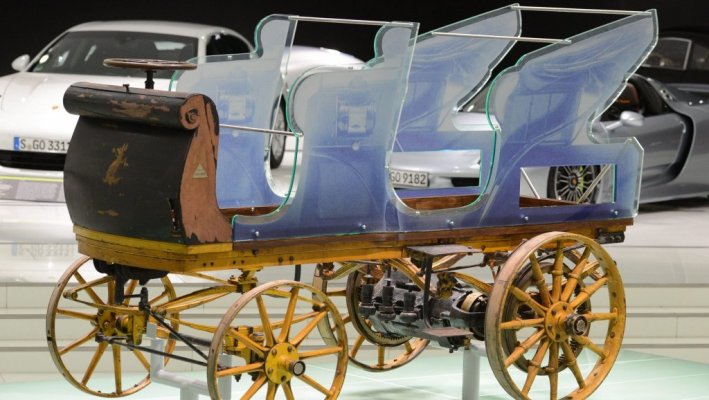
Ferdinand Porsche develops his first car, the electric P1.
Porsche was also the first invention of a hybrid gas/electric car. As ugly as it was it ran well. The first one was a ladies car with what looked like wings. Had flower pits etc to get women to like it. No hand cranking needed, nor smokey noisy gas engine to propel it. I'm sure we will be seeing many new inventions to propel a vehicle with. Much of it already known of. Just not perfected.
 

Attachments

  • 01-P11_0240-4e6df572.jpg
    01-P11_0240-4e6df572.jpg
    108.8 KB · Views: 5
  • 1390857541000-EPA-GERMANY-MUSEUM.jpg
    1390857541000-EPA-GERMANY-MUSEUM.jpg
    128 KB · Views: 5
Back
Top