
ColdCase
Senior Member
- Joined
- Mar 11, 2016
- Posts
- 673
- Reaction score
- 210
- Ram Year
- 2016
- Engine
- 5.7
I've never sled on ice. I can say on snow the skinny sled moves better because it has to push less snow. Less resistance to the forward force. The length helps applies force to keep the sled from slipping sideways. I Kind of like a ship in the water. On ice you want more lbs per inch.
Not exactly, I've done a bunch of driving on snow and ice as well as mud, gotta get to work regardless.
There are a lot of variables but in general
What makes ice slippery is the water layer that builds up between the tire and ice due to pressure. On ice, the widest tire possible with softest compound works best as less water forms and there is a better chance to catch a bump or crack or imperfection to hang on to.
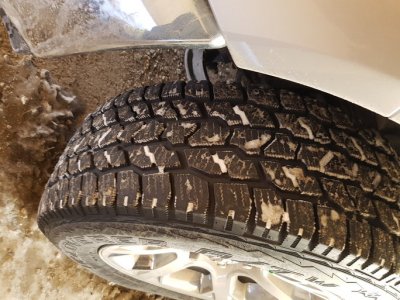
For snow, nothing sticks to snow like more snow, you want a tire that fills with snow and retains it in the tread (think sipes), opposite what you want for mud. Show will provide more traction near the surface (ground), so you don't want to float over, a narrow tire that can dig in is best up to you run into ground clearance issues. In that case its best to float

For mud you want aggressive lugs that can dig down to solid earth and throw of the mud, don't want the tread filling in. Stay out of mud holes if you don't have ground clearance.
For long tire life you want a hard compound, for a quiet ride you want little tread.
So life is a compromise. For the street, I just buy a set of blizzacks for winter and a highway tread for summer. I don't think they may a blizzack truck tire, so I don't drive the truck in bad weather.
Otherwise slow and steady, 4x4 can give you a sense of confidence, until you can't stop and slide through that intersection...
Last edited: