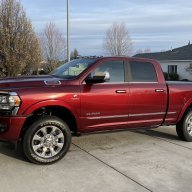


6.4 vs 6.7

Disclaimer: Links on this page pointing to Amazon, eBay and other sites may include affiliate code. If you click them and make a purchase, we may earn a small commission.

loveracing1988

Senior Member
Joined
Jul 4, 2013
Posts
3,508
Reaction score
918
Location
Clarkston, MI
Ram Year
2020
Engine
6.7 Cummins
So let me get this straight....


If you make a post that is positive about the 6.7L while not saying one thing negative about the 6.4L then you get flamed with a rebuttal of negatives about the 6.7L.


If you post a rebuttal to a poster that just said something positive about the 6.7L with nothing but negatives about the 6.7L and why you think the 6.4L is better then you get praised.


If you rebut the negative comments made about the 6.7L saying that both engines are good for their intended purpose and do not need to bash either then you are a butt hurt troll. Huh?


So is this just a "Lets all agree that the 6.4L is the best and flame anyone who disagrees" thread?


I wonder what would happen if someone started talking negatively about the 6.4L and really meant it?
You would probably have a lot of butt hurt people with an inferiority complex in here.


I guess you missed where I said I was just using it as an example to show him how much BS both comments were. It seems you 6.4L guys like to bash others engines, but get a little defensive when it is the 6.4L even when it was done as example using the same wording as someone else did to bash other engines.


As an ex employee of Cummins and currently working at a Class 8 dealership with a fleet of Ram 5500 Cummins and Ford F550 service trucks, I have yet see all the problems with DPF and SCR that you are speaking of. There were issues when DPF first came out in 2007, but most issues got ironed out a few short years later. There were never any SCR(DEF) problems and using DEF actually aides the DPF system quite a bit making it not have to regen nearly as much. Knowing what I know about the DPF and SCR system, I am not afraid of it nor do I think it is a bad thing.

There are a lot of ignorant people who think these DPF and SCR systems are mainly for emission to protect the ozone or the environment. While these systems are for emissions, they are more for emissions to protect public health than anything. It is gasoline engines that are the ozone killers and can kill you relatively quickly when exposed to it in mass quantities of gasoline exhaust(ie engine on with garage door shut).

Diesels on the other hand emit a lot less ozone killing gasses, and will not kill you quickly like gasoline exhaust will when exposed to mass quantities. However, diesels emit particulate matter that is known to be carcinogenic (even higher than cigarettes) to the respiratory system. This is why DPF's and SCR's are put on diesel engines, and is why I don't mind them on my truck. I am knowledgeable about the systems and their purpose which is why I am not ignorantly leary of them especially when it makes my diesel run cleaner and with less cancer causing particulates than a gas engine.

Every now and then I have to teach this to a "rolling coal" numbtard who thinks DPFs and SCR's are put on trucks because because of tree huggers. I also have to explain to them that actual coal miners love DPF systems on their underground diesels because it means they will have a much less risk of lung cancer in their retirement years. These DPF systems will also mean billions of tax dollars less going to lung cancer treatment for those with medicaid along with less health insurance cost.

So the next time you see someone with a deleted DPF and SCR thank them for raising your taxes, raising the cost of your health insurance, and giving you a higher chance of getting lung cancer just so he can be in the cool club and "roll coal".

In short, I don't have any issues with the DPF and SCR systems on my truck. I still have more power, better fuel economy, and running cleaner for my family and my health than the gasoline counterpart. Although, I still have not seen a lot of issues with these DPF/SCR systems like you were referring to on current diesels.

The sad thing about all of this is you are reading so far into what people are saying you that everything is being twisted to look as an attack on your mighty cummins. I would have bought a cummins if it was only a 4k up charge for it, you can look at the thread I posted in August to prove that. I ended up with the 6.4 because of many reasons, mainly price. I live in Michigan and park outside so starting my truck in negative 15 degree weather is entirely possible. That doesn't require me to plug a diesel in, but if I want heat before I get to work I would have to. It is my daily driver, I don't want to have to worry about taking my truck on the expressway for a regen every week or 2 either, I just want to get in and drive. Driving the 6.4 and Cummins back to back the Cummins feels slower even though it has almost double to torque, what is the point of having 800 foot pounds if you are going to castrate it with all sorts on torque management? The last reason is fuel mileage, I know I am going to get crappy mileage, but from what I saw when I looked on fully before getting my truck the fuel mileage numbers for the Cummins is all over the place. One person claims to get 24 mpg Highway, the next person claims to never get above 14 no matter what. So you might get enough on an advantage to pay for that cummins up charge, but you might not.
Lastly I am 100% for all on the emissions on diesels unlike most people. The health risks on diesels are much greater than gas motors from just the particulate alone. I just wish they could come up with a system that didn't clog up and suck fuel like the scr system and require def like the dpf systems. I wish they could come up with a standard catalytic converter that requires no maintenance and isn't restrictive, but I'm sure if that technology was out there someone would be using it.

 

SouthTexan

Senior Member
Joined
Jan 24, 2015
Posts
2,149
Reaction score
1,305
Ram Year
2014
Engine
408 CTD
It is my daily driver, I don't want to have to worry about taking my truck on the expressway for a regen every week or 2 either, I just want to get in and drive.

This is false. You don't have to drive on the expressway to regen. There is what is called a passive regen and an active regen. When operating conditions maintain sufficient exhaust temperature enabling continuous oxidation, then passive regen will take place. This passive regen not only happens going down the highway, but can also happen when just doing normal off highway driving. Cummins field test results have shown that most off-highway equipment operates at a high enough engine load factor for the DPF to regen in passive mode the majority of the time.


Active regen is when operating temps have not been met to regen, and the engine has to inject a small amount of fuel upstream of the DPF to get exhaust temps hot enough. This can happen with the truck stationary or even in in town driving. Engine power will not be cut, and the only thing you will notice slightly more fuel being consumed. Basically the truck will regen and you may never even notice it.


Driving the 6.4 and Cummins back to back the Cummins feels slower even though it has almost double to torque, what is the point of having 800 foot pounds if you are going to castrate it with all sorts on torque management?.

Actually this is due to two things.

One, due to their construction, diesel engine has a longer and more pronounced "break-in" period than gas engine does. However, due the same construction the engine will last a lot longer. Before 10,000 miles (if you don't load your engine), you will not get the full power or efficiency of a diesel engine. the "break-in" time period on gas engines are much shorter and have a less effect on power and fuel efficiency. This is why the Diesel manual states.....

"NOTE: Light duty operation such as light trailer towing
or no load operation will extend the time before the
engine is at full efficiency. Reduced fuel economy and
power may be seen at this time.
For additional vehicle break-in requirements, refer to
“Trailer Towing” in “Starting and Operating” of the
Owners Manual.
Because of the construction of the Cummins® turbocharged
diesel engine, engine run-in is enhanced by
loaded operating conditions which allow the engine
parts to achieve final finish and fit during the first 6,000
miles"


..... so basically if you drive a Ram with a 6.7L that only has 50 miles on it, it will feel compleytly different performance wise than one with 10,000 miles on it.


Secondly, the drive by wire throttle is tuned very badly for performance (but good for fuel mileage) on these diesels to where it reacts very slowly to inputs and does not give you all the engine power at lower throttle pedal postions. However, a BD Throttle sensitivity booster will fix that without the need for a tune or voiding warranty. It will make the acceleration pedal more linear like the old cable driven pedals were. A lot of what people think is "torque management" is actually attributed to this.


So you might get enough on an advantage to pay for that cummins up charge, but you might not.

Actually most that I know that have diesels along with me did not buy them to get a payback in fuel. They bought them for more capability, better towing performance, a longer range when towing. If one is buying just to get a monetary payback to justify getting one then they obviously do not need or want what a diesel engine offers in the first place.


The health risks on diesels are much greater than gas motors from just the particulate alone.

Yes, before DPF systems, but after no. In all actuality there are talks of DPF systems coming to gas engines as well.


I just wish they could come up with a system that didn't clog up and suck fuel like the scr system and require def like the dpf systems.


Actually the SCR system is not the one that requires fuel. That is the DPF when it needs to active regen. The SCR is what injects the DEF which actually increases fuel economy by not needing to regen nearly as much without it. This is why you will notice the Ram with the Cummins increased mileage when they started using DEF on the 2013 trucks. The only time the DPF system will suck fuel is when you cannot do a passive regen and has to do an active regen.
 

SouthTexan

Senior Member
Joined
Jan 24, 2015
Posts
2,149
Reaction score
1,305
Ram Year
2014
Engine
408 CTD
The sad thing about all of this is you are reading so far into what people are saying you that everything is being twisted to look as an attack on your mighty cummins.

So to get clear on this.


If you made post stating......

"6.4L Hemi hands down the best engine, i own 2014 ram 3500 6.4L beautiful solid truck."


and then someone quoted your post while stating......

"The 6.4L Hemi is a high reving go fast unloaded powerhouse. That's about it. With all the MDS garbage they hooked up to these trucks and considering how little the lifespan a gas engines has compared to diesels it may not be to your benefit. I wanted a Hemi , the fact that there was 411hp really tickled me pink. However after considering that I do need to tow right now, my commute to work is 25 miles, the new MDS crap they put on, and the controversial power lag at higher altitudes or going up hills towing heavy , I took a pass on the Hemi and went with a 6.7L Cummins. Unless you don't tow at all or even just short distances I'd pass on the Hemi 6.4L, atleast until they get this MDS stuff figured out. Cost of more frequent maintenance, fuel, it adds up for about an average of 2 mpg worse than the Cummins 6.7L. Hopefully in a few years they will get the MDS figured out because then I will not have something to tow and would not need the diesel."


......then you wouldn't have issues with that and having issues with that is "reading too far into what poeple are saying"?
 

wyo2track

Senior Member
Joined
Dec 9, 2014
Posts
210
Reaction score
139
Location
western Wyoming
Ram Year
2014 RAM 2500
Engine
6.4L Hemi w/ 4.10's
Yes, before DPF systems, but after no. In all actuality there are talks of DPF systems coming to gas engines as well.

I haven't heard of DPF for gasoline engines due to the differences in particulates, but, I have heard rumors that SCR would be feasible to clean gasoline emissions further.

So, let me ask you a question and try to get this thread pulled out of the gutter. Since your a mechanic, you are probably familiar with the 6.7 EGR and its workings/pitfalls/benefits. From what I understand, the more load (apply the heat to it) the better/longer it will last. This 6.4 I have has its own EGR, "first of its kind" according to the Ram propaganda. In your opinion, which from what I've read is strong...haha...what do we need to watch out for with the 6.4 EGR?
 

SouthernBoy

Senior Member
Joined
Jan 11, 2015
Posts
366
Reaction score
192
Location
Central Texas
Ram Year
2015
Engine
6.4 Hemi
In your opinion, which from what I've read is strong...haha...what do we need to watch out for with the 6.4 EGR?

The biggest issue of EGR in the diesel application is the fact that soot gums everything up. All the plumbing from the EGR cooler to the EGR valve on the intake horn,, then all over the grid heater. A well tuned gasoline engine has very 'clean' exhaust and not nearly as much debris coming out to gum up an EGR valve and associated piping/tubing.

It would be much less problematic if they couldve gotten enough EGR done with cam timing events and got it done internally instead of all the external crap to gum up and fail.
 

wyo2track

Senior Member
Joined
Dec 9, 2014
Posts
210
Reaction score
139
Location
western Wyoming
Ram Year
2014 RAM 2500
Engine
6.4L Hemi w/ 4.10's
The biggest issue of EGR in the diesel application is the fact that soot gums everything up. All the plumbing from the EGR cooler to the EGR valve on the intake horn,, then all over the grid heater. A well tuned gasoline engine has very 'clean' exhaust and not nearly as much debris coming out to gum up an EGR valve and associated piping/tubing.

It would be much less problematic if they couldve gotten enough EGR done with cam timing events and got it done internally instead of all the external crap to gum up and fail.

Thanks for the response. When it comes to this thread topic, I believe a lot of us with the 6.4 chose it over the 6.7 because of this. Many of us are short trip users, cold weather applications. Just cannot get the 6.7 up to operating temps plus low engine loads. That 6.7 just loves to be loaded up - designed to be worked and worked hard. I've seen pics of 2013+ trucks EGR's with only 10,000 miles on them on other forums. Look nasty...

I had a 2013 6.7 ctd 3500. I found out that it was a very different truck from the 2001 5.9 CTD I drove for 13 years. I live in a very cold climate, and most of my trips are short. I was going to kill that 2013 CTD and it would have been all my fault using it how I was. Good learning lesson. The power the 6.7 has is...AMAZING! Using as a DD, IMO the cutoff point between choosing a 6.7 or a 6.4 is around that 15 mile one way trip. If you're a short trip commuter on weekdays and can get out on the weekends and run the 6.7 hard, all the better!
 

loveracing1988

Senior Member
Joined
Jul 4, 2013
Posts
3,508
Reaction score
918
Location
Clarkston, MI
Ram Year
2020
Engine
6.7 Cummins
This is false. You don't have to drive on the expressway to regen. There is what is called a passive regen and an active regen. When operating conditions maintain sufficient exhaust temperature enabling continuous oxidation, then passive regen will take place. This passive regen not only happens going down the highway, but can also happen when just doing normal off highway driving. Cummins field test results have shown that most off-highway equipment operates at a high enough engine load factor for the DPF to regen in passive mode the majority of the time.


Active regen is when operating temps have not been met to regen, and the engine has to inject a small amount of fuel upstream of the DPF to get exhaust temps hot enough. This can happen with the truck stationary or even in in town driving. Engine power will not be cut, and the only thing you will notice slightly more fuel being consumed. Basically the truck will regen and you may never even notice it.


Yes, there are the two different types of regeneration, but to meet the requirements for passive regen you need to be going faster than stop and go traffic. That is why most people drive in the expressway to do a passive regen, stop and go doesn't generate enough heat to passive regen. The line you took word for word from Cummins is for the commercial diesels in semi trucks. Since you lifted something from there I found something else about the motors in the HD trucks.
*Two regeneration modes clean the filter when it is "full"; passive and active regeneration. Passive regeneration occurs naturally anytime the exhaust gas temperature reaches the required threshold to burn the collected particulates from the filter. Since the conditions that allow for passive regeneration do not occur frequently, the engine relies on active regeneration to burn off particulates that have accumulated in the filter. Active regeneration relies on various sensors to tell the control module when the filter needs to be cleaned. During active regeneration, commonly referred to as "reburn" or "regen", the engine's idle is increased and diesel fuel is introduced into the exhaust stream to reach the required temperatures. Temperatures inside the DPF can exceed 1,000 degrees F when diesel fuel is burned in the exhaust. The disadvantages of this exhaust aftertreatment is that the DPF can clog (many 6.7L Cummins owners repeatedly have this issue) and fuel economy is greatly diminished.
The clogged dpf's that are mentioned has been helped by the addition of Def, but it still hasn't been 100% fixed.


Actually this is due to two things.

One, due to their construction, diesel engine has a longer and more pronounced "break-in" period than gas engine does. However, due the same construction the engine will last a lot longer. Before 10,000 miles (if you don't load your engine), you will not get the full power or efficiency of a diesel engine. the "break-in" time period on gas engines are much shorter and have a less effect on power and fuel efficiency. This is why the Diesel manual states.....

"NOTE: Light duty operation such as light trailer towing
or no load operation will extend the time before the
engine is at full efficiency. Reduced fuel economy and
power may be seen at this time.
For additional vehicle break-in requirements, refer to
“Trailer Towing” in “Starting and Operating” of the
Owners Manual.
Because of the construction of the Cummins® turbocharged
diesel engine, engine run-in is enhanced by
loaded operating conditions which allow the engine
parts to achieve final finish and fit during the first 6,000
miles"


..... so basically if you drive a Ram with a 6.7L that only has 50 miles on it, it will feel compleytly different performance wise than one with 10,000 miles on it.


Secondly, the drive by wire throttle is tuned very badly for performance (but good for fuel mileage) on these diesels to where it reacts very slowly to inputs and does not give you all the engine power at lower throttle pedal postions. However, a BD Throttle sensitivity booster will fix that without the need for a tune or voiding warranty. It will make the acceleration pedal more linear like the old cable driven pedals were. A lot of what people think is "torque management" is actually attributed to this.

So to get the performance level of 800nft lbs out of a Cummins I have to install a throttle Booster?


Actually most that I know that have diesels along with me did not buy them to get a payback in fuel. They bought them for more capability, better towing performance, a longer range when towing. If one is buying just to get a monetary payback to justify getting one then they obviously do not need or want what a diesel engine offers in the first place.

Most of the people around here buy them for the fuel economy advantage, even if they tow 4 times per year and the load is something a v6 half ton could tow.


Yes, before DPF systems, but after no. In all actuality there are talks of DPF systems coming to gas engines as well.


Thanks for taking that out of context I am well aware of the health advantages of the exhaust systems.


Actually the SCR system is not the one that requires fuel. That is the DPF when it needs to active regen. The SCR is what injects the DEF which actually increases fuel economy by not needing to regen nearly as much without it. This is why you will notice the Ram with the Cummins increased mileage when they started using DEF on the 2013 trucks. The only time the DPF system will suck fuel is when you cannot do a passive regen and has to do an active regen.

OK, I had them backwards.
 

SouthernBoy

Senior Member
Joined
Jan 11, 2015
Posts
366
Reaction score
192
Location
Central Texas
Ram Year
2015
Engine
6.4 Hemi
Thanks for the response. When it comes to this thread topic, I believe a lot of us with the 6.4 chose it over the 6.7 because of this. Many of us are short trip users, cold weather applications. Just cannot get the 6.7 up to operating temps plus low engine loads. That 6.7 just loves to be loaded up - designed to be worked and worked hard. I've seen pics of 2013+ trucks EGR's with only 10,000 miles on them on other forums. Look nasty...

I had a 2013 6.7 ctd 3500. I found out that it was a very different truck from the 2001 5.9 CTD I drove for 13 years. I live in a very cold climate, and most of my trips are short. I was going to kill that 2013 CTD and it would have been all my fault using it how I was. Good learning lesson. The power the 6.7 has is...AMAZING! Using as a DD, IMO the cutoff point between choosing a 6.7 or a 6.4 is around that 15 mile one way trip. If you're a short trip commuter on weekdays and can get out on the weekends and run the 6.7 hard, all the better!

I agree with everything you just said. I just sold my 6.7 because of all the reasons you cited. The 6.7 is an excellent diesel engine, but all the EGR stuff is problematic I dont care who says it isnt, it is. And it doesnt matter how much you tow, or how much highway miles you tow it, the EGR is gonna soot up and need work. And I didnt even get to the whole notion of the Regen process and all that raw diesel going into the Variable Turbo gumming up the vanes and eventually needing cleaning, flushing and replacing. I mean, whos idea was it to tell the injectors to shoot diesel into the exhaust stroke and therefore sending sticky/tacky soot into the VGT ? And soon as the Regen is done, the dry soot goes in immediately afterward and batters up those poor vanes like putting cornmeal on your buttermilk dipped catfish filets. Its a recipe for a hassle from the word go.

Oh, and now they have DEF to screw with, too. :Insane:

Now all that stuff may not be an issue for folks who indeed need the torque and power the badass 6.7 can deliver, they are willing to put up with the crap to get the end result of a badass towing machine. But Im not willing to put up with all that hassle (and more upfront cost, isnt it like 8K, higher per gallon fuel costs, and now the DEF costs too) for the few times I do need to tow, the gasser just makes more logical sense in my application.
 
Last edited:

loveracing1988

Senior Member
Joined
Jul 4, 2013
Posts
3,508
Reaction score
918
Location
Clarkston, MI
Ram Year
2020
Engine
6.7 Cummins
You can thank the EPA for all those issues!

And like said above, it isn't them doing it just to mess with us, they are doing it because the particulate's in diesel exhaust that those systems filter out has been proven to cause cancer, lung disease, and a brand new study linked autism to it if a pregnant woman lived within a certain distance of a major freeway.
 

wyo2track

Senior Member
Joined
Dec 9, 2014
Posts
210
Reaction score
139
Location
western Wyoming
Ram Year
2014 RAM 2500
Engine
6.4L Hemi w/ 4.10's
And soon as the Regen is done, the dry soot goes in immediately afterward and batters up those poor vanes like putting cornmeal on your buttermilk dipped catfish filets. Its a recipe for a hassle from the word go.[/I]

Well...there's an analogy I never thought I'd read in a truck forum..lol.
Yeah...um...we don't grow corn or catfish here at 7200 feet....:):roflsquared:
 

wyo2track

Senior Member
Joined
Dec 9, 2014
Posts
210
Reaction score
139
Location
western Wyoming
Ram Year
2014 RAM 2500
Engine
6.4L Hemi w/ 4.10's

Hahaha......no, no, no....don't have those either! Gets too damn cold! Lol, but, we do have jackrabbits and skunks..! And the big fury **** with teeth, like grizzle bears and wolves....I don't know if they'd eat possum either...?!:roflsquared::)

Glad to see some humor added to this thread...how bout a little dancing poop... can't hurt.....:dancingpoop::dancingpoop:
 

6.4 dude

Senior Member
Joined
Mar 7, 2014
Posts
367
Reaction score
245
Location
Oklahoma
Ram Year
2014
Engine
6.4 hemi
I haven't seen a jack rabbit in my neck of the woods in 20 years.....
 

SouthernBoy

Senior Member
Joined
Jan 11, 2015
Posts
366
Reaction score
192
Location
Central Texas
Ram Year
2015
Engine
6.4 Hemi
Well...there's an analogy I never thought I'd read in a truck forum..lol.
Yeah...um...we don't grow corn or catfish here at 7200 feet....:):roflsquared:

Well us Southern sod-busters love our row crops, settin' some lines in the Brazos River to hook a big stringer of humpback blues and some iced down Shiner Bocks ! :favorites13:
 
Last edited:

SouthTexan

Senior Member
Joined
Jan 24, 2015
Posts
2,149
Reaction score
1,305
Ram Year
2014
Engine
408 CTD
Since your a mechanic, you are probably familiar with the 6.7 EGR and its workings/pitfalls/benefits.


I am not a technician.

The 6.7L EGR pitfalls is one of the reasons why I like the SCR system. What most don't know is the 6.7L Cummins is emissions compliant even without the SCR system so it doesn't need it(which is why it hasn't had an SCR from 2007-2012), and only needs the EGR and DPF to be compliant. The SCR system was used with the 6.7L in the 2013+ specifically because the EGR issues in the 2007-2012 engines and to lessen the amount of regens needed. Most people incorrectly think that the SCR and DEF is a bad thing when it is actually a good thing and those who had EGR issues in the 2007-2012 CTD should be praising the use of SCR.

The whole reason for either of these systems is to lower NOx to be compliant. The EGR introduces cooled exhaust gas, which has less oxygen, at combustion into the intake system which reduces the combustion temperature and lowers NOx production. The amount of exhaust gas introduced and when is controlled by the EGR valve. The lower combustion temperature makes the diesel engine less efficient and also creates more particulate matter so you essentially trade off less NOx for more fuel usage and soot production. Also, the engine is creating less power due to the lower combustion temperatures. The extra particulate matter or soot generated also clogs up DPFs even quicker.


The SCR basically injects urea into the exhaust turning the NOx into nitrogen and water vapor from the reaction with the catalyst thereby lowering NOx. With the SCR system, the EGR would not be needed as much or at all which allows the engine to operate at optimal combustion temperatures providing better fuel economy, more engine power, and less soot generation therefore less DPF regens. The downside to this system is that you have to buy DEF every 5,000 to 7,000 miles depending on your engine loads. These two systems working with each other reduces emissions even more and reduces the need operate the EGR at such extreme levels therefore reducing engine wear.


So again, those who were having EGR issues in the 2007-2012 CTD Rams should be praising the introduction of SCR, and not see it as a negative. I think most see it as a negative because they do not fully understand how it works and what it does so as we all know, people fear what is unknown to them.


In your opinion, which from what I've read is strong...haha...what do we need to watch out for with the 6.4 EGR?


I am not familiar with the EGR system on the 6.4L to comment, and cannot find enough info about it to give an educated answer. Although, as SouthernBoy pointed out, gas engines have "clean" exhaust in terms of particulates and soot compared to diesels. The EGR systems on diesels also make the combustion temps lower than optimal which creates more soot and less power as I stated above. A gasoline engine would actually benefit from a cooled EGR to prevent predetonation allowing for more timing. That is unless it is a DI engine and then you would run into soot buildup on the intake valves being a major issue.
 

wyo2track

Senior Member
Joined
Dec 9, 2014
Posts
210
Reaction score
139
Location
western Wyoming
Ram Year
2014 RAM 2500
Engine
6.4L Hemi w/ 4.10's
I am not a technician.

The 6.7L EGR pitfalls is one of the reasons why I like the SCR system. What most don't know is the 6.7L Cummins is emissions compliant even without the SCR system so it doesn't need it, and only needs the EGR and DPF to be compliant. The SCR system was used with the 6.7L in the 2013+ specifically because the EGR issues in the 2007-2012 engines and to lessen the amount of regens needed. Most people incorrectly think that the SCR and DEF is a bad thing when it is actually a good thing and those who had EGR issues in the 2007-2012 CTD should be praising the use of SCR.

The whole reason for either of these systems is to lower NOx to be compliant. The EGR introduces cooled exhaust gas, which has less oxygen, at combustion into the intake system which reduces the combustion temperature and lowers NOx production. The amount of gas introduced and when is controlled by the EGR valve. The lower-temperature diesel combustion is less efficient, so it creates more particulate matter and it burns more fuel so you essentially trade off less NOx for more fuel usage. Also, the engine is creating less power due to the lower combustion temperatures. The extra particulate matter or soot generated also clogs up DPFs even quicker.


The SCR basically injects urea into the exhaust, which when reacted with the catalyst, turning the NOx into nitrogen and water vapor thereby lowering NOx. With the SCR system, the EGR would not be needed as much or at all therefore it allows the engine to operate at optimal combustion temperatures providing better fuel economy, more engine power, and less soot generation therefoe less DPF regens. The downside to this system is that you have to buy DEF every 5,000 to 7,000 miles depending on your engine loads. These two systems working with each other reduces emissions even more and reduces the need operate the EGR at such extreme levels therefore reducing engine wear.


So again, those who were having EGR issues in the 2007-2012 CTD Rams should be praising the introduction of SCR, and not see it as a negative. I think most see it as a negative because they do not fully understand how it works and what it does so as we all know, people fear what is unknown to them.

I am not familiar with the EGR system on the 6.4L to comment, and cannot find enough info about it to give an educated answer. Although, as SouthernBoy pointed out, gas engines have "clean" exhaust in terms of particulates and soot compared to diesels. The EGR systems on diesels also make the combustion temps lower than optimal which creates more soot and less power as I stated above. A gasoline engine would actually benefit from a cooled EGR to prevent predetonation allowing for more timing. That is unless it is a DI engine and then you would run into soot buildup on the intake valves being a major issue.


That is all really good information with a lot of meat on the bone. Thank you. I learned a little when I had the 2013 ctd. I never had an issue with the DEF. I was getting 1000 to 1200 miles just driving the truck unloaded per gallon of DEF. When pulling, even light loads, from what I could tell DEF consumption was doubled. Did I worry about the DEF freezing...yes I did, in fact I know it had to be frozen on those mornings when it was 20 below, but I didn't have a problem. The systems were new and all components functioned. But, the problems I've read with the SCR/DEF system have been those trucks in real cold climates. $$hit happens. I really like the 'clean' diesel. Is the SCR the best solution...at this point in time, yes. My 2001 CTD flat out stunk! Pure NOx directly from the belly of that 5.9L. The exhaust from the 2013 had its own burnt urea smell, but you could walk through it and not stink for the remainder of the day. Maybe sometime in the future I'll actually own another diesel. They are amazing machines. Technology and system components will only get better.....
 

Peattie

Senior Member
Joined
Aug 31, 2012
Posts
376
Reaction score
36
Location
Las Vegas
Ram Year
2012
Engine
Hemi 5.7
There you go again putting down other peoples choices. Why do you have to say I DD a semi? I don't DD a semi and you know it yet you have to make that little comment to down other peoples choice just to justify your own. I am not downing your 6.4L. I can say "If you want to daily drive a lifted pavement queen that poses as an off roader then do it. What ever makes you happy go for it."


Sorry, but you wanted a lift for the looks of it, not for off roading. You don't need a lift and 20's to get you anywhere you are willing to take a 40k+ truck off road. In all actuality a lift as high as you got yours with 20's actually make your off road ability worse. To many people say they lift their trucks for off road when they really just do it for looks because if they really did go off road then they would know their lift is useless off road. I am not chastising them for wanting their truck to have a certain look, but at least call it for what it actually is and not what it ain't because to say you lifted your 40k truck to go off road sounds idiotic to real off roaders. Come to places with my off road club like Moab or King of the Hammers and you will probably walk away with a different outlook on what an off road vehicle really is and why 20's are useless in real off road.

Besides, if you wanted to really go off road in a 2500 then a Power Wagon would have been a better choice as a real off roader instead of a regular truck just posing as one. Just plain stock without a lift, a Power Wagon will go places a regular 2500 with a 6 inch lift could only dream of.


I personally chose to spend the money because I got it to spend, but that is my own choice.


Dang man, chill out. He didn't mean you specifically. 20's aren't useless in offloading either bud. COPS racing team has 20's on their Trophy truck, which will beat anything you and your buddies do at moab.

Cost of the truck doesn't matter for off roading either, I take my ****** 1500 express the same place my friends take their raptors and jeeps. A raptor is a 50+ off road truck too. Now I would do a lot better if my truck was lifted, yes a lift helps. It gives you more ground clearance, kind why I ruined my bumper, stock Rams are too low. So if he wanted to lift his truck to go off-roading then so be it. Theres a height that makes it functional, as well as a height thats just dumb.

The cali kids that do a 6" lift with 12 wides and 33's doesn't help off roading.
 

Latest posts

Forum statistics

Threads
211,273
Posts
3,064,378
Members
171,550
Latest member
Arturo Rojas
Back
Top