Ethanol has unfortunately become highly political, which is why it's impossible to have a rational conversation about it.
The chemical compound C2H5OH has an effective "octane" of 113 and burns extremely cleanly - plus it brings oxygen into the combustion chamber in the liquid fuel and that oxygen is available to the combustion process so when a gallon of liquid fuel consisting of 15% CnH2n+2 and 85% C2H5OH is burned, it is approximately equivalent to burning 3 quarts of C8H18 while also pumping in an additional 145 cubic feet of air worth of oxygen that doesn't have to get pulled past the intake/valves and doesn't carry 115 cubic feet of inert nitrogen with it, doesn't have to push all that heavy useless nitrogen out through the exhaust either.
The same effect occurs on a smaller scale with smaller blend %'s, in any case you're supplementing the anaerobic alkenes with a clean high "octane" behaving oxygenator and the result is cleaner and more energetic combustion.
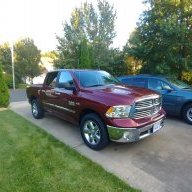
I convert every vehicle I own to run E85 (well locally in AZ it's E54 because of heat/elevation) and will be converting my Ram to burn that as well the minute it's out of warranty. In my book fuel ethanol's a very good thing.
On the topic of gasoline I generally run premium E10 in my Ram, around home always from the same 2 stations because it's convenient to my house & office. On the road sometimes I've run 87 and even 85 in Utah once but it's harder to notice small changes in power while on a road trip, they could just as well be attributed to changes in elevation or unfamiliar grades.
The only big fuel-related change I ever experienced in the Ram was when I filled (with premium) at a specific station I don't usually visit and the truck became noticeably sluggish a few minutes later, stayed that way until I had burned half the tank and topped up at my usual station again.