
Inside Stellantis' plan to revive its Ram Trucks brand after yearslong sales declines

Disclaimer: Links on this page pointing to Amazon, eBay and other sites may include affiliate code. If you click them and make a purchase, we may earn a small commission.

Inside Stellantis' plan to revive its Ram Trucks brand after yearslong sales declines​

Story by Michael Wayland, CNBC
6 min read

1751311852174.png


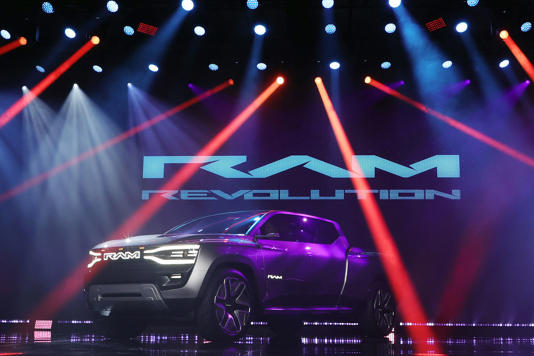
AUBURN HILLS, Mich. — Ram CEO Tim Kuniskis reemerged from a seven-month retirement late last year saying he “missed the fight” and admitting the Stellantis brand was getting smashed in the marketplace by its competition.

Kuniskis walked on stage during a media event as the speakers blared Detroit rapper Eminem singing “Guess who’s back, back again.” He promised an aggressive turnaround for the embattled truck brand that is now getting underway and will extend through 2026.

The plan includes more than 25 announcements through next year. Thus far they have included a return to NASCAR with mechanical bull rides and a new race truck, the resurrection of Hemi V-8 engines with a new “Symbol of Protest,” and, most recently, a new industry-leading powertrain warranty for its Ram products.

Since returning after a CEO shake-up, Kuniskis is invigorated. He’s “flying without a parachute,” as he recently described it, while playing with borrowed time and house money since his unretirement. He’s going all in to launch a renaissance of Ram, which has experienced a 38% sales decline since its record year back in 2019.

“I have perfect clarity of my return because, after I left and had a chance to rest, I realized I didn’t need to leave, I just needed a break. Then I was itching to come back,” Kuniskis told CNBC during a recent interview in his relatively undecorated office. (He gave many of his career keepsakes away when he retired.) “We have a window of opportunity here to fix a lot of stuff, and some people are stressed out by that opportunity, and some people are fueled by it. Luckily, our team is fueled by it.”

Kuniskis, who was leading Ram and Dodge upon his retirement mid-last year, said an array of issues led to the brand’s current situation, including the automaker’s pricing, model launch cadence and, most importantly, problems with a redesign of its Ram 1500. That redesign led to production issues that are still being worked out more than a year after the vehicle’s launch.

“We tried to do too many things at once,” Kuniskis said of the Ram 1500. “We literally changed everything instead of doing a cadence of the changes.”

Kuniskis didn’t touch on the larger issues Stellantis was dealing with under former Stellantis CEO Carlos Tavares, who left the automaker in December. Kuniskis was recruited back to Ram amid the change in leadership.

Turnaround plan​

Ram is one of the most crucial of Stellantis’ 14 brands — if not the most important. It competes in the highly profitable full-size pickup truck market and industry experts said its success is key to the company reestablishing itself in the commercial sales market.

“It’s kind of the backbone of their business,” said Joseph Yoon, consumer insights analyst at CarMax’s data and consumer car shopping site Edmunds.com. “The market share is hugely important.”

Market share for the Ram 1500 in the U.S. full-size pickup truck market has plummeted from 17.8% in 2019 to 8.4% through roughly the first half of this year, according to Edmunds.

Ram’s sales of full-size trucks, which includes the 1500 and larger versions, have declined 41% from 2019 through 2024, according to company data, allowing competitors such as General Motors and Toyota Motor to increase sales during that time.

While it’s early into the turnaround plan, which goes into next year, Ram has already resurrected its popular Hemi V-8 engine; reintroduced lower-priced pickup truck models; announced a return to NASCAR; and introduced a 10-year/100,000 limited powertrain warranty for new trucks across its lineup, among other things.

Kuniskis has said further announcements could encompass several new potential vehicles, including a passenger van and midsize pickup truck that’s expected in 2027. He’s also launched a “Nothing Stops Ram” marketing campaign and delayed the brand’s electrified pickup trucks amid low market demand.

“There’s always a method to the madness,” Kuniskis said. “There’s always a business reason behind something that seems like fun.”

Part of that “fun” includes a return to NASCAR truck racing, where fans can “Ride the Hemi” — a mechanical bull ride that looks like the brand’s new “Symbol of Protest” logo that features the engine with a ram’s head. If riders can stay on for 15 seconds, they receive a special-edition T-shirt that can’t be purchased.

Its splashy return to NASCAR earlier this month in Michigan also included a new truck design, as well as a vehicle doing doughnut burnouts.

Kuniskis declined to disclose sales targets for the Ram brand or its full-size pickup trucks, but he said the company is aiming for a market share somewhere between 20% and 29.9% for its full-size trucks by the end of the plan. Ram Trucks had a roughly 17% share of the U.S. full-size pickup truck market in 2024, according to industry data.

“I know exactly where we want to be and what our expectations are,” he said. “I should legitimately have a market share that starts with a two. … That’s a starting point for us.”

But Kuniskis said market share is only one metric and that plant utilization and profits are also important. While Ram’s overall sales are down, he said retail sales — a closely watched metric — are expected to be up by about 28% through the first half of the year.

“You don’t want to chase share just for the sake of chasing share,” he said. “I want to have all plants running at full capacity to maximize my efficiency.”

Last Tenth LFG'​

Kuniskis wears a black band on his left wrist with white lettering that reads “Last Tenth LFG.”

The first part has been a mantra of Kuniskis’ for years to push his top lieutenants to perform as best as they can. The latter part is an acronym with many meanings, including “let’s freaking go.”

“When you were in school, they told you ‘Get an ‘A,’ everything will be great. You’ll be successful in life.′ Not true. Not true,” Kuniskis said. “They remember the guy that way pushed beyond just getting an ‘A’ in school and did something different, push that last tenth.”

Kuniskis handed out the wristbands to his team as well as the brand’s dealers during his return to an annual dealer conference in January as a way to regain the trust of retailers after years of contentious relations over incentives, products and price increases.

So far it seems to be working, according to Michael Bettenhausen, a dealer in Illinois who chairs the Stellantis National Dealer Council.

“Everything that Tim has showed us has us convinced that the brand is on a path to get back to the volumes that we’ve seen from years past,” Bettenhausen said. “We’re really excited that Tim is leading this charge. It’s really remarkable.”

Bettenhausen also said the full-size pickup truck market is key to the success of the company and its dealers. It is made up of buyers who often have generational loyalties to a brand and act as ambassadors for it.

“Customer loyalty is a huge part of that business,” Yoon said. “For a lot of these people, it doesn’t matter if their brand is objectively the best product or not. It’s just that whatever the automaker is doing, they feel like it’s best for them.”

Bringing back the automaker’s well-known Hemi V-8 may have been a good start, as Kuniskis said the company received 12,000 Hemi orders on the first day pickup trucks with the engine were available for dealers to order.

As the Hemi returns, Ram’s electrification plans, including a new plug-in truck and an all-electric model, are being delayed. Kuniskis declined to discuss production timing for the all-electric model, which was initially expected last year. He said the plug-in model — known as an extended-range electric vehicle, or EREV — will begin production this year but declined to specify when consumer sales will begin.

Kuniskis said he believes the EREV will be more of a differentiator in the market and more important in the brand’s turnaround plan through 2026.

“I’m really bullish on the year. I’m really proud of how we started this year and that’s just using traditional tactics,” Kuniskis said. “We haven’t gotten to the new stuff yet.”


https://www.msn.com/en-us/autos/aut...S&cvid=1c553e0b76154455a728a611c16d935a&ei=45
 

rambobob

Junior Member
Joined
Jan 3, 2024
Posts
3
Reaction score
6
Location
michigan
Ram Year
2016
Engine
6.7
They need to lower prices. I refuse to pay 60 or 70K for a new truck. Ridiculous.
I agree with this 100%. New truck prices are simply out of hand and out of my range. Paid 30k for my used 2016 ram 2500 longhorn with 150k, love it. New it cost over double that.

All I can say is WTF? I'm 67 and just can't see it. I also have a 2006 Tacoma double cab long bed TRD bought new, I'll keep it forever. Also a 2021 rav4 bought with 10k on it, paid to much 45k. Rav is wife's, thing is like some kind of space craft, 50 mpg at 80 mph with cruise control on.

Needed the Ram for towing what the Tacoma couldn't. Tacoma is the every day driver but still only has just over 100k so I don't drive it that far/much and when I was working I lived 2 miles from work. I'm set for life on street legal vehicles. ATV's dune buggies and race cars are the thing now... lol.

New truck? If I had that much $$ I'd rather buy more toys or a new boat. Fix everything myself for the most part. Retired welder/fabricator/machinist. Working harder now then before I retired.
 

BossHogg

Senior Member
Navy Badge Law Enforcement
Joined
Feb 23, 2014
Posts
2,421
Reaction score
3,829
Location
Oakland Township, Michigan
Ram Year
2015
Engine
6.7L Cummins
It may not be long before the prices are reduced if the tariffs help us somehow
I think I read there is a 25% tariff on the Huricame engine that is built in Mexico. How that 25% maps to dollars is unknown to me. The transmission is built in Indiana. Searching, AI reports that the tariffs are adding thousands to the costs of a RAM 1500. If RAM brought most of its parts manufacturing back to the states (the main reason for tariffs), it would face higher UAW labor costs.

I'd sure like to look at the bookjs and see what the bean counters see. It would be fascinating. I don't know if this is true today, but I worked in the automotive industry, and I was told back in 2008 that labor cost for a new vehicle was 17% of the MSRP. The 17% came from a conversation about the 2008 Ford Explorer built in Louisville. Don't know if the 17% carries over to other products and/or brands. Does anyone have info on this?

Pricing is over the top for most of us. I'd like to replace my 2015 3500, but with pricing over six figures, it isn't going to happen. I'll roll the dice, and if something does break, it will be less expensive than a new truck.
 

bcbouy

Senior Member
Joined
Nov 12, 2014
Posts
1,911
Reaction score
1,553
Location
pitt meadows/100 mile house
Ram Year
2021 power wagon
Engine
hemi
if I ever need to buy a new truck it won't be a ram.I've been waiting over 3 months now for a simple part to fix my fcw/cruise control.3 f#cking months.fix that,ram.
 

Docwagon1776

Senior Member
Joined
Mar 16, 2012
Posts
4,758
Reaction score
10,198
Location
Midwest
Ram Year
2012, 2021
Engine
5.7, 6.4
I think I read there is a 25% tariff on the Huricame engine that is built in Mexico. How that 25% maps to dollars is unknown to me. The transmission is built in Indiana.

Even that's only part of the story. Both have components that have crossed the US/CAN/MEX border at least once prior to final assembly. You end up with things like raw steel made in the US sent to machine shops in CAN sent back to the US for assembly into a part sent to CAN for assembly into a component subassembly sent to the US for final assembly into the overall part.
 

HEMIMANN

Senior Member
Joined
Dec 7, 2020
Posts
9,593
Reaction score
25,223
Location
Minneapolis, MN
Ram Year
2017 2500 Laramie Crew Cab
Engine
6.4L HEMI
I think I read there is a 25% tariff on the Huricame engine that is built in Mexico. How that 25% maps to dollars is unknown to me. The transmission is built in Indiana. Searching, AI reports that the tariffs are adding thousands to the costs of a RAM 1500. If RAM brought most of its parts manufacturing back to the states (the main reason for tariffs), it would face higher UAW labor costs.

I'd sure like to look at the bookjs and see what the bean counters see. It would be fascinating. I don't know if this is true today, but I worked in the automotive industry, and I was told back in 2008 that labor cost for a new vehicle was 17% of the MSRP. The 17% came from a conversation about the 2008 Ford Explorer built in Louisville. Don't know if the 17% carries over to other products and/or brands. Does anyone have info on this?

Pricing is over the top for most of us. I'd like to replace my 2015 3500, but with pricing over six figures, it isn't going to happen. I'll roll the dice, and if something does break, it will be less expensive than a new truck.

In the same timeframe at my workplace (industrial generators), accounting showed our USA assembly labor was approximately 10% of the cost of the finished product. Our factory was non-union, but still competitive wage based.

The highest costs were the major Tier 1 components, which were increasingly being outsourced during those years for cost savings. If we're assembling junk made by others elsewhere within the USA, it doesn't add much value.
 

MeatCurtains

Senior Member
Joined
Jan 9, 2018
Posts
193
Reaction score
137
Location
US
Ram Year
2011 2500 tradesman, 2018 2500 tradesman, 2014 1500 Laramie
Engine
6.7 Cummins, 5.7 hemi
"Customer loyalty is a huge part of that business".... all of the auto industry needs to read that line and actually live it. No more cutting coats on known issues to save 3 cents. Why aren't they coming out with fixes for the known issues for a released Hemi? Ramp up parts at plants so repairs have parts available? Make better products. All the brands want brand loyalty, well show loyalty back.

... I suppose a 10yr warranty is that direction, it's a start.
The industry is focused on unsustainable infinite growth. You have to cut costs endlessly to grow. We are finally getting into the cutting quality. when the ownership statistics come along 10 years from now we will see the ownership statistics crater for the first time in decades with cars going back to the 80s and later of being junk at 100k.

It doesn't help that suppliers give absolutely zero ***** either. Ram can have all of the best in order but they still have to rely on suppliers for everything that are struggling for life. There have been several to close up shop this year suddenly. We damn near closed our doors because of it.

We need basic trucks. We don't need bro dude wagons. We need great transmissions and reasonable engine output not as much power as ******* possible good luck everything behind the engine.
 
OP
OP
Yardbird

Yardbird

Senior Member
Joined
Aug 6, 2022
Posts
1,162
Reaction score
2,709
Location
Western NC
Ram Year
2018
Engine
3.6
The easiest way to raise prices is to blame it on tariffs.

Yes, tariffs will add to price, but the manus are padding the tariff cost for everything, and blaming every cost increase on them.

These new vehicles could be build simpler and made to last longer, but where are the increased profit margins in that?

The younger people have been programmed to believe more tech is better, so, now we have cars that do everything but wipe your butt. I suppose that will be an option in a few years.
 

skates15

Senior Member
Joined
May 4, 2022
Posts
1,053
Reaction score
1,284
Location
Ohio
Even that's only part of the story. Both have components that have crossed the US/CAN/MEX border at least once prior to final assembly. You end up with things like raw steel made in the US sent to machine shops in CAN sent back to the US for assembly into a part sent to CAN for assembly into a component subassembly sent to the US for final assembly into the overall part.
Its a Mad, Mad, Mad World.
 

Cloud9

Junior Member
Joined
Jan 29, 2021
Posts
11
Reaction score
15
Location
Florida
Ram Year
2010
Engine
6.2L Cummins diesel
Their trucks are too expensive, that simple. Your base truck can't start around 40K and expect to take any market away from any other manufacturer. Stop creating 10 versions of a single model (across the board from Rams to Wranglers).

Ram 1500 - 10 versions
Ram 2500 - 7 versions
Jeep Wrangler - 7 and that doesn't account for 2/4 door variants
Jeep Wagoneer - 4

Focus your product, lower your costs, up your quality assurance, move your software design to the US. And don't 'abandon' common designs (ex. Wrangler, nobody can explain why the window switches are in the center console which makes zero sense for a vehicle that removes doors and forces lost real estate on the console, not to mention auto-up isn't a feature in 2025). Stop chasing EV nonsense, your company is in no position to waste money on that. Simplify your product line.
Best advice I've seen so far. Hope the new (old) CEO is reading this
 
Back
Top