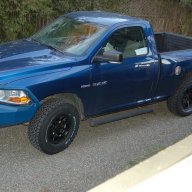
Here ya go brother. Enjoy!
Oil Viscosity is an important decision when choosing your oil, regardless of oil brand. Because all engines are constructed with “very specific” clearances between internal engine components. Those clearances are determined by the engine designers (engineers) and that’s why they give you the recommended oil weight. So why is this important? It’s because internal engine components are cooled by oil “Directly” and cooled by the coolant “Indirectly”. So running a thicker oil than what is recommended is a bad idea in most cases. Because oil “flow” through internal engine clearances is critical for proper lubrication and to pull heat from internal engine components. The engine oil temperature in these areas of the engine can be 50-90 degrees “Hotter” than oil sump temperatures; thinner oils flow better than thicker oils pulling more heat from internal engine components. I tested this by switching from manufacturer recommended 5w20 to 5w30 while canyon racing in the North Georgia mountains, and my oil sump temperatures were 16 degrees “Hotter” on average running the thicker oil. Why? Because thicker oil’s flow “slower” through internal engine components and get hotter, driving up bearing temperatures, reach or exceed the oils thermal stability (more on that below), lubricate less affectively and pull less heat from your engine. Thicker oils do provide options with mechanical noise, but mechanical noise doesn’t necessarily mean there is a problem with the engine; usually just annoys the vehicle owner. In addition, I wrote certified letters to the Dodge Ram manufacturing plant in Mexico, corporate office in Ann Arbor Michigan and corporate office in London United Kingdom and asked them what oil viscosity was recommended specific to the cam and bearing clearances on the 4th gen Hemi. And to my surprise I got a response; they gave me the cam and bearing clearances and only recommend 5w20; no surprise. Engineers know what they’re doing, and they know what oil viscosity is ideal. Bottom line, stick with the recommended oil weight from the manufacturer unless you live/work in extreme cold climates; then thinner oils will serve you better. But if you choose a thicker oil, you need to understand what is happening inside your engine. Thicker oils “Do Not” protect better, oil performance has to do with the base oil and additive package working together.
Now that you understand the importance of oil viscosity let’s talk about the single “Most” important aspect of oil. Anti-wear performance! Your oils anti-wear performance is the most critical job of your oil of choice, and that performance differs wildly between different brands of oil. Doesn’t matter what oil manufactures you choose they “All” say their oil is the best. So where does that leave us? Where do we go to see the difference between oils and how they perform against one another? You, I, most of us end up on the internet forums getting opinions from “Self-Proclaimed” oil experts. They talk about base oil, oil additives, post used oil analysis (UOA) and virgin oil analysis (VOA). Trying to helplessly prove that their oil of choice is better. Or prove some other point that has no relevance on the oils anti-wear performance. So where does that leave us? Were right back to the first and most important issue with oil choice, How Does My Oil Perform against other oils???? There is only one (1) place you can find this information, and the link to the oil testing site is in my signature, and at the end of this post. 216 oils tested and compared by a qualified mechanical engineer, independent, controlled, repeatable oil testing that you Cannot find anywhere else. Your only other option is to listen to some self-proclaimed internet oil expert.
Now that that you can freely scroll through the oil testing site and see how oils compare against one another, and you understand the importance of oil viscosity. Let’s talk about the next important aspect of oil. Thermal Stability! Oil thermal stability is the oils ability to maintain anti-wear characteristics while heated. All oils have a drop in anti-wear performance when heated, but the drop varies wildly from oil to oil. Some drop 2-10% while others have a significant drop 25-30% or more and everywhere in between, this is another important thing to consider when choosing your oil. With that said, were right back to the big question; where can we find information on thermal stability? The internet? The self-proclaimed oil expert? Where? This information can be found on the oil test site along with the anti-wear performance. But first why is thermal stability important? During the brief time interval that oil is flowing through the rod and main bearings, most oils will momentarily reach and exceed their thermal breakdown points; and once any oil, conventional or synthetic, has reached its onset of thermal breakdown point, the lighter oil fractions will begin to vaporize, leaving thicker and heavier oil. This will over time, contribute to poor circulation, reduced fuel economy, increased oil consumption, increased wear and increased emissions. This is something to consider if you believe in extended drain intervals. I’m sure someone will mention the NOACK Volatility Test; oil is heated to 482 degrees F for one (1) hour and test reports results in the percentage, by weight, lost due to “volatilization.” Don’t confuse the NOACK test with thermal stability.
Another highly debated oil topic is “oil additives”. And oil additives differ between oil brands wildly just like thermal stability and anti-wear performance. Aftermarket oil additives like Moly, ZDDP and others, people will debate on the internet with no understanding of how the additive “added” changes the characteristic of the oil when added to the manufactures oil formulations. All the motor oils I have seen have ZDDP in the oil from the manufacture as part of the additive package, adding more ZDDP in the form of an added additive is a bad idea. Check out article 9 on the test site and see 16 oils tested after adding ZDDP additive to the oils, and their anti-wear performance went “Down”. Moly is another highly discussed oil additive and I personally will not run an oil that doesn’t have moly in it, and there are a lot of oils on the market that have None. But I will not add an aftermarket Moly additive to my oil. Simply choose an oil with a robust additive package straight from the oil manufacturer. There are many other oil additives that make up an oils additive package, detergents, anit-foaming and many others that the oil manufacturer puts in the oil as its being formulated. Best thing to do is “Leave The Oil Alone”, chemists and chemical engineers that formulate oil know that they are doing, and, recommend not adding aftermarket oil additives to their oil. See oil additives below:
Silicon = (anti-foaming agent in new oil, but in used oil, certain gasket materials and dirt can also add to this number)
Boron =(detergent/dispersant, anti-deposit buildup/anti-sludge, anti-wear)
Magnesium =(detergent/dispersant, anti-deposit buildup/anti-sludge)
Calcium = (detergent/dispersant, anti-deposit buildup/anti-sludge)
Barium =(detergent/dispersant, anti-deposit buildup/anti-sludge)
Zinc =(anti-wear)
Phos =(anti-wear)
Moly =(anti-wear)
Potassium =(anti-freeze corrosion inhibitor)
Sodium =(anti-freeze corrosion inhibitor)
As stated above, the amount of additive between them all in Parts Per Million (PPM) vary from oil brand to oil brand. You can get a virgin oil analysis (VOA) done on your oil to see the amount of additives in PPM in the oil, or go to The Petroleum Quality Institute of America and look at the VOA’s they have posted. But that tells you nothing about anti-wear performance and nothing about thermal stability. There are some racing applications that can benefit from additives due to short drain intervals.
What’s next? Oil change intervals! Another highly debated topic on the internet, and rightfully so considering the differences between oil formulations. Conventional oils, blends, synthetics, high TBN, low TBN and how hard the oil has been worked needs to be considered when choosing your oil drain interval. Racing applications, heavy towing, off road, high idle time, up and down mountains, TBN all need to be considered. Total Bas Number (TBN) in a nut shell is how robust an oils additive package is, high TBN equals longer drain intervals due to the robust additive package. I personally don’t recommend anything over 5k and do not support extended oil drain intervals. But that is a personal decision. My friend at work has a 1992 F-150 with a straight 6 with over 200k miles, and he has never changed the oil himself, never had any kind of engine failure and is the original owner. Just takes it to the quick lube every 3k because the sticker on the windshield tells him to.
Conclusion; choose a highly ranked oil from the mechanical engineers test site, choose an oil with good thermal stability, stick with the vehicle manufacturers oil weight recommendation (extreme cold exception), leave the oil manufacturers carefully balanced oil additive package alone, change your oil regularly.
The mechanical engineer has a questions and answer section where you can ask questions, and get a qualified answer from a qualified person.
Credit: Mechanical Engineer Rat 540
Note: Most of this post I personally typed, but there are a few sentences I copied from the test site to articulate correct information. Test vehicle for the oil viscosity test I did was a 2013 RCSB Dodge Ram 5.7 Hemi.