crazy jerry
Senior Member
different springs and shocks wont get rid of expansion joint buck but 500lb in the bed probly will


Disclaimer: Links on this page pointing to Amazon, eBay and other sites may include affiliate code. If you click them and make a purchase, we may earn a small commission.

 youtu.be
Again dude, that's the purpose of designing/installing correct springs/spring rates...the PW was designed to be capable offroad, of course, but it's still a passenger truck and it should ride devent on pavement as well. Not being able to hold a conversation because the freeway ride is so jarring, is not my definition of "a decent ride". It's a crap engineering job...for the 3rd time, glad you're ok with mediocre.start the video at 2:30 and it should make it clear why these trucks drive the way they do
Unsprung weight & Suspension performance (MTB Rear Ep. 22)
Heavy unsprung weight can affect the suspension performance by reducing the contact between tires and ground over bumpy surfaces. Learn more in this video wi...
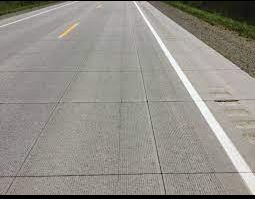
1" boards? I think you may have misread the post...i'm referencing expansion joints in concrete, on freeways, Spaced roughly 10-15ft apart (I haven't stopped in the middle of a freeway to measure them)When Ram built Power Wagons, they never expected that anyone would be driving over a series of 1" boards evenly placed on a flat surface at any speed over 40 mph
You are likely experiencing what is referred to as ' Kick Out '
What seems to be happening was the rear tires were actually unloading to the point the rear tires would move over and the stock shocks couldn't react fast enough to keep them planted
Death Wobble and the truck kicking sideways are not 2 in the same,
death wobble applies to a loose or worn front end part that starts a chain reaction of un controllable vibration of the front wheels/tires.
To me, it sounds like either you add weight, get stiffer shocks or slow down on bridges, which we all know is not going to happen

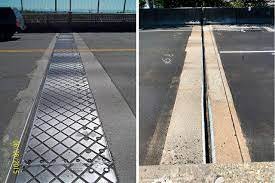
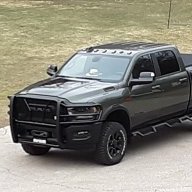
Similar, indeed. Just running left to right across highway and Spaced about 10-15ft apart. I'll try to snap a photo tomorrow@Vandy321 I am wrong, you are talking about something like this ?
Road I drive on, has in some areas like below picture.
Also in other areas, it has small strip of metal between different sections of concrete.
View attachment 473285
Perhaps, you are using the incorrect term for what you are trying to describe
An Expansion Joint is used on bridges
Bridge expansion joints are designed to adjust its length accommodating movement or deformation by external loads, shrinkage, or temperature variations, and allow for continuous traffic between bridge structures and interconnecting structures (another bridge or abutment).
What you may be trying to describe is what happens to concrete slabs over a period of time.
Heavy vehicles like loaded semi trucks drive down the highway & whether we realize it or not, they set up a bouncing motion.
That motion when combined with rain going down in between the concrete slabs causes mud, for lack of a better word.
The truck comes along & pounds on the beginning of the concrete slab, pushing it down. meanwhile at the far end of the slab, a bit of gravel slides under the temporarily lifted slab, , each time something heavy drives over that slab over a period of years.
Over time, the leading edge of each slab pushes down & the far end of the slab lifts.
At some point, usually during the night, a construction company will come in & try to grind the concrete slabs back to level again.
We had a highway that got so bad that they actually slowed the speed limit temporarily, until they could let out bids to do the grinding
Nothing but slowing down will make your ride smoother, in that situation
Well don't get in accident. But those are what cause my Rebel to bounce, and other vehicles had no issues.Similar, indeed. Just running left to right across highway and Spaced about 10-15ft apart. I'll try to snap a photo tomorrow
There's gotta be a fix with spring rates and shock tunes...its just surprising to see so many folks be so accepting of this. I'm not one to exaggerate, the hop is borderline violent, think washboards on forest service road, at 60+
Perhaps, you are using the incorrect term for what you are trying to describe
An Expansion Joint is used on bridges
Bridge expansion joints are designed to adjust its length accommodating movement or deformation by external loads, shrinkage, or temperature variations, and allow for continuous traffic between bridge structures and interconnecting structures (another bridge or abutment).
What you may be trying to describe is what happens to concrete slabs over a period of time.
Heavy vehicles like loaded semi trucks drive down the highway & whether we realize it or not, they set up a bouncing motion.
That motion when combined with rain going down in between the concrete slabs causes mud, for lack of a better word.
The truck comes along & pounds on the beginning of the concrete slab, pushing it down. meanwhile at the far end of the slab, a bit of gravel slides under the temporarily lifted slab, , each time something heavy drives over that slab over a period of years.
Over time, the leading edge of each slab pushes down & the far end of the slab lifts.
At some point, usually during the night, a construction company will come in & try to grind the concrete slabs back to level again.
We had a highway that got so bad that they actually slowed the speed limit temporarily, until they could let out bids to do the grinding
Nothing but slowing down will make your ride smoother, in that situation
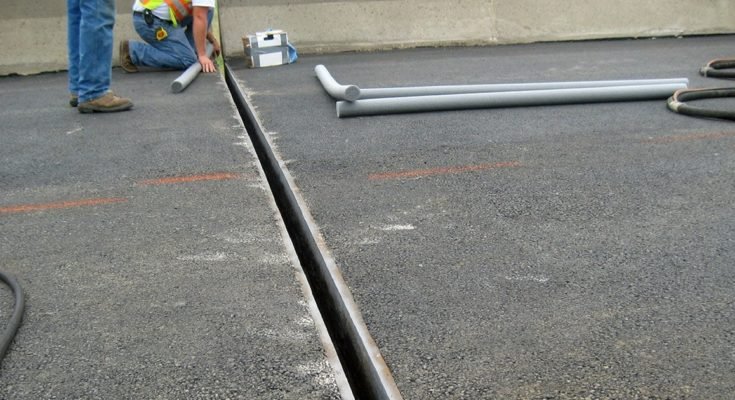


View attachment 473289
That is not solid ground under the area shown in the image, that is the beginning of a bridge or large culvert
In 33 years of working on highways, we never shoved rubber tubing between concrete slabs on compacted soil or asphalt.
Usually when a concrete highway is laid, there are no joints. After the concrete dries they Saw Cut the joints
There's gotta be a fix with spring rates and shock tunes...