
New Turbo 4 to start displacing the Pentastar

Disclaimer: Links on this page pointing to Amazon, eBay and other sites may include affiliate code. If you click them and make a purchase, we may earn a small commission.

ugkujhgthg-1536x864.webp


Starting with the Jeep Grand Cherokee:


  • Stellantis unveils the all-new Hurricane 4 Turbo engine.
  • It produces 324 hp, 54 hp more than the current V6.
  • Supports hybrid, plug-in hybrid, and standard setups.
Jeep introduced the 2026 Grand Cherokee earlier today, and it ushers in an all-new turbocharged 2.0-liter four-cylinder engine. It’s more powerful and fuel-efficient than the 3.6-liter Pentastar V6, and it will eventually show up in other models.

Some interesting features, including a pre-chamber combustion design and both direct and port injection.

Another wait and see if they can make it work from a durability/longevity standpoint motor to me, but hopefully it works out.
 

tjfdesmo

Senior Member
Joined
Apr 15, 2014
Posts
2,860
Reaction score
5,580
Location
AZ
I'd prefer the Pentastar over the turbo any day, and I'm not a huge fan of the Pentastar
In the West where we see some high elevation, NA engines get really wheezy. The Pentastar in our GC definitely feels lazy even at only 7K feet on the way to Flagstaff, and there are much higher passes where boost is your friend.
 
OP
OP
Docwagon1776

Docwagon1776

Senior Member
Joined
Mar 16, 2012
Posts
4,758
Reaction score
10,198
Location
Midwest
Ram Year
2012, 2021
Engine
5.7, 6.4
This looks like an upgraded version of the 2.0 thats in most of the new Wranglers...

I think it is, but don't know that for a fact. If it is, it was originally an Alfa Romeo engine, then to Jeep. In some foreign markets it's been put in the Grand Cherokee already, so it's not a leap that it's the same motor with an update coming to the US market.

*edit*
Alfa also paired it with an electric motor in some applications, I wouldn't be surprised to see that coming to the US as well in future Jeeps. I'm still not convinced Stellantis has the expertise to make that work well, though.
 

Rustywallace

Member
Joined
Jul 18, 2025
Posts
37
Reaction score
56
Location
WI
Ram Year
2026 1500 Bighorn Night 3.92
Engine
5.7
GM has a Turbo-4 and it's been pretty successful. Could be interesting.
Yes, but I think that’s a pretty big difference between 2.7 vs 2.0. The only way I personally could see longevity from this platform is if it’s used in tandem with hybrid systems.
 

huntergreen

Senior Member
Marine Corps Navy Badge
Joined
Jan 5, 2011
Posts
13,089
Reaction score
28,509
Ram Year
2016
Engine
hemi 5.7
I think it is, but don't know that for a fact. If it is, it was originally an Alfa Romeo engine, then to Jeep. In some foreign markets it's been put in the Grand Cherokee already, so it's not a leap that it's the same motor with an update coming to the US market.

*edit*
Alfa also paired it with an electric motor in some applications, I wouldn't be surprised to see that coming to the US as well in future Jeeps. I'm still not convinced Stellantis has the expertise to make that work well, though.
Electric motors in a wrangler that are often used to cross streams . This should be interesting .
 
Last edited:

Forsakentalon

Senior Member
Joined
Mar 28, 2019
Posts
101
Reaction score
139
Location
Iowa
Ram Year
2017
Engine
5.7
It's had a lot of failures too. Don't like the trend of big vehicles and small engines. Turbo'd engines turning high RPM's aren't good for longevity, especially in big vehicles.
What high rpms? I have a 24 gm turbo 4 and it knocks the socks off my 4.7 and 5.7 while towing.

My rams would spin up to 5k-6k rpms while dropping down to 50mph to pull a 4k lb camper up hills.

The gm turbo 4 spins all the way up to 3500rpm while holding 72mph pulling the same camper up the same hills.

That turbo 4 is a gasoline operated diesel engine! It did have hardware updates in 22 so I would not buy before that date.

The rams though cannot keep up. Especially because both had lifter failure at 70k miles with 3k mile oci.

When not towing the rams might be peppier. But put a load behind them and the rams get their asses handed to them by the Chevy.
 

HEMIMANN

Senior Member
Joined
Dec 7, 2020
Posts
9,591
Reaction score
25,215
Location
Minneapolis, MN
Ram Year
2017 2500 Laramie Crew Cab
Engine
6.4L HEMI
Add in pre-ignition concerns mean pulling timing, which means even more fuel needed to make the same power, which makes more heat, and it spirals. It's why the Hurricane HO has a lower tow rating than the SO, can't shed heat fast enough to maintain that (admittedly insane for the displacement) amount of power while the dumb ol' 6.4L BGE will chug along at high demand without meltdown.

This one should not have LSPI because it properly has dual injectors - port for rich burn (loads), direct for lean burn (coasting/idling).

That said, new design is 90% perspiration, the part where Chrysler usually failed, and Stellantis has always failed. This is tech at the holy alter of EPA CAFE mileage increase regulations.
 
OP
OP
Docwagon1776

Docwagon1776

Senior Member
Joined
Mar 16, 2012
Posts
4,758
Reaction score
10,198
Location
Midwest
Ram Year
2012, 2021
Engine
5.7, 6.4
Electric motors in a wrangler that are often used to cross streams . This should be interesting .

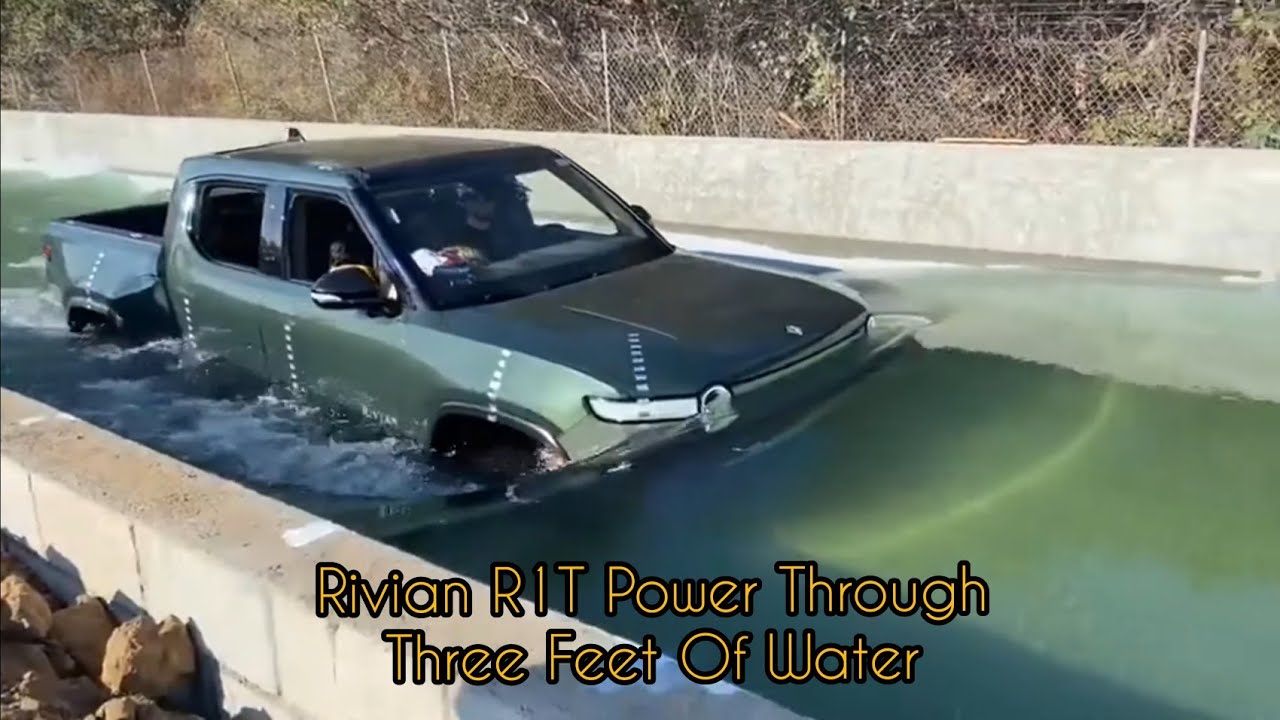
Rivian has a fording depth of right at 40". The limit isn't even about the electric motors, it's about buoyancy and maintaining enough weight on the tires to keep get traction.

Here's 3 feet of water:

 
OP
OP
Docwagon1776

Docwagon1776

Senior Member
Joined
Mar 16, 2012
Posts
4,758
Reaction score
10,198
Location
Midwest
Ram Year
2012, 2021
Engine
5.7, 6.4
This one should not have LSPI because it properly has dual injectors - port for rich burn (loads), direct for lean burn (coasting/idling).

That said, new design is 90% perspiration, the part where Chrysler usually failed, and Stellantis has always failed. This is tech at the holy alter of EPA CAFE mileage increase regulations.

What about regular ol' high load steady speed pre-ignition due to heat build up? Does the dual injection system help move the needle there, or does it not matter for that condition?
 

HEMIMANN

Senior Member
Joined
Dec 7, 2020
Posts
9,591
Reaction score
25,215
Location
Minneapolis, MN
Ram Year
2017 2500 Laramie Crew Cab
Engine
6.4L HEMI
What about regular ol' high load steady speed pre-ignition due to heat build up? Does the dual injection system help move the needle there, or does it not matter for that condition?

No, LSPI is during the transition from lean burn idle to rich burn high load acceleration. It's not a function of heat build up, it's a function of using a single direct injector. Well yes, if your cyclinder is all carboned up from never cleaning your the engine cylinder (i.e. - not using Top Tier gas regularly, and occasionally dumping a bottle of PEA in the fuel), you could get cylinder carbon hotspots also. But again, that's because a single direct injector is used. It has to over fuel in rich burn mode because there's not enough time to vaporize all the gasoline in the power stroke, as opposed to injecting gasoline during the intake stroke with almost an entire engine revolution to vaporize the fuel.

Having a single injector in the cylinder is like running with a carburetor choke partially closed all the time when accelerating. I just proved it via the Amsoil Lab Service showing moderate fuel dilution in the engine oil @ oil change time, where there is none in a port fuel-injected engine.

So - while it's critical to change Hemi engine oil frequently to minimize potential oil galley orifice flow restriction in a marginally oiled engine, it's equally important to change GDI single injector oil frequently due to fuel and soot dilution of the engine oil.
 
OP
OP
Docwagon1776

Docwagon1776

Senior Member
Joined
Mar 16, 2012
Posts
4,758
Reaction score
10,198
Location
Midwest
Ram Year
2012, 2021
Engine
5.7, 6.4
No, LSPI is during the transition from lean burn idle to rich burn high load acceleration. It's not a function of heat build up, it's a function of using a single direct injector.

I get that, I'm not asking about LSPI. I'm asking if the motor can run hotter without pre-ignition risk under steady state high load demands as a result. I also get that at some point, pre-ignition is a given regardless of injection type. I'm just curious if the fine control allowed here moves that needle at all, if you know.
 

HEMIMANN

Senior Member
Joined
Dec 7, 2020
Posts
9,591
Reaction score
25,215
Location
Minneapolis, MN
Ram Year
2017 2500 Laramie Crew Cab
Engine
6.4L HEMI
I get that, I'm not asking about LSPI. I'm asking if the motor can run hotter without pre-ignition risk under steady state high load demands as a result. I also get that at some point, pre-ignition is a given regardless of injection type. I'm just curious if the fine control allowed here moves that needle at all, if you know.

Well yes, but then the ignition timing has to get pulled - so the turbo on a spark-ignited engine is very limited in what it is allowed to do.

I'm always amazed how they keep a top fuel drag engine together when running the high levels of blower boost they do without detonating. Maybe top fuel nitromethane has an octane rating over 100? I know wife's Mazda turbo 4 requires high octane pump gas for just this reason - to be able to use the boost from the turbo to yield higher cylinder pressure/power. Temp comes with pressure: PV=nRT For a constant volume cylinder size and air capacity, P=T
 

ts27330

Member
Joined
Sep 13, 2014
Posts
57
Reaction score
45
Ram Year
2014
Engine
V6 3.6
ugkujhgthg-1536x864.webp


Starting with the Jeep Grand Cherokee:


  • Stellantis unveils the all-new Hurricane 4 Turbo engine.
  • It produces 324 hp, 54 hp more than the current V6.
  • Supports hybrid, plug-in hybrid, and standard setups.
Jeep introduced the 2026 Grand Cherokee earlier today, and it ushers in an all-new turbocharged 2.0-liter four-cylinder engine. It’s more powerful and fuel-efficient than the 3.6-liter Pentastar V6, and it will eventually show up in other models.

Some interesting features, including a pre-chamber combustion design and both direct and port injection.

Another wait and see if they can make it work from a durability/longevity standpoint motor to me, but hopefully it works out.

Yep - All that adds up to the bad side of things here.

It's been said before - "There is no substitute for cubic inches" and a larger displacement engine always does better under these conditions.

The exact displacement of a Hurricane engine is 183 cubic inches, which is only 13 cubes more than what I had in my old 64 Falcon 4-door that really didn't have alot of power to begin with.
In the case of my Pinto, the 2.3 turbo made plenty of power and was properly built for it too, also had it in a vehicle suitable for it in terms of size and weight but even then I had to be careful at times with it.
If I was driving it around normally it did quite well as a daily and was really good on gas too - Loved that about it!

A Hurricane, being of such a small displacement with potential for running hotter than the sun under the conditions it's setup for will run hot(ter) due to the fact it's turbo'ed and that's just asking for trouble long-term.

One thing that can happen is the oil in the engine could get hot enough it actually loses viscosity and thins out, in turn making the engine lose oil pressure and a turbo's bearings are NOT a fan of that at all..... In fact every bearing in the engine is like "Nope - Can't do that".
And you know what comes next.....

The company is trying to do several things at the same time here, with different reasons for each thing about it and it's adding up to nothing but trouble for "Us", the ones paying for and driving these around.
I'll keep my 5.7 truck and keep riding for as long as it will go.
My 2014 V6 is rated 305hp. How do they figure 54 more hp?
 
OP
OP
Docwagon1776

Docwagon1776

Senior Member
Joined
Mar 16, 2012
Posts
4,758
Reaction score
10,198
Location
Midwest
Ram Year
2012, 2021
Engine
5.7, 6.4
My 2014 V6 is rated 305hp. How do they figure 54 more hp?

Current GC is 293 hp, but still the math doesn't math. My guess is they either can't do basic math or they compared it to the 3.2L for some reason, despite it not being a GC motor (and still missed it by 1). Go figure, the media got something basic wrong.
 

Deltron

Junior Member
Joined
Jan 31, 2024
Posts
12
Reaction score
13
Location
Sierra Vista
Ram Year
2021, 2022
Engine
5.7, Cummins
As long as you keep the oil changed like you should a turbo engine like what you had or even what I had does fine.
However a Hurricane or these turbo 4's are a different story because the truck body is already heavy due to it's size and on top of that it's expected to haul/pull a load too.

Similar thing when GM decided to drop a 4.3 in a full sized pickup designated as a work truck model - Good engine, just wasn't "Right" for what they had it in because you know some of those had tool bodies loaded full of stuff and so on.
You literally couldn't kill the 4.3 though. Bought dozens of work trucks with it for my business. The trucks would fall apart and rust out around 300k or so but the engines still ran well.
 

Dusty

Senior Member
Joined
Jun 6, 2013
Posts
2,103
Reaction score
2,865
Location
Rochester, New York
Ram Year
2019
Engine
5.7 Hemi
Maybe i missed something, but by my reading there's no suggestion of putting the new Hurricane 4 into a Ram. Seems its destined for many Jeep model and cars.

Regards,
Dusty
2019 Ram 1500 Billet Silver Laramie Quad Cab 2WD, 5.7 Hemi, 8HP75, 3.21 axle, 33-gallon fuel tank, 18” wheels. Build Date: 3 June 2018. Now at 141040 miles.
 

rvance

Senior Member
Joined
Nov 18, 2013
Posts
480
Reaction score
548
Location
Texas
Ram Year
2017
Engine
Pent 3.6
I'm on my 2nd Pentastar Ram and I love that engine. It's perfect for my needs. I am old enough to have set opinions on turbocharged engines and they aren't good. But I would love to have a supercharged Pentastar.
 
Back
Top