Random Car Picture Thread

Disclaimer: Links on this page pointing to Amazon, eBay and other sites may include affiliate code. If you click them and make a purchase, we may earn a small commission.
Wild one

Senior Member
Joined
Jan 17, 2016
Posts
23,670
Reaction score
54,354
Ram Year
14 Sport
Engine
5.7
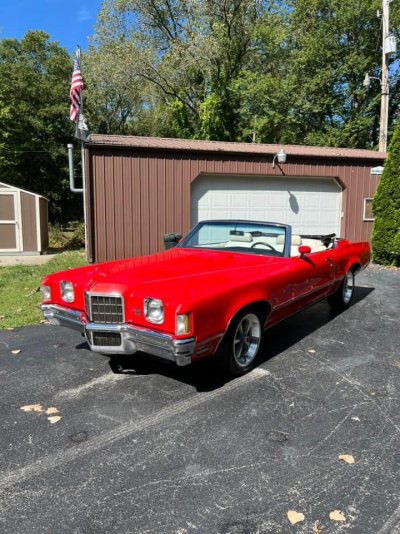
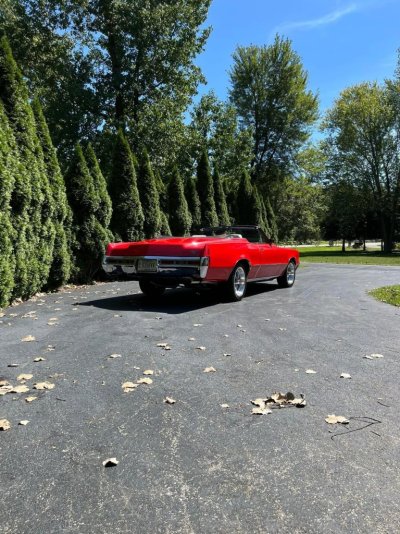
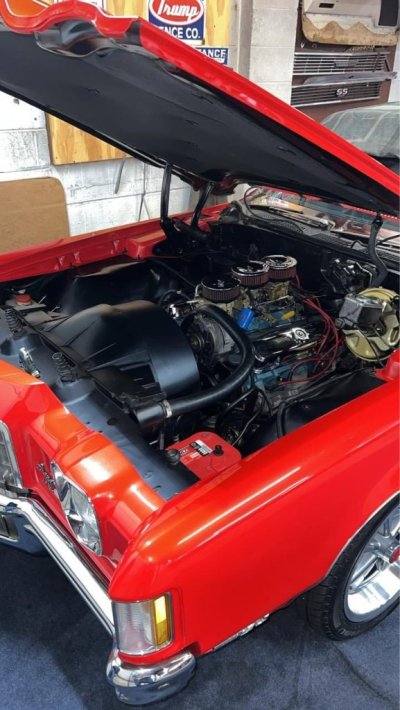
The owners manual for my old 79 Gran Prix still showed how to shift a 4 speed,but i've never actually seen one with a factory 4 speed.I did run into a 79 Lemans that was a factory 301 car with the 4 speed, but that's the only one i've ever seen with a 301 and 4 speed. I got alot of parts off a 69 428HO Gran Prix,that was in a local wrecking yard in the mid 80's,like heads /intake/exhaust manifolds etc,that was a factory 4 speed car with 4.11's in it,for my little 79 that i'd stuffed a HO400 out of a 71 Gran Prix into.I found the build sheet under the rear seat for that old 428 Gran Prix,and who ever had ordered it,knew what they were ordering,as the car had really no options except the engine/transmission and 4.11 gears,in it's heyday,it would of been a hell'va sleeper Gran Prix
 
OP
OP
Treburkulosis

Treburkulosis

Glorified Car Washer
TOTM Winner
Joined
Mar 21, 2016
Posts
7,520
Reaction score
12,543
Location
Haslet, TX
The owners manual for my old 79 Gran Prix still showed how to shift a 4 speed,but i've never actually seen one with a factory 4 speed.I did run into a 79 Lemans that was a factory 301 car with the 4 speed, but that's the only one i've ever seen with a 301 and 4 speed. I got alot of parts off a 69 428HO Gran Prix,that was in a local wrecking yard in the mid 80's,like heads /intake/exhaust manifolds etc,that was a factory 4 speed car with 4.11's in it,for my little 79 that i'd stuffed a HO400 out of a 71 Gran Prix into.I found the build sheet under the rear seat for that old 428 Gran Prix,and who ever had ordered it,knew what they were ordering,as the car had really no options except the engine/transmission and 4.11 gears,in it's heyday,it would of been a hell'va sleeper Gran Prix
To the best of my knowledge I do not think the 71-72 Grand Prix cars had the option for a 4 spd. If they did I have never seen one. That car was converted. That was what was great about cars of that era. Lots of stuff interchange. They stopped doing that and it kinda got annoying. I have heard the 428 HO was a pretty stout motor.
 
OP
OP
Treburkulosis

Treburkulosis

Glorified Car Washer
TOTM Winner
Joined
Mar 21, 2016
Posts
7,520
Reaction score
12,543
Location
Haslet, TX
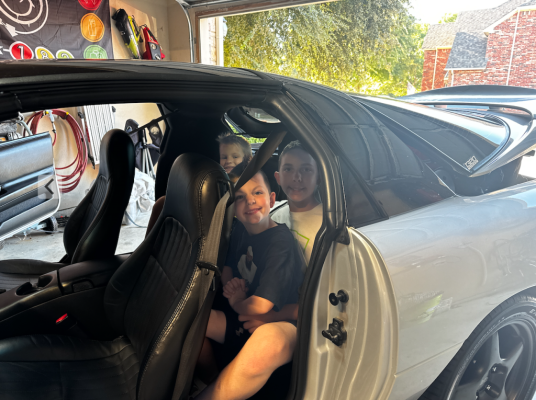
Can we get it all in the car and drive in the tunnel and up to the show at Good guys tomorrow? 5 chairs, a pack of water, my display, a pop up tent, weights, food, a big ice chest, a soft side ice chest full of gatorade, a nitrous bottle, and a Partridge in a Pear Tree.

Screen Shot 2024-09-28 at 2.03.56 PM.pngScreen Shot 2024-09-28 at 2.04.07 PM.png
 

jawzs2

Senior Member
Air Force
Joined
Mar 24, 2014
Posts
2,905
Reaction score
5,379
Location
South Jersey
Ram Year
2010, 2014
Engine
1500, 3500
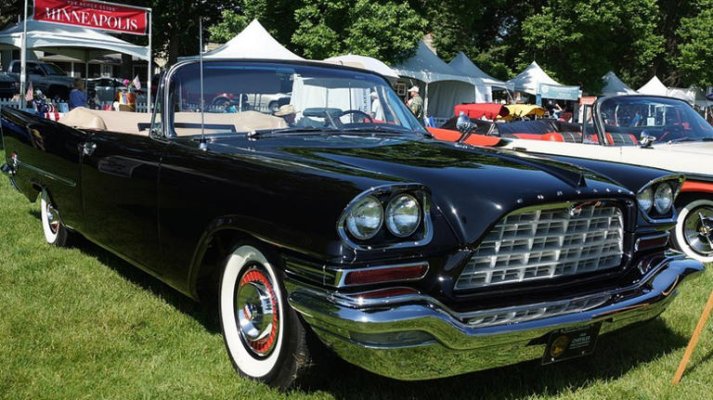
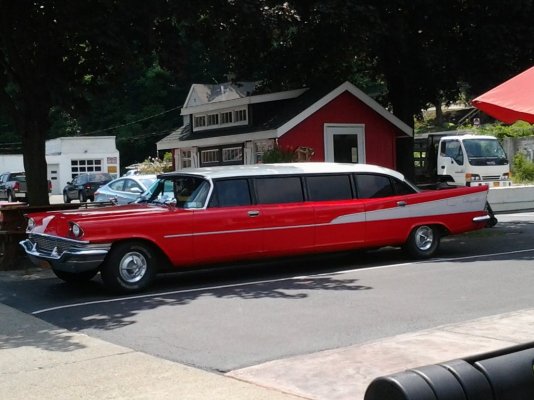
The' 57 - '58 letter series are one of, if not the, favorite of mine.

Shamelessly plagiarized from the original article;

You could order a 300-D with a 390-horsepower Hemi V8 engine, which would be the ultra-rare model because it was the first car to be offered with electronic fuel injection. The Bendix Electrojector used most of the same sensors we have today to function, including an array of sensors and an electric fuel pump.

It functioned using a transistorized computer -- which meant that it lacked a microchip as in modern systems -- that was made up of capacitors, transistors, and other electrical components. However, it was delicate, and engineers failed to test it in real-world conditions. The Bendix system performed poorly to the point that all 35 cars ordered with this option were recalled and retrofitted with carburetors. This makes an all-original fuel-injected 1958 Chrysler 300-D the rarest Chrysler there is, and you are guaranteed not to see one with all of its original equipment.


300-D.jpg
300-D.2.jpg
 

Wild one

Senior Member
Joined
Jan 17, 2016
Posts
23,670
Reaction score
54,354
Ram Year
14 Sport
Engine
5.7
To the best of my knowledge I do not think the 71-72 Grand Prix cars had the option for a 4 spd. If they did I have never seen one. That car was converted. That was what was great about cars of that era. Lots of stuff interchange. They stopped doing that and it kinda got annoying. I have heard the 428 HO was a pretty stout motor.
There was a 71 with a 400 and 4 speed that was featured in a hotrod mag years ago.But i don't remember if anything was said in the article about it being a factory 4 speed car.
Well it looks like they did offer a 4 speed in the 71 Gran Prix's


See All 11 Photos
It isn't often an auto manufacturer can dominate the new-car market with the introduction of a new model. But Pontiac did just that in 1964 with the GTO and again in 1969 with the redesign of the personal luxury car-the Grand Prix. The fresh styling lasted a few years before another redesign in 1973, which fostered even greater attention for the flagship model.


While most Pontiac hobbyists have no trouble distinguishing the Grand Prix from other Pontiac models, many are unfamiliar with the details that differentiate one model year from another. Our three-part series will take a closer look at how the Grand Prix evolved from 1969 to 1972 (including the SSJ) and then from 1973 to 1977, as well as discussing some detailed production numbers.

EvolutionThe Grand Prix was introduced in 1962 and built on the Catalina platform. Its image was one of personal luxury and performance with an understated appearance. Aimed at older, more affluent buyers, the Grand Prix was subdued, lacking much of the bright chrome found on other models. With several standard amenities that were otherwise optional on the Catalina, it was also more expensive. Drivetrain options even included the Super Duty 421 engine and a four-speed manual transmission, which meant one could produce a Grand Prix that was every bit as potent as its toughest competitor.

As years progressed, nearly every GM vehicle grew in size-and the Grand Prix was no exception. The additional weight negatively affected performance and handling. And a major redesign for 1967 produced a Grand Prix that shared little with what it was just a few years before. By 1968, Grand Prix sales figures had dipped below 32,000 units. Amid the increasing popularity of musclecars, the larger Grand Prix was doomed for extinction if drastic changes were not in its future.


During much of the '60s, Pontiac had been third in sales in the industry. The company was also well known for its trendsetting concepts. As the late-'60s performance-car market swayed heavily toward the intermediate and midsize platforms, Pontiac General Manager John DeLorean worked closely with design engineers to create an intermediate-sized Grand Prix for 1969 that was classy, luxurious, and sporty. He envisioned the new Grand Prix as the Duesenberg of its day, even designating the entry model "Model J" and the high-performance model "Model SJ" in Duesenberg fashion. It was with this that DeLorean saw Pontiac's newest trendsetter-but he left Pontiac shortly thereafter when he was promoted to general manager of the larger Chevrolet division.

1969The '69 Grand Prix was designed as a two-door hardtop model on an extended two-door A-body chassis similar to that of the four-door LeMans. Its wheelbase, however, was extended to 118 inches (as opposed to 116 inches for the four-door LeMans), but its body was 4 inches shorter than the four-door LeMans. The platform was designated G-body, and several Duesenberg-type styling cues were incorporated into it, including the traditional long-hood/short-deck theme. DeLorean also wanted the Grand Prix to have the longest hood in the industry-and Pontiac advertising made sure that this was a well-publicized fact.

Its interior resembled a cockpit with wrap-around styling, and its instruments and switches were angled toward the driver. Plush bucket seats; a center console; and a floor-shifted, three-speed manual transmission were all standard. This new model also incorporated such state-of-the-art equipment as a heated-glass rear window defroster and a windshield-mounted radio antenna. The concealed antenna consisted of wires that were captured between the two laminated panes of windshield glass, giving the Grand Prix an entirely uninterrupted exterior.

Find a car near you
The new Grand Prix was introduced into a fiercely competitive new-car market where GM divisions were even searching for ways to get a jump on one another. In Pontiac's instance, they withheld publicizing the new Grand Prix until the last moment, which prevented other divisions from preparing competitive models. Once released, the Grand Prix was an immediate success with buyers and magazine writers alike. It even received Car Life magazine's prestigious Engineering Excellence Award for 1969-an award that hadn't been presented in either of the two previous model years.

Standard under the Grand Prix's massive hood was the 400 four-barrel engine with 10:1 compression, rated at 350 hp. It was backed by a standard three-speed manual transmission, while a four-speed manual and Turbo 400 were available at extra cost. Those buyers concerned with fuel economy or burning regular fuel could opt for the 265hp 400 with 8.6:1 compression and two-barrel carburetion at no extra cost. It was, however, only available with the Turbo 400.

Even with the sporty attitude of the Grand Prix Model J, one option gave buyers the chance to create the ultimate performance-oriented, personal-luxury vehicle. By selecting UPC Y97 on the order form and adding $244 to the window sticker, the Model J was transformed into the Grand Prix Model SJ boasting of several items that were otherwise optional, including a 370hp, 428ci engine with 10.5:1 compression; Rally gauges; a custom lamp group; an automatic leveling suspension; G78-14 white-lined tires; a heavy-duty rear axle; and specific SJ identification.


Those wanting to create the ultimate high-performance Grand Prix could opt for the L79 428 H.O. Boasting a 10.75:1 compression ratio, the 428 H.O. was rated at 390 hp and featured high-flow exhaust manifolds, a 273/289- or 288/302-degree camshaft, depending upon transmission type, and revised distributor and carburetor settings. Available on the J for $177 or on the SJ for $119, the H.O. engine could be had with either an automatic or manual transmission-but air conditioning was not available with the manual. When combined with axle ratios as deep as 3.90:1, vintage performance tests indicate that a 428 H.O.-powered Grand Prix was a solid, low-14-second quarter-mile performer.

The '69 Grand Prix was a major success, generating large amounts of showroom traffic and magazine exposure. Model-year production totaled 112,486 units-an increase in excess of 80,000 units from the previous year, which included 101,403 Model J and 11,083 Model SJ models. It appears that a total of 1,105 428 H.O. engines were installed-986 of which were backed by the Turbo 400. And 1,014 Grand Prixs received a manual transmission.


See All 11 Photos
 
Last edited:

Wild one

Senior Member
Joined
Jan 17, 2016
Posts
23,670
Reaction score
54,354
Ram Year
14 Sport
Engine
5.7
1971The Grand Prix received some significant design changes for 1971. The most notable included single headlights that replaced the previous dual-style treatment, a new decklid with pronounced boat-tail styling, and new bumpers front and rear. Interior changes were limited, but the same overall theme was retained. It seemed as if excitement about the Grand Prix was peaking. Enthusiasm regarding what was underhood was another story, however.

General Motors imposed a compression-ratio restriction on all divisions for 1971. By limiting the ratio to a maximum of 8.5:1, engines could operate on lower-octane unleaded fuels, ultimately reducing tailpipe emissions. However, the reduction negatively affected engine output. If that weren't enough, a new method of net rating output-which more closely represented actual engine output when installed in a vehicle with all accessories connected and operating in normal underhood conditions-made it seem as if the '71 engines were mere shadows of their former selves.

The 400 four-barrel remained the standard powerplant in the Grand Prix Model J, but its new 8.2:1 compression ratio caused its gross horsepower rating to slip to 300. Its net rating was 255 hp-or what appeared to be nearly 100 less than the 1970 offering. As in previous years, the three-speed manual transmission was standard, while the four-speed manual and Turbo 400 remained extra cost options. Rated at 325 gross and 260 net horsepower, the 455 four-barrel was no longer available with a manual transmission. And the 400 two-barrel was cancelled.

For 1971, the SJ package retailed for $195 and again included such items as the 455 four-barrel engine, Rally gauges, custom lamp group, and specific SJ identification. There were, however, a few new features in the package such as vinyl accent stripes, body-colored sport mirrors, and the Delco X battery-a high-tech unit that was completely sealed and required no periodic maintenance while offering higher power reserves.

As promising as 1971 looked for the Grand Prix, the UAW launched a massive strike on September 14, 1970, that halted vehicle production at every GM assembly plant across the country-including the three that built Grand Prixs. Sixty-seven days later, the strike was officially resolved, but it took some plants several weeks after that to resume production. The Grand Prix's Lakewood, Georgia, plant, for one, sat idle until January 29, 1971, greatly affecting availability.


See All 11 Photos

Once production was back in full force, a running change to standard equipment was made midyear. Sales Information Bulletin 71-16 was issued on April 23, 1971, announcing the cancellation of the manual transmission on several models including the Grand Prix. It stated the Turbo 400 would become the only transmission available on vehicles in the affected model lines shipped on or after May 1. It went on to add that base prices would be changed accordingly.

Production records indicate that just 116 manual transmissions had been installed into Grand Prixs up to that point (64 400 three-speeds and 52 400 four-speeds), so sluggish sales may be partially responsible for the midyear cancellation. But the 67-day strike and resumption delays caused total production to dip to just 58,325 units for the model year. The Model J represented 53,441 of those, while 4,884 SJs were produced. Another 2,365 455 four-barrel engines were installed in Grand Prix Js.

1972Major changes to the A- and G-body platforms were scheduled for 1972. But because of the lengthy UAW strike the previous year, the changes were delayed and the '72 model year was a virtual carryover for the Grand Prix. Like 1969 to 1970, the '72 Grand Prix saw little more than minor changes to areas like the grille and taillights. Interior and drivetrain combinations remained much the same. Gross horsepower ratings, however, were no longer published.

The SJ package retained all the same components from 1971, but a new option was limited to the Grand Prix Model SJ only. As we learned in the article "Unitized Ignition, Anyone?" that appeared in the March '04 issue of HPP, the K65 Unitized Ignition was a self-contained, breakerless distributor that was virtually maintenance-free. Grand Prix advertising claimed that when Unitized was ordered, it, along with the Delco X battery and integral charging system, gave the Grand Prix SJ an entirely maintenance-free electrical system-with the exception of normal spark plug replacement. Production records indicate that 4,618 buyers purchased this $75 option.

Another Grand Prix option to emerge during the '72 model year was a radial tire package. Until this point, bias-belted tires and 14-inch wheels were standard. But on February 16, 1972, Car Distribution Bulletin 72-70 was issued stating that a package containing white-lined radial tires, 15-inch wheels with deluxe wheel covers, and special suspension components was available for $148. It added that when Rally or Honeycomb wheels were ordered with the radial-tire package, 15-inch units were supplied.

Production for 1972 increased over 30,000 units from the previous year to a total of 91,961-all of which were equipped with the Turbo 400. Of that total, 82,563 were Grand Prix Model Js. Including the 9,398 SJs, the 455 four-barrel engine was installed into a total of 13,560 Grand Prixs. In all, just 1,024 Grand Prixs rolled off the assembly lines with radial tires. It's unclear how many of those received 15-inch Rally II or Honeycomb wheels.

ConclusionAlthough the Firebird and GTO were the division's hard-core performance models, they were considered by many as young-adult vehicles with high insurance premiums. The Grand Prix was much more elegant and nearly as sporty, but it wasn't within everyone's budget-which made owning one prestigious.

Next time we'll take a closer look at the special Hurst-derived SSJs.
 
Back
Top