As mentioned in one of the earlier sections, clear coat paints became popular in part due to their higher UV stability and resistance. Single stage paint jobs were prone to oxidation and fade - if you've ever seen an old red lacquer paint job that has turned to a chalky pink you can understand why a more stable, UV resistant paint system was needed. This ability to withstand UV rays comes from blockers mixed in with the clear coat when it is applied, but these blockers have a tendency to migrate to the upper portions of the clear - paint sinks and the blockers rise as the clear coat hardens.
While there are conflicting bits of information on this its generally accepted that the UV blockers reside in the upper 25%+/- of the clear coat. As such its recommended that clear coat removal be limited to no more than 25% of the total thickness, at least in order to preserve that UV stability.
Referencing our original example - 50.8µ to start - removal of 25% would put the remaining clear around 38.1µ and as luck would have it in our example 7 years of average care after one initial major correction would leave you with 38.3µ... 0.2µ more than the recommended minimum to maintain the UV protection.
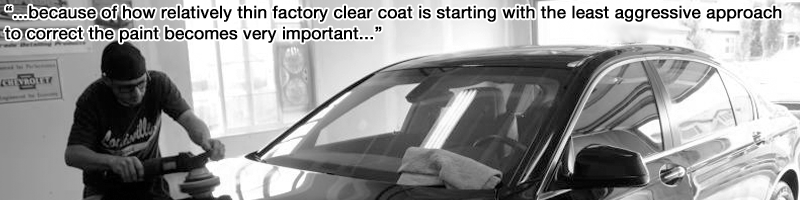
In the end this illustrates one very simple point - if you're already following good detailing processes, minimizing damage introduction wherever you can and sticking to the rule that you should always use the least aggressive method to get the job done, then DON'T CHANGE A THING! You're already doing everything the way you should be.
On the other hand, if you're one of those guys who skips the maintenance in favor of heavy corrections more frequently you may be flirting with disaster. It also is imperative for those who call detailing their profession to educate their customers on the limitations of correction and the importance of proper paint care in between corrections.

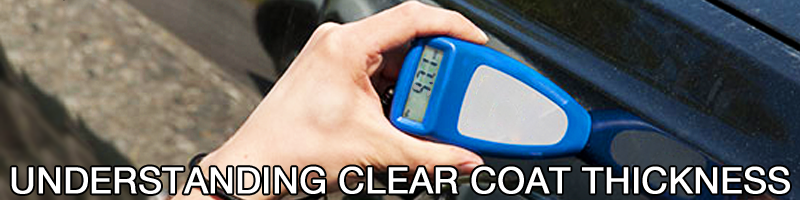
NOTE: Anyone looking for a decent paint gauge thats relatively inexpensive I have been using this model, purchased on Amazon for about $150 and for the price has been very good.
Just realize that this meter in particular only measures total coating thickness, and does not differentiate between base and clear, but it at least gives you something to gauge the reduction of the surface.