Lower wheel inertia, higher gas flow, less I/O flow restriction.
With practical considerations - overspeeding turbo wheels is generally frowned upon, hence the exhaust port wastegate valves first, and then the variable geometry turbine vanes ($$$$$$$$$$$).
The VVT turbos do it all, regardless of engine architecture - for a 'small' fee. Usually used on diesels, which can be boosted very highly.
I do have to say I like wifey's Mazda CX-5 turbo I4 2.5L a lot better than her previous Chev V6 3.5L, which had to be wound up to 3,000 rpm to get moving. The little Mazda goes @ only 1,200 rpm. It's quite the torque monster - gets good fuel economy too.
I supposed they waste-gate the turbo as VVT would be too $$$ for such a little engine. It reminds me of the old Pontiac Iron Duke I4 engine, except much peppier with the turbo added.
Don't know how long it will last, but it's only moving a car - not a 7,500 pound truck and 7,000 pound trailer.


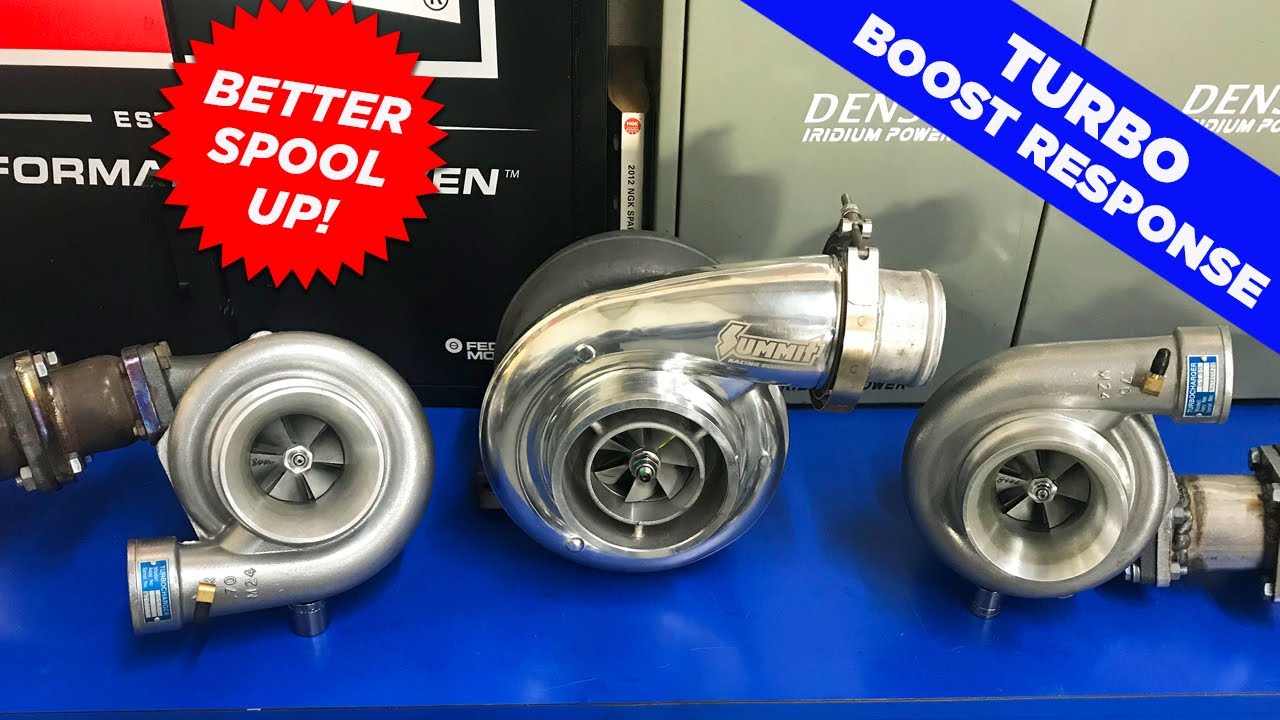
 www.youtube.com