So what happens to the oil pressure when the bypass valve opens. I just started a thread asking this question.
Sent from my VS988 using Tapatalk
Stone Dude,
If you've ever cut a filter apart, the bypass assembly at the bottom of the filter body is laughingly simple.
Basically, its a round plate about the diameter of the filter body's I.D. which is held against the bottom of the internal filter element body by a simple compression spring.
As you probably know, oil flows goes into the filter under pressure through the outside perimeter holes in the base. From there it gets forced through the filter element and into the center portion of the filter. From there it then gets pushed up through the center tube and into the engines internal oil passages to lube the different engine components.
In a filter with a bypass, when the oil pressure between the outside filter body and the internal filter element crosses a design threshold (somewhere between 10-20# I think), as it would when/if the filter element begins to get plugged, it will compress that spring and push the plate away from the end of the internal filter element. This allows the oil to flow completely past the plugged up internal filter element, do a U turn and flow directly into the center of the filter, up into the central feed tube and up into the engines oil passages, obviously completely un-filtered. This valve opens slowly as the pressure builds, so the amount of bypassing of the filter element is small at first and gets greater as the filter plugs (or if a large piece of debris like a chunk of gasket, valve spring, etc... gets wedged between the bypass plate the filter element itself, then it bypasses constantly).
So, to answer your question, with a bypass type of filter, by the time the filter plugs and the valve on the bottom begins to bypass, you probably haven't noticed ANY kind of pressure loses on the oil gauge, unless you had your eyes pinned on it constantly. So, when it happens, if it was something significant that failed to plug the filter which doesn't necessarily affect how the engine runs right away (or how it runs at speed like on the track or on the highway possibly), completely undetected you are allowing that debris to bypass the filter element and go up into other sensitive parts of your motor to cause even more damage.
With a no bypass filter, when something bad happens, all the debris stays inside the filter body. It begins to plug the internal filter element, and even if the engine is still running fine, you notice something is wrong because the oil pressure unexpectedly begins to drop. Oil pressure does NOT usually go to "zero pressure" right away. But it will drop slowly, usually giving you plenty of time to shut it down and investigate what is going wrong.
Bypass type of filter; see the spring loaded plate at the top of the filter? High tech huh?
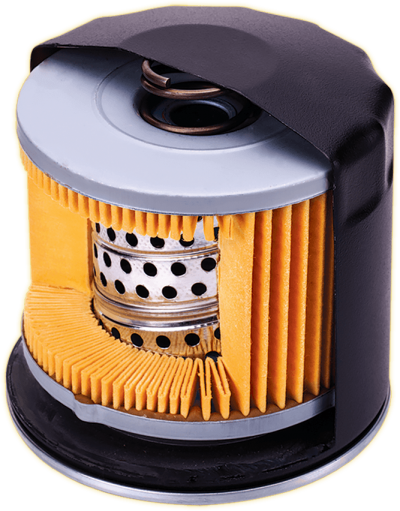
No bypass type, no spring loaded plate. Nothing gets through besides stuff small enough to make it through the filter element itself...