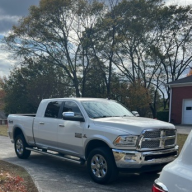
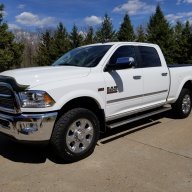
There is a lot to consider when deciding between a gas or diesel tow vehicle. A diesel would serve you best pulling this weight. One issue few think of besides climbing up the passes is getting down them. The Cummins has the best exhaust braking system; test after test, the Cummins comes out on top. Using the exhaust brake in conjunction with tow/haul mode is the best way to keep it all under control on the descent.
Downside to a modern diesel, besides the initial cost, is the emissions system. Some will point out higher maintenance costs and/or upkeep, and repair, but I don't; I do my own oil and filter changes. The other issue is with the emission system; they don't do well with multiple short trips. They need to get to operating temperature so the DPF system can regenerate, about ten to twenty minutes.
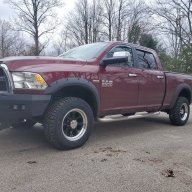
I have a 2015 3500 Cummins I use to pull a dump trailer, a few other smaller trailers, and a 16,000-pound fifth-wheel RV. I've never had emission issues, but I don't take multiple short trips often.
I used to pull a bumper pull camper in a Tahoe with the 5.3L engine. It did the job, but it struggled on the freeway, it struggled up grades winding out the RPMs. The camper was about 8,000 pounds. Towing on surface streets wasn't a big deal, but towing over 50 MPH was where the struggles started. Like I said before, my campground street education convinced me a diesel was the way to go. 11 years later, the Cummins is still pulling strong, it's paid for, and I have no regrets on my decision to go diesel. It just hurts up front with the higher cost.
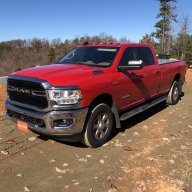
If you do go this route (HD RAM), gas or diesel, consider adding the rear air leveling system. It's fantastic when towing with a heavy pin load.