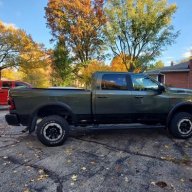

Oil Catch Can on 2022 RAM 1500 5.7L HEMI (Non-eTorque) — Needed or Not?

Disclaimer: Links on this page pointing to Amazon, eBay and other sites may include affiliate code. If you click them and make a purchase, we may earn a small commission.

97RedRam

Member
Army
Joined
Apr 6, 2020
Posts
84
Reaction score
72
Location
Brentwood, Tennessee
Ram Year
1997
Engine
360
I have a 97 1500 with the 5.9. The throttle body would gunk up every few thousand miles and would have to remove air cleaner and clean throttle body. After installing the CC the throttle body stays clean. I empty the CC every oil change with about a third to half full of gunky oil. one of the best things I have installed on my truck.
 

Grams

Senior Member
Joined
Oct 4, 2024
Posts
1,158
Reaction score
1,876
Location
Texas
Ram Year
2024 & 2015
Engine
6.7 Cummins & 5.7 Hemi
I seem to recall in my youth….(muscle-car-60’s-era)…one of the most popular additives sold was “Bardahl Upper Cylinder” lubricant.
This stuff, poured into the gas-tank added lubricant to the intakes….supposedly kept the “upper cylinders, valves, pistons” etc lubricated to prevent premature wear, increase horsepower, and prevent E.D. In 18-26 year-olds.
It seemed to have worked….

So I don’t understand why a new-fangled catch-can to prevent oil from getting into the intakes is a good-thing…. especially for the E.D. …

:cool:
 

mikeru

Super Moderator
Staff member
Moderator Supporting Member
Joined
Nov 3, 2016
Posts
4,505
Reaction score
9,184
Location
Florida
Ram Year
2020 Limited
Engine
Hemi 5.7L non-Etorque
Considering that catch cans have been around since the early 60's I wouldn't say they are new-fangled. If they are then that makes me new-fangled too! :anitoof:
 

TC

Senior Member
Supporting Member
Joined
May 3, 2020
Posts
161
Reaction score
300
Location
Central TX
Ram Year
2024
Engine
5.7 Hemi
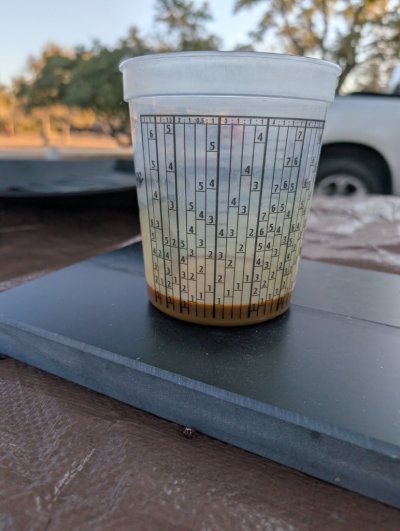
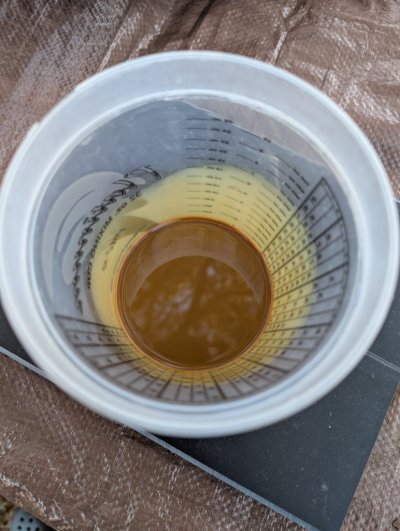
Just got home from a 1600 mile round trip in adverse northern type conditions. 20-30 degrees snow sleet etc. Pulled catch can and found 3 ounces of milkshake. Running HPL SC 0W30 2000 miles on current oil change. It's easier to dump than making a cup of coffee.
PXL_20260201_232654870.jpg
PXL_20260201_232623640.jpg
 

Kickboxer

Senior Member
Joined
Feb 18, 2020
Posts
402
Reaction score
507
Location
ND
Ram Year
2022
Engine
5.7 Hemi-non-Etorque
Just got home from a 1600 mile round trip in adverse northern type conditions. 20-30 degrees snow sleet etc. Pulled catch can and found 3 ounces of milkshake. Running HPL SC 0W30 2000 miles on current oil change. It's easier to dump than making a cup of coffee.
View attachment 579228
View attachment 579229

The milkshake is 90% water, I suppose you should know that........
 

CanuckRam1313

Senior Member
Supporting Member
Joined
Aug 29, 2022
Posts
3,242
Reaction score
7,982
Location
Ontario Canada
Ram Year
2023 Warlock
Engine
5.7
Just got home from a 1600 mile round trip in adverse northern type conditions. 20-30 degrees snow sleet etc. Pulled catch can and found 3 ounces of milkshake. Running HPL SC 0W30 2000 miles on current oil change. It's easier to dump than making a cup of coffee.
View attachment 579228
View attachment 579229
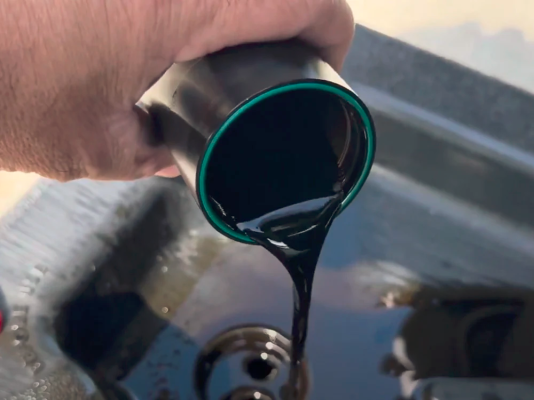
Brother... How do you find this oil in your 5.7 rig?

I run this exact oil with the RP 20-820 oil filter in my HEMI up here in Ontario, Canada, and I find this oil to be the most beneficial to my HEMI!!!

I also average about the same deposit volume in my CC as well between 10,000KM OCI's!
 

TC

Senior Member
Supporting Member
Joined
May 3, 2020
Posts
161
Reaction score
300
Location
Central TX
Ram Year
2024
Engine
5.7 Hemi
Brother... How do you find this oil in your 5.7 rig?

Up here in Ontario, Canada, I find this oil to be the most beneficial to my HEMI!!!

I also average about the same deposit volume in my CC as well between 10,000KM OCI's!
Truck sounds great on this oil...used PCMO 5W30 previous two OCI but wanted to give the SC 0W30 a try.
 

Nick@GotExhaust

Senior Member
Supporting Vendor
Joined
Aug 1, 2017
Posts
7,714
Reaction score
6,706
Location
SC
Ram Year
2017
Engine
6.4
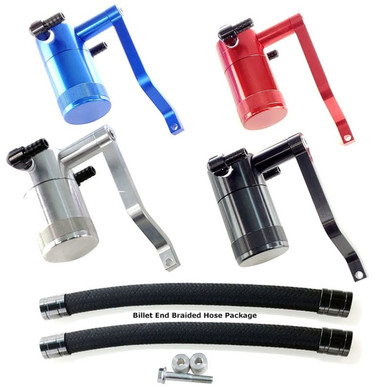
I recommend a catch can. Is it needed, no. Does it help reduce oil deposits, yes. Every time I empty mine I am happy to have it. I have run them on several vehicles. I prefer the UPR catch can, super high quality and multi chamber design and can come with the optional drain valve, which I also highly recommend.

We have them listed here


From UPR

Do Oil Catch Cans actually work?​


Yes. A properly designed Oil Catch Can actually does a very good job of stopping oil from being sucked through the PCV system and into your intake tract. UPR Oil Catch Cans are specifically designed to stop as much oil as possible from entering your intake system while allowing the system to flow freely.

Using a complex diffuser system with multiple chambers, the oil passes through our custom formed Stainless Steel media where it coalesces until it is deposited into the bottom of the Oil Catch Can.

  • A properly designed oil catch can separates oil in air.
  • Prevents oil from entering air intake system.
  • Oil is deposited in Catch Can for disposal.

Are all Oil Catch Cans created equal?​

No. Not all oil catch cans are created equal, as the design and materials significantly impact performance.


UPR Products' oil catch cans stand out with their advanced features, including a complex diffuser system, multiple chambers, and custom-formed stainless steel media.These elements ensure superior oil separation by effectively coalescing and trapping oil vapor and debris.


These elements ensure superior oil separation by effectively coalescing and trapping oil vapor and debris. Unlike inferior designs that rely on basic baffles, fine mesh, aluminum honeycomb, or cheap bronze air compressor filters.

What are the benefit's of running an Oil Catch Can?​


The benefits of a properly designed UPR Catch Can consist of improved engine life, engine performance, and overall engine reliability. When a Catch Can is doing it's job you will be able to run more aggressive timing and fuel adjustments and experience more power and improved gas mileage. These are common benefits you will experience and can expect from a properly functioning UPR Catch Can.

Other Benefits Include:

  • Reduced carbon build-up on engine valves
  • Extended spark plug life
  • More efficient combustion
  • Less performance degradation due to carbon covered engine valves, oil in the intercooler or turbo impellers.


UPR Products ONLY uses high quality billet aluminum, OE quality connectors, oil resistant hose / o-rings and stainless steel
parts & hardware.

1770076352352.png
 

Grams

Senior Member
Joined
Oct 4, 2024
Posts
1,158
Reaction score
1,876
Location
Texas
Ram Year
2024 & 2015
Engine
6.7 Cummins & 5.7 Hemi
Considering that catch cans have been around since the early 60's I wouldn't say they are new-fangled. If they are then that makes me new-fangled too! :anitoof:
And of the immense Numbers of All vehicles made since then with PCV systems…. the numbers which have catch-cans are infinitesimally-small…. yet often used as examples of longevity.
Hence, Catch cans are not what I will spend my money and time on.

(PS: Chevron TechRon (included in Chevron and Texaco gasoline) specifically advertises, w/pics, that product keeps valves clean….should that be a concern for anyone.)
 
Last edited:

Docwagon1776

Senior Member
Joined
Mar 16, 2012
Posts
4,769
Reaction score
10,230
Location
Midwest
Ram Year
2012, 2021
Engine
5.7, 6.4
And of the immense Numbers of All vehicles made since then with PCV systems…. the numbers which have catch-cans are infinitesimally-small…. yet often used as examples of longevity.
Hence, Catch cans are not what I will spend my money and time on.

(PS: Chevron TechRon (included in Chevron and Texaco gasoline) specifically advertises, w/pics, that product keeps valves clean….should that be a concern for anyone.)

Something to keep in mind is fuel induction type varies, especially now:

With TBI or carbs, the gasoline goes through the entire intake in the fuel/air mixture. The natural solvent ability of gasoline plus any detergents will clean the entire tract.

With port injection the fuel gets inserted into the mix just above the valve. You can clean the tops of the valves, but anything above that point is not seeing any solvent.

With direct injection, it's injected directly into the cylinder. No fuel additive is going to help the tops of the valves because the fuel is never above the valve.

The smarter manufacturers are doing a combination of port and direct injection now, exactly because of coking and no fuel/detergent above the valve to wash it away.

If I were driving a direct injection, especially a turbo'd one, then I'd spend the money if I was going to keep it long term. Anything else, meh.
 

mikeru

Super Moderator
Staff member
Moderator Supporting Member
Joined
Nov 3, 2016
Posts
4,505
Reaction score
9,184
Location
Florida
Ram Year
2020 Limited
Engine
Hemi 5.7L non-Etorque
And of the immense Numbers of All vehicles made since then with PCV systems…. the numbers which have catch-cans are infinitesimally-small…. yet often used as examples of longevity.
Hence, Catch cans are not what I will spend my money and time on.

(PS: Chevron TechRon (included in Chevron and Texaco gasoline) specifically advertises, w/pics, that product keeps valves clean….should that be a concern for anyone.)
I don’t disagree with what you said here. But I’m not sure I’ve seen anyone claim catch cans are making non-port injected engines last longer. I know I’ve never made that claim. Just that they help keep the intake system innards a little cleaner. In the post you quoted I was just pointing out that catch cans are in no way a new-fangled device, along with adding a little bit of levity.

I also haven’t told anyone they need a catch can. One of the great things about living in a free country is that we can decide which aftermarket products, if any, we want to spend our money on. If you don’t want a catch can don’t buy one.
 

HEMIMANN

Senior Member
Joined
Dec 7, 2020
Posts
9,610
Reaction score
25,244
Location
Minneapolis, MN
Ram Year
2017 2500 Laramie Crew Cab
Engine
6.4L HEMI
Something to keep in mind is fuel induction type varies, especially now:

With TBI or carbs, the gasoline goes through the entire intake in the fuel/air mixture. The natural solvent ability of gasoline plus any detergents will clean the entire tract.

With port injection the fuel gets inserted into the mix just above the valve. You can clean the tops of the valves, but anything above that point is not seeing any solvent.

With direct injection, it's injected directly into the cylinder. No fuel additive is going to help the tops of the valves because the fuel is never above the valve.

The smarter manufacturers are doing a combination of port and direct injection now, exactly because of coking and no fuel/detergent above the valve to wash it away.

If I were driving a direct injection, especially a turbo'd one, then I'd spend the money if I was going to keep it long term. Anything else, meh.

Yup - I believe I read Mazda was the only company that attempted to put a oil vapor coalescer (what you all call "catch cans") on their PCV system. I have seen it in engine schematics, so I presume it is real.

Further, it does things correctly in that you don't have to manually drain the damned thing - it has a drain hose from the coalesced vapor (I know it is a mix of water and oil, so don't tell me) back to the oil sump.

That's how we did things on the big diesel engines too.
 

Grams

Senior Member
Joined
Oct 4, 2024
Posts
1,158
Reaction score
1,876
Location
Texas
Ram Year
2024 & 2015
Engine
6.7 Cummins & 5.7 Hemi
The milkshake is 90% water, I suppose you should know that.......

Yup - I believe I read Mazda was the only company that attempted to put a oil vapor coalescer (what you all call "catch cans") on their PCV system. I have seen it in engine schematics, so I presume it is real.

Further, it does things correctly in that you don't have to manually drain the damned thing - it has a drain hose from the coalesced vapor (I know it is a mix of water and oil, so don't tell me) back to the oil sump.

That's how we did things on the big diesel engines too.
And that shouldn’t hurt a thing, for the next time the engine warms-up …any water will cook-out. It’s normal operations.
 

Docwagon1776

Senior Member
Joined
Mar 16, 2012
Posts
4,769
Reaction score
10,230
Location
Midwest
Ram Year
2012, 2021
Engine
5.7, 6.4
Yup - I believe I read Mazda was the only company that attempted to put a oil vapor coalescer (what you all call "catch cans") on their PCV system. I have seen it in engine schematics, so I presume it is real.

Further, it does things correctly in that you don't have to manually drain the damned thing - it has a drain hose from the coalesced vapor (I know it is a mix of water and oil, so don't tell me) back to the oil sump.

That's how we did things on the big diesel engines too.

Then the heat just burns the water vapor off? I don't know diddly about the diesels. Does that speed up oxidization of the oil or is it an irrelevant amount?
 

HEMIMANN

Senior Member
Joined
Dec 7, 2020
Posts
9,610
Reaction score
25,244
Location
Minneapolis, MN
Ram Year
2017 2500 Laramie Crew Cab
Engine
6.4L HEMI
Then the heat just burns the water vapor off? I don't know diddly about the diesels. Does that speed up oxidization of the oil or is it an irrelevant amount?

Generally, but it's temperature dependent, of course. Water is in vapor phase equilibrium with liquid water @ 212 F / 100 C.

Water does not effect oil oxidation that I am aware of - but - it does effect the lubricity of the emulsion causing more wear than without any moisture - i.e., water is not a lubricant! (why old steam locomotives used super-fatty oils to act like a great on piston rods, etc.).

Water also causes iron oxidation (rust) of course, so oil can't take a lot before OCI is needed. Which is why short trips are so bad due to water and unburned fuel not being vaporized off.

Depending how accurate EVIC sensors are, my engine oil varies between 200 F in winter to 230 F in summer. Hemi sensor schematics show the temp and pressure sensors past the oil filter as oil enters the main rifle galley.
 

Nick@GotExhaust

Senior Member
Supporting Vendor
Joined
Aug 1, 2017
Posts
7,714
Reaction score
6,706
Location
SC
Ram Year
2017
Engine
6.4
And of the immense Numbers of All vehicles made since then with PCV systems…. the numbers which have catch-cans are infinitesimally-small…. yet often used as examples of longevity.
Hence, Catch cans are not what I will spend my money and time on.

(PS: Chevron TechRon (included in Chevron and Texaco gasoline) specifically advertises, w/pics, that product keeps valves clean….should that be a concern for anyone.)

Automobile manufacturers don't use catch cans for multiple reasons

-Carbon buildup from PCV blow-by is usually a long-term issue, not a “during warranty” issue. Just like them using many plastic internal parts for the engines now. Thats obviously a cost saving move also not a longevity one which brings me to the next point...

-cost savings, lower production cost

-Another thing that the EPA will want to regulate

-Typical consumer does not want to check their catch can and in some cases they need to be checked more often than every oil change
Now imagine:
  • Someone never checks it
  • It fills with sludge
  • Freezes in winter
  • Blocks PCV flow
  • Blows out seals
Guess who gets blamed? The car company.
Manufacturers design cars for people who:
  • Never open the hood
  • Skip maintenance
  • Ignore warning lights

A catch can adds owner responsibility, and that’s liability.
 

Grams

Senior Member
Joined
Oct 4, 2024
Posts
1,158
Reaction score
1,876
Location
Texas
Ram Year
2024 & 2015
Engine
6.7 Cummins & 5.7 Hemi
Automobile manufacturers don't use catch cans for multiple reasons

-Carbon buildup from PCV blow-by is usually a long-term issue, not a “during warranty” issue. Just like them using many plastic internal parts for the engines now. Thats obviously a cost saving move also not a longevity one which brings me to the next point...

-cost savings, lower production cost

-Another thing that the EPA will want to regulate

-Typical consumer does not want to check their catch can and in some cases they need to be checked more often than every oil change
Now imagine:
  • Someone never checks it
  • It fills with sludge
  • Freezes in winter
  • Blocks PCV flow
  • Blows out seals
Guess who gets blamed? The car company.
Manufacturers design cars for people who:
  • Never open the hood
  • Skip maintenance
  • Ignore warning lights

A catch can adds owner responsibility, and that’s liability.
In my post (#11) … I addressed some of the things you mention (re: EPA, etc)…. However, in some previous designs, both automotive, marine, and aviation, … air/oil separators simply condense and drain automatically into the sump, where the oil goes back to work….and any water is evaporated with heat.
 
Back
Top