In general I would not recommend doing that. Obviously in 2wd there is no issue. If you only used 4wd for short distances in low traction situations, like mud or snow, then would be okay. What I mean is that if you were actually stuck in 2wd or could only move with a lot rear wheel spin, then shifting into 4wd to get out that situation would not cause issues. Just make sure to shift back into 2wd.
I definitely would not use 4wd or any extended periods of time of higher speed driving, like if the roads were spotty with snow and ice (which I do all the time, but with matching tire sizes).
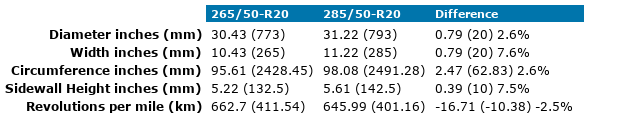
The size difference you list means that for each revolution of the tires there is a 2 1/2" distance difference in how far the front versus rear tires are trying to move the truck. The larger rear tires would want to "push" the truck 2 1/2" further than the front tires during each revolution if you had it locked in 4wd and would be fighting against each other. In another example, if you drove 1 mile the rear tires would make 645 revolutions where as the front tires would need to make 662 revolutions. Again, if you were locked in 4wd you would have some serious scrubbing and stress going on between the front and rear if on any surface with reasonable traction.
Also not sure how the auto 4wd system would react to this (assuming the truck has it). Not 100% how the Ram system works as I have never owned a 1500, and therefore never had the auto 4wd system (my 2500 has no auto mode). The difference in wheels speeds between the front and rear may be great enough where it's always basically fooling the system to think one or the other end is slipping and therefore applying the 4wd clutch packs???? In any case, don't think the system would like it one way or another.