

Witch
Senior Member
- Joined
- May 6, 2016
- Posts
- 1,295
- Reaction score
- 630
- Ram Year
- 2015
- Engine
- Hemi 5.7 liter
Man, I wish I could tell, since I started this audio deal on my truck I have been trying to read everything i can to try to get the most out of the choices I made.
here is the definition, it is not frequency range or cross over cut off
FS= This parameter is the free-air resonant frequency of a speaker. Simply stated, it is the point at which the weight of the moving parts of the speaker becomes balanced with the force of the speaker suspension when in motion. If you’ve ever seen a piece of string start humming uncontrollably in the wind, you have seen the effect of reaching a resonant frequency. It is important to know this information so that you can prevent your enclosure from ‘ringing’. With a loudspeaker, the mass of the moving parts, and the stiffness of the suspension (surround and spider) are the key elements that affect the resonant frequency. As a general rule of thumb, a lower Fs indicates a woofer that would be better for low-frequency reproduction than a woofer with a higher Fs. This is not always the case though, because other parameters affect the ultimate performance as well.
Not sure what all drivers you have, but you should be able to get the FS value off the manufacture.
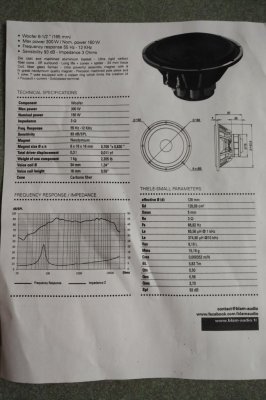
For example mine it looks like this
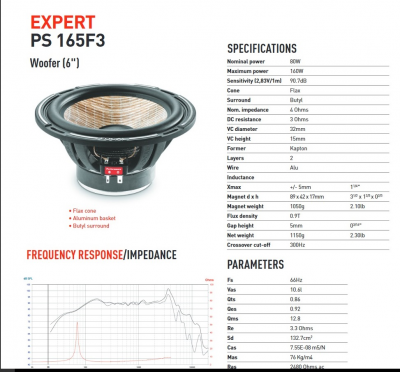

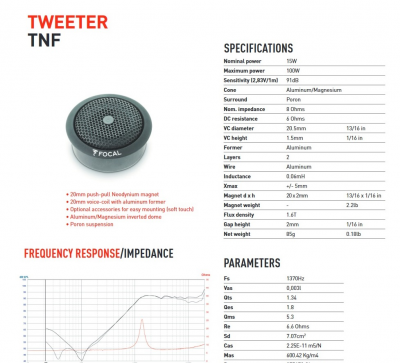
Sub has to cover up to the the roll on of the mid bass so low pass would be set to 132 hz
Mid Bass FS = 66 x2 = High pass set to roll on at 132 Hz
Midrange FS = 200 x2 = High pass set to roll on at 400 Hz , so mid bass rolls off at 400
Tweeter FS = 1370 x2 = High pass set to roll on at 2742 Hz , so midrange would roll off at 2742
it goes on to say slopes is why you the value is x2 to cover the slope from top to bottom to protect the speaker
Seems to me if you have a steeper slope you could decrease the times value on ther FS, say x 1.75 or 1.5 on a very drastic drop off ?
That is total speculation though ???
Just throwing this out there
To be honest I am not so sure this even makes sense, just some stuff I was reading , like I said, better to listen to someone who knows what they are doing
here is the definition, it is not frequency range or cross over cut off
FS= This parameter is the free-air resonant frequency of a speaker. Simply stated, it is the point at which the weight of the moving parts of the speaker becomes balanced with the force of the speaker suspension when in motion. If you’ve ever seen a piece of string start humming uncontrollably in the wind, you have seen the effect of reaching a resonant frequency. It is important to know this information so that you can prevent your enclosure from ‘ringing’. With a loudspeaker, the mass of the moving parts, and the stiffness of the suspension (surround and spider) are the key elements that affect the resonant frequency. As a general rule of thumb, a lower Fs indicates a woofer that would be better for low-frequency reproduction than a woofer with a higher Fs. This is not always the case though, because other parameters affect the ultimate performance as well.
Not sure what all drivers you have, but you should be able to get the FS value off the manufacture.
For example mine it looks like this
Sub has to cover up to the the roll on of the mid bass so low pass would be set to 132 hz
Mid Bass FS = 66 x2 = High pass set to roll on at 132 Hz
Midrange FS = 200 x2 = High pass set to roll on at 400 Hz , so mid bass rolls off at 400
Tweeter FS = 1370 x2 = High pass set to roll on at 2742 Hz , so midrange would roll off at 2742
it goes on to say slopes is why you the value is x2 to cover the slope from top to bottom to protect the speaker
Seems to me if you have a steeper slope you could decrease the times value on ther FS, say x 1.75 or 1.5 on a very drastic drop off ?
That is total speculation though ???
Just throwing this out there
To be honest I am not so sure this even makes sense, just some stuff I was reading , like I said, better to listen to someone who knows what they are doing