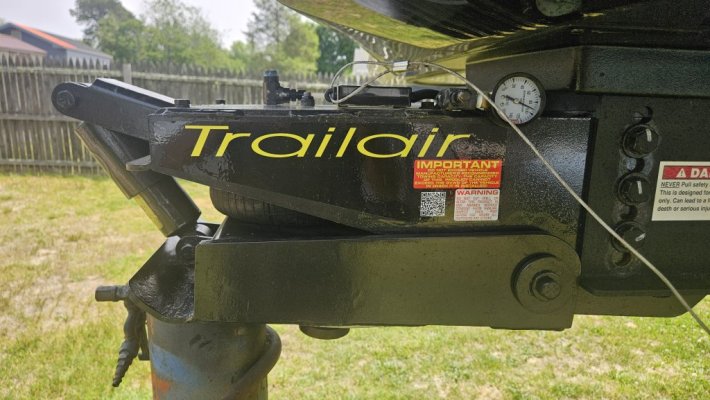
I understand where you are coming from but it is not being applied correctly. In order for the pressure to change significantly the volume of the airbag has to change. However it is not. While airbags are rubber and can deform, them deforming doesn't mean the volume changes unless they actually stretch and retract. The rubber actually has very little stretch. Rather the "shape" of the bag changes. When it compresses the sides bulge out and it gets wider. When it gets pulled upwards it gets skinnier but taller....which equals the same volume. If the volume doesn't change, the pressure doesn't change.
That's great on paper, but it's something you can easily trial on a truck with bags installed. Put some air pressure in the bags, or example 30 psi, with the normal weight of the truck pushing down on the bags. Now jack up the truck by the bumper or frame which takes the weight off the suspension and airbags so the tire is just hanging. Now measure the pressure in the bag and it will be right around 30 psi. You can do the same thing with your tires. Check the pressure in your tires with the weight of the truck on them, and then jack up the truck so the tires are hanging in the air and they will be the same (well, maybe 1/2 or 1 PSI difference, but nothing significant). Just like the airbags, the tires will squat and deform under weight but the volume stays the same. The rubber in the tires is not shrinking or stretching which would be required to change the volume.
Again, because there will be doubters......you can easily see this first hand in person by doing the quick and easy experiments listed above.