HPTuners tuning/tweaking tips - where/how to find?

Disclaimer: Links on this page pointing to Amazon, eBay and other sites may include affiliate code. If you click them and make a purchase, we may earn a small commission.

Mojo88

Senior Member
Joined
Feb 4, 2024
Posts
725
Reaction score
1,887
Location
Rhode Island
Ram Year
'19 Longhorn Gen5 ORG
Engine
Hemi 5.7L non-eTorque
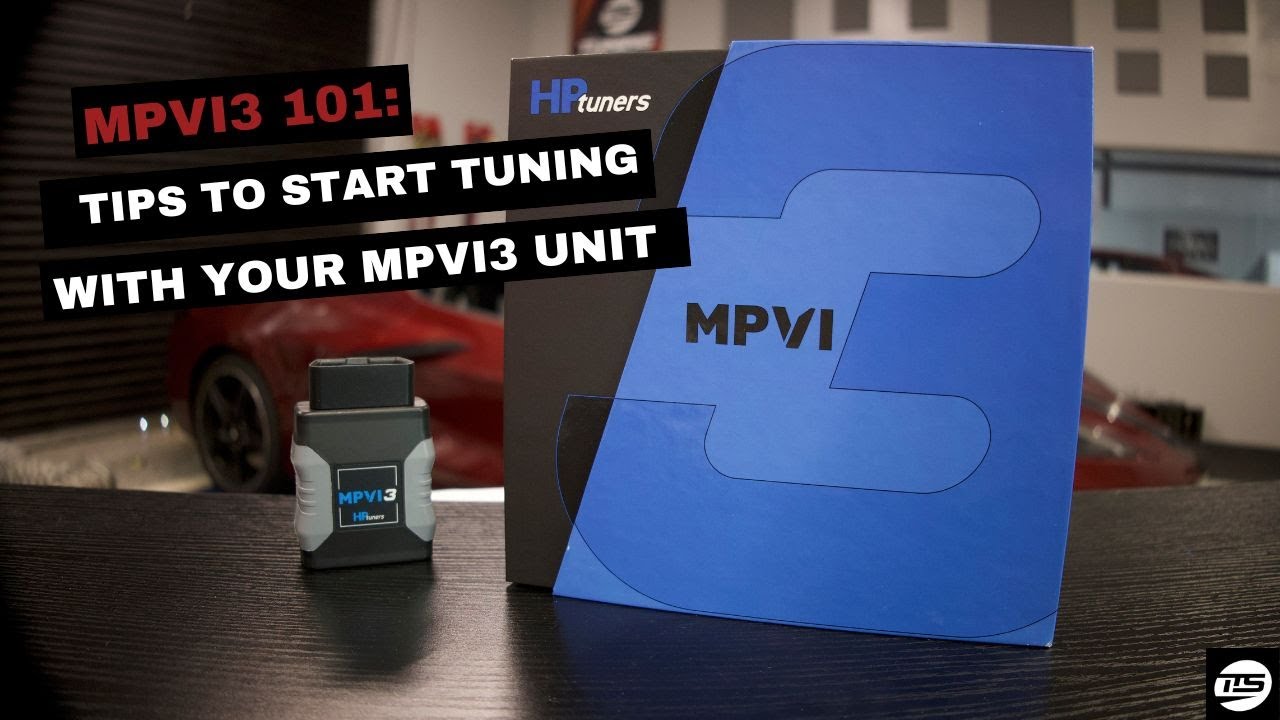
I have a new Dodge unlocked PCM coming from HPTuners. Recently bought their MPVI3 dongle and Smart Access Cable. So I'm almost ready to start messing around (very carefully) with a few tuning and tweaking adjustments in my engine and the trans. I did a little tuning maybe 20 years ago, so I'm not a complete noob, but never tuned with HPTuners.

My question is: when it comes to HPTuners tuning/tweaking tips - where/how are you finding them?

For instance, my first tweak will be to turn off MDS. After that, I'm gonna adjust the AGS and fan parameters, and install lower-temp stat. These are very simple things, so where are you guys going to get info on how to things like this??

Many thanks
 

Fast69Mopar

Senior Member
Joined
May 10, 2019
Posts
2,438
Reaction score
2,667
Location
Texas
Ram Year
2006
Engine
5.7 HEMI
I have a new Dodge unlocked PCM coming from HPTuners. Recently bought their MPVI3 dongle and Smart Access Cable. So I'm almost ready to start messing around (very carefully) with a few tuning and tweaking adjustments in my engine and the trans. I did a little tuning maybe 20 years ago, so I'm not a complete noob, but never tuned with HPTuners.

My question is: when it comes to HPTuners tuning/tweaking tips - where/how are you finding them?

For instance, my first tweak will be to turn off MDS. After that, I'm gonna adjust the AGS and fan parameters, and install lower-temp stat. These are very simple things, so where are you guys going to get info on how to things like this??

Many thanks
If you haven't done it already go to the HP Tuners forum on their website and register. There is a good chance that what you are looking for has been discussed by the forum members. You're going to find that there are not many but only a select few who are tuners or even have any experience with HP Tuners. It is s very small, elite club.

Over the last decade when it comes to RAM/Charger/Challenger tuners they have become very stingy with their tuning knowledge and I understand why.

They worked their tails off on the laptop to figure out what works and this has allowed them to make a living. Nobody wants to give away their knowledge for free. Does it suck when you just want to do a few things but you don't know how? Yes. But you can do what they did. Make a backup copy of your PCM's file and start making changes. If you don't like how the vehicle reacts to your changes you can always revert back to stock.

If you haven't attempted to watch any of the free YouTube videos involving HP Tuners now would be a great time to start. HP is very complex. It has to be because our vehicles are complex.

If I were you I would go ahead and download the VCM Suite and then head on over to the tune repository and download a couple of tune files and use the compare feature to see what is different between the two.

The only real way to learn how to use this tool properly is to open up the laptop and get busy. Having an understanding of what the PCM is trying to accomplish with fuel and timing makes things a lot easier. This is my opinion.
 
Last edited:

Bigskyroadglide

Moderator
Staff member
Member Relations Specialist
Moderator Supporting Member
Joined
Nov 9, 2016
Posts
2,778
Reaction score
5,930
Location
Montana, officially RETIRED
Ram Year
2014
Engine
Hemi 5.7, supercharged
Here is where I started learning. I still depend on my tuner but at least I now understand what he is talking about


Wild one

Senior Member
Joined
Jan 17, 2016
Posts
23,817
Reaction score
54,820
Ram Year
14 Sport
Engine
5.7

Xsen

Member
Joined
Oct 25, 2021
Posts
59
Reaction score
112
Location
Urals, Russia
Ram Year
2014
Engine
Hemi 5.7
Oh, where should I even begin.
OP, here are my 2c, for what its worth.

If you're really looking into squeezing some more from your engine than what Chrysler engineers thought is good enough - you have a long road ahead of you, but an interesting one too.

Here's what I would do (or rather how I got into this).

Square one, which I won't say is a must, but a tech background would be of great help. Mechanical engineering or IT - both are great points to start with. You should also be confident with Excel or any other spreadsheet editor, these are very useful.

Before you attempt at making any sort of changes - make sure you understand how a typical internal combustion engine works and how do engine control systems operate. What does the ECM control, which feedback circuits does it use. Which parameters are crucial for the engine and how do they affect power and torque. This can be done fairly easy, there are a few books on this, my personal recommendation would be this: https://a.co/d/aG8FJ0d and this: https://a.co/d/76xlvSd. Both are written by Greg Banish, an experienced factory calibrations engineer. I mean it, do invest some time and a few bucks into baseline knowledge, it will save you a ton of effort.

There are other books of course which you may also find useful, the Internet is there to help. Online/offline tuning schools... Well, never been to one, maybe they're worth it. Also, watch tech videos on Gale Banks' channel on Youtube. They do a lot of product advertising, that's true, but there are quite a few longer videos where they go into technical details regarding air density, etc. and that's worth watching.

Once you have the base knowledge, make sure to know and remember two things:
1. Improper ECM calibrations can kill a good engine. It may just be one or two wrong numbers in the table, but once they are applied to physical world - things go south real quick. If you make changes to the ECM, you must be capable of explaining the reason behind each individual change.
2. Tuning requires a healthy engine (and drivetrain). Fixing hardware problems with software corrections is just plain wrong and it will bite you later on.

In the older days, you'd also have to learn how to work with the ECM on the bench, but modern Chrysler does let you read and write the ECM without actually taking it off the vehicle.

So once you feel that you do understand what's what in the ECM world - move on to the HPTuners forums. You really want to dig through the Mopar section rather than just create a new topic and ask. You will find several people there, whose posts are often quite valuable. As mentioned before - do not expect anyone to share the secrets. In my experience the only way to make a good tune is to test it in the real world on a real car or truck. You modify something, upload the tune to the ECM and go driving, trying to see and feel what has changed. Getting the tune right requires huge time investments, which kind of affect the desire to share the results for free. :)

You may also want to find a test road somewhere near your house, a quiet road with a few straights and easy corners would do. You want that road to have as little traffic as possible and no pedestrians too.

When you do understand how things work and you have your testing grounds - then it's time to do some adjustments. By all means take the incremental approach, do not change multiple calibrations at once, unless you really know what you're doing.

My experience so far revolves around the stock engines, but I know for sure that the 5.7 HEMI can do much better than what the factory has done with it.

Basically, the engine has several ways to make torque, simply put it's the amount of air and fuel (and the mixture ratio) and the spark advance. So if you're starting to work with a N/A engine and are looking for more torque, you might want to look into:

1. Your AFR (FA in Mopar world, which essentially is 1/AFR). There are a few things that move the AFR away from stoich like power enrichment, component protection, catalytic converter needs, etc. Ideally you want to disable the rear o2 sensors completely and these ECMs can do that, but HPtuners removed this functionality from latest SW versions. Maybe try looking for older versions, maybe some beta's... There should ;) be a way. Regarding the component protection strategies - leave them as is. Last thing you want to happen is internal engine mayhem due to lean conditions in an overheated combustion chamber.
2. Your Spark advance maps. There's a lot to do there, but forget about making unified changes to the whole map. And you will need to switch to the highest fuel grade available, if you haven't done that already. 2019 GPEC OS finally has High Octane spark maps, which is good news. Also, be very careful with what you do with spark retard settings and knock control.
Also very useful things are:
3. Throttle rates. Factory tune has certain limits on the throttle change rates, playing with these will let you have a better throttle response.
4. Driver Demand map. This defines the relation between the pedal position and the demanded torque. I'd say there's a catch here - making the truck jump forward when you just look at the pedal is possible, but what's the use?
In general, I think it's a great idea to make throttle control as linear as possible, like if it was cable-driven.
5. All other essential stuff, like fans control, speed limiter, etc.

GPEC ECM modules rely on a neural network for VE calculation, and in my experience it does that really well. If you're not changing cams or doing any other hardware mods - I'd leave the NN on. Then again if you are doing the mods - HPTuners offer model retraining service, so I would definitely look that way rather than trying to adjust the static VE maps with account for VVT, SRV and other stuff.

Two final notes here.
1. Don't take map descriptions in VCM editor for granted. As much as I hate to say so, HPtuners sometimes make mistakes, which may really confuse you, i.e. for 2013-2014 GPEC2, I refuse to believe that the map labeled as MBT is actually that. Then there is some stuff that they leave out on purpose, but at the end of the day VCM Editor is still probably the best tool you'll find.
2. Don't overestimate the dyno. I mean it's cool when you can see the Nms and HP right there, but this really is all about WOT. If this truck is your daily driver - just how much of the total time on the road does it spend in WOT mode? Good street everyday tunes are all about PT. :)

Hope this will help at least somewhat.

P.S. You won't be doing your lifters any favors by switching the MDS off. If it's the throttle lag that's bothering you - I'd suggest you look into the throttle control first.

 
OP
OP
Mojo88

Mojo88

Senior Member
Joined
Feb 4, 2024
Posts
725
Reaction score
1,887
Location
Rhode Island
Ram Year
'19 Longhorn Gen5 ORG
Engine
Hemi 5.7L non-eTorque
Oh, where should I even begin.
OP, here are my 2c, for what its worth.

If you're really looking into squeezing some more from your engine than what Chrysler engineers thought is good enough - you have a long road ahead of you, but an interesting one too.

Here's what I would do (or rather how I got into this).

Square one, which I won't say is a must, but a tech background would be of great help. Mechanical engineering or IT - both are great points to start with. You should also be confident with Excel or any other spreadsheet editor, these are very useful.

Before you attempt at making any sort of changes - make sure you understand how a typical internal combustion engine works and how do engine control systems operate. What does the ECM control, which feedback circuits does it use. Which parameters are crucial for the engine and how do they affect power and torque. This can be done fairly easy, there are a few books on this, my personal recommendation would be this: https://a.co/d/aG8FJ0d and this: https://a.co/d/76xlvSd. Both are written by Greg Banish, an experienced factory calibrations engineer. I mean it, do invest some time and a few bucks into baseline knowledge, it will save you a ton of effort.

There are other books of course which you may also find useful, the Internet is there to help. Online/offline tuning schools... Well, never been to one, maybe they're worth it. Also, watch tech videos on Gale Banks' channel on Youtube. They do a lot of product advertising, that's true, but there are quite a few longer videos where they go into technical details regarding air density, etc. and that's worth watching.

Once you have the base knowledge, make sure to know and remember two things:
1. Improper ECM calibrations can kill a good engine. It may just be one or two wrong numbers in the table, but once they are applied to physical world - things go south real quick. If you make changes to the ECM, you must be capable of explaining the reason behind each individual change.
2. Tuning requires a healthy engine (and drivetrain). Fixing hardware problems with software corrections is just plain wrong and it will bite you later on.

In the older days, you'd also have to learn how to work with the ECM on the bench, but modern Chrysler does let you read and write the ECM without actually taking it off the vehicle.

So once you feel that you do understand what's what in the ECM world - move on to the HPTuners forums. You really want to dig through the Mopar section rather than just create a new topic and ask. You will find several people there, whose posts are often quite valuable. As mentioned before - do not expect anyone to share the secrets. In my experience the only way to make a good tune is to test it in the real world on a real car or truck. You modify something, upload the tune to the ECM and go driving, trying to see and feel what has changed. Getting the tune right requires huge time investments, which kind of affect the desire to share the results for free. :)

You may also want to find a test road somewhere near your house, a quiet road with a few straights and easy corners would do. You want that road to have as little traffic as possible and no pedestrians too.

When you do understand how things work and you have your testing grounds - then it's time to do some adjustments. By all means take the incremental approach, do not change multiple calibrations at once, unless you really know what you're doing.

My experience so far revolves around the stock engines, but I know for sure that the 5.7 HEMI can do much better than what the factory has done with it.

Basically, the engine has several ways to make torque, simply put it's the amount of air and fuel (and the mixture ratio) and the spark advance. So if you're starting to work with a N/A engine and are looking for more torque, you might want to look into:

1. Your AFR (FA in Mopar world, which essentially is 1/AFR). There are a few things that move the AFR away from stoich like power enrichment, component protection, catalytic converter needs, etc. Ideally you want to disable the rear o2 sensors completely and these ECMs can do that, but HPtuners removed this functionality from latest SW versions. Maybe try looking for older versions, maybe some beta's... There should ;) be a way. Regarding the component protection strategies - leave them as is. Last thing you want to happen is internal engine mayhem due to lean conditions in an overheated combustion chamber.
2. Your Spark advance maps. There's a lot to do there, but forget about making unified changes to the whole map. And you will need to switch to the highest fuel grade available, if you haven't done that already. 2019 GPEC OS finally has High Octane spark maps, which is good news. Also, be very careful with what you do with spark retard settings and knock control.
Also very useful things are:
3. Throttle rates. Factory tune has certain limits on the throttle change rates, playing with these will let you have a better throttle response.
4. Driver Demand map. This defines the relation between the pedal position and the demanded torque. I'd say there's a catch here - making the truck jump forward when you just look at the pedal is possible, but what's the use?
In general, I think it's a great idea to make throttle control as linear as possible, like if it was cable-driven.
5. All other essential stuff, like fans control, speed limiter, etc.

GPEC ECM modules rely on a neural network for VE calculation, and in my experience it does that really well. If you're not changing cams or doing any other hardware mods - I'd leave the NN on. Then again if you are doing the mods - HPTuners offer model retraining service, so I would definitely look that way rather than trying to adjust the static VE maps with account for VVT, SRV and other stuff.

Two final notes here.
1. Don't take map descriptions in VCM editor for granted. As much as I hate to say so, HPtuners sometimes make mistakes, which may really confuse you, i.e. for 2013-2014 GPEC2, I refuse to believe that the map labeled as MBT is actually that. Then there is some stuff that they leave out on purpose, but at the end of the day VCM Editor is still probably the best tool you'll find.
2. Don't overestimate the dyno. I mean it's cool when you can see the Nms and HP right there, but this really is all about WOT. If this truck is your daily driver - just how much of the total time on the road does it spend in WOT mode? Good street everyday tunes are all about PT. :)

Hope this will help at least somewhat.

P.S. You won't be doing your lifters any favors by switching the MDS off. If it's the throttle lag that's bothering you - I'd suggest you look into the throttle control first.


Great post, just discovered it today, for some reason. Thanks for the extensive explanations, most of which I was already surmising, but I figured I'd ask the questions anyway.

I did a fair bit of racing and engine building, plus I owned two service stations, but all that was back in 70's & 80's, we had no computers back then. However, I did have one of the famous Sun Distributor machines, that was high tech back then, haha.

I've always had at least one muscle car since those days, and maybe 20 years ago, I had a big-block '68 Camaro which I rebuilt the engine and installed Accel DFI. That system (by Holley) came with its own software which was similar to HPTuners, but MUCH, MUCH simpler. That was my only experience with tuning via laptop.

This HPTuners setup allows me access to the Dodge PCM, and I am instantly overwhelmed by the sheer number of data entry points. So I immediately realized I don't know enough to feel comfortable tinkering.

I am indeed on the HPTuners Forum. Good idea about digging around in there for tips and tricks, I will try that.
 
Back
Top