I watched a repeat of Engine Masters from 2021 on Motortrend TV this snowy afternoon.
They ran the same engine at the same timing to prove, of course, gasoline with differing octane ratings have no effect on engine torque or power.
They finally admitted their tests were misleading - because the engine they used had the ignition timing already set for optimum fuel burn for the compression ratio and max air volume at WOT.
So essentially, they proved nothing. They grudgingly admitted that consumer engines from the factory are now available with differing ignition timing for different octane gas. I was disappointed in their ranting for the majority of the tests.
IF - the factory optimizes the ignition timing for max power, then the octane gas needed to prevent detonation at this timing is set - no higher octane will do anything but waste money and create deposits.
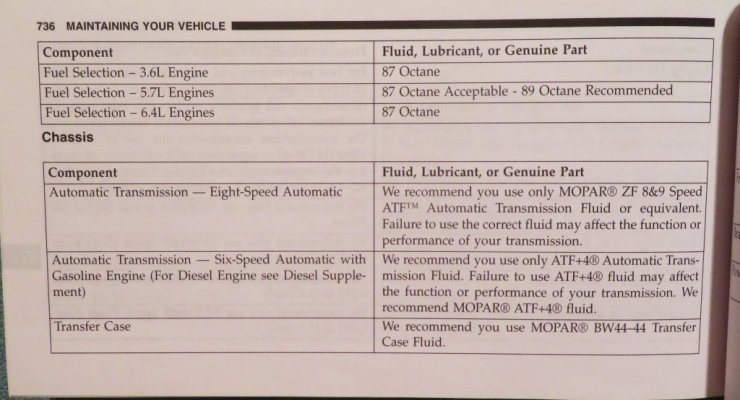
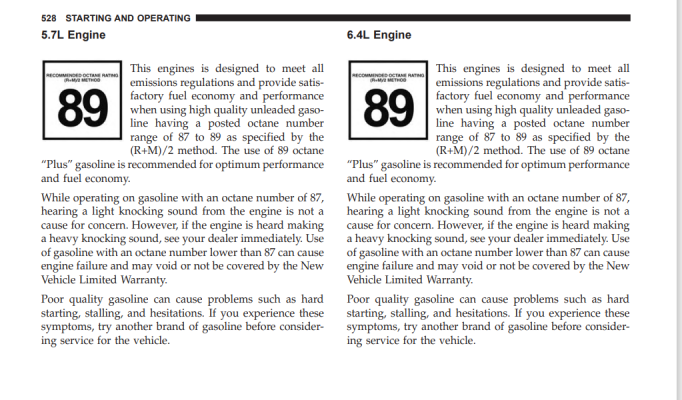
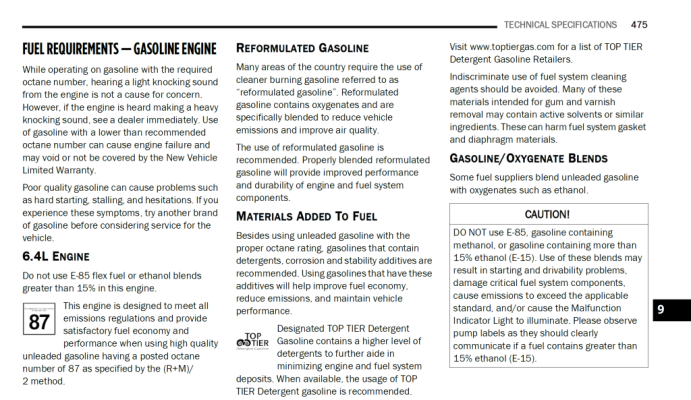
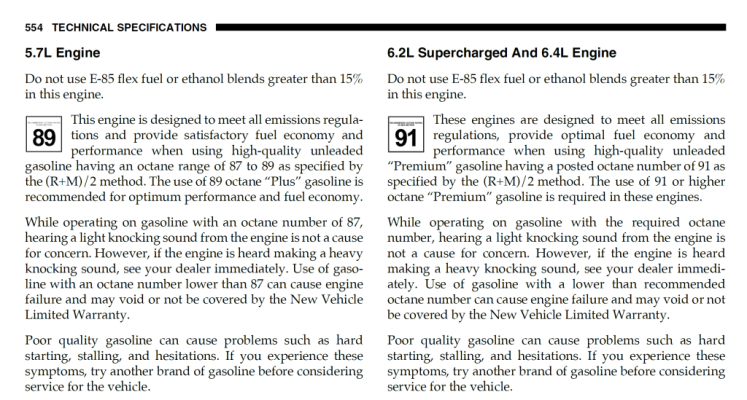
So why did Daimler-Benz-Chrysler design the Gen III Hemi to need 89 octane gas? Probably to get more power from the given displacement and compression ratio, no? Then telling us their ECM algorithm allows use of 87 octane - because let's face it, the gas price difference in octane is a big deal to a lot of people that wouldn't buy the Ram Hemi if they didn't do this.
That said, we've established that it's not great for engine longevity to run on 87 octane.
Yes, I know - more ranting about established facts.
Thank you for reading my TedTalk.