If you are stopped for whatever reason, they only care about what is registered weight. Meaning, your vehicle registration. For example- I register my 2500 to 11340Kgs (25000lbs) which is more that Rams rated GCWR, and WAY more than the GVWR of 10000lbs. I do that for cushion and would be completely legal on any road (unless the roads weight was otherwise specified by the Ministry of highways) in Sask, door stickers and manufacturer ratings be damned, at that weight as long as my tire ratings weren't exceeded.
Things are a bit different in the U.S.
Good info for Canadian members though.
State Troopers and DOT service vehicles on interstates in the U.S. do carry plate scales in their vehicles. My neighbor got ass ***** in fines and his insurance dropped him when he rear ended another vehicle while being over weight.
Riccochet, things are the exact same in the United States. If we are talking LEGALITY, in other words, what a police officer could stop you and write you a citation for, there are 2 things that matter. The first is your paid registration. The second is federal bridge regulations for tire ratings.
#1 is paid registration. My prior truck was a 2010 Tundra. It had a GVWR of 7200 lbs. In Maryland you can register a vehicle for 7000 lbs or 10,000 lbs. If I registered for 7000 lbs, I would have "lost" 200 lbs of payload on a vehicle that already has a low payload. Instead I paid for the 10,000 lbs registration, which cost me about $20 a year more. Assuming that I had sufficient tires, I just legally raised my payload by 2800 lbs... tripling what Toyota wrote on my sticker. There is nothing any police officer could have done about it, as it would have been perfectly legal.
#2 is tire rating regulations. I'm not as familiar with these, since these really only affect commercial motor vehicles. I believe that the weight limit is something like 20,000 lbs per axle. In other words, if I have a 2 axle truck like a pickup, federal bridge regulations state that I can not load either axle to over 20,000 lbs. That means that theoretically I could load my Ford Ranger to 39,999 lbs (if I paid my registration and had a CDL) and there is NOTHING a cop could do to stop me... assuming that I could get 39,999 lbs moving with a Ford Ranger.
The numbers on your truck's sticker are a WARRANTY RATING, nothing more.
My Ram 2500 has AAM axles that are rated for 10,000 lbs by AAM. In theory, with the correct suspension upgrades and tire upgrades, I could load 20,000 lbs on my Ram and be within manufacturer (AAM) specs.
My 2500's tires are rated to 3700 lbs (give or take) each. In theory, I can load 7400 lbs per axle, or 14,800 lbs total in my Ram and be within manufacturer (Nitto tire) specs.
These numbers are the starting point for "negotiations" in a civil lawsuit trial if you were ever to get into a collision with your vehicle. The plaintiffs would argue that the GVWR is the maximum weight you can carry, causing you as the responded to present data as to why your vehicle was safe to carry whatever weight you loaded. For this reason, and this reason alone, it makes it easier to purchase a 1 ton truck instead of a 3/4 ton truck. The specs are the EXACT SAME between both vehicles, but the 3/4 ton truck is artificially de-rated to give a 10,000 lbs weight rating to keep it below an arbitrary weight rating... but the vehicles are exactly the same.
When it comes to these half ton trucks in question, Ram clearly built them with comfort as the priority. Ability to haul weight was much further down the list. The OP could go through his truck and determine what is the weak link and make upgrades there, if he likes. I would assume tires and suspension are the weakest link, as those have the biggest impact on ride quality.
Figure out your tire's weight carrying capacity at the PSI recommended on your placard. Add those 4 weights up and I bet its pretty close to what Ram states is your GVWR. Simply swapping out tires to a heavier load range would give your truck more capability. Timbrens or airbags that stiffen up the soft suspension will give your truck more capability. The problem with half tons usually comes down to the FRAME, WEIGHT and BRAKES. You need enough frame keep your truck together, you need enough weight to safely anchor your truck as a towing vehicle and you need enough brakes to safely stop the truck.


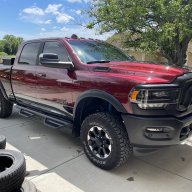

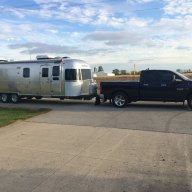


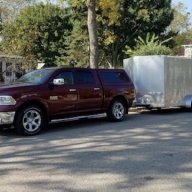
 95% of the time I'm by myself, but having that cushion is a relief. With my truck alone weighing 5800 lbs, I have a 1000 payload of people and "stuff" according to the sticker and what RAM says. None-the-less, averaging 20+mpg is a great trade-off for a little more towing capacity for what I need.


