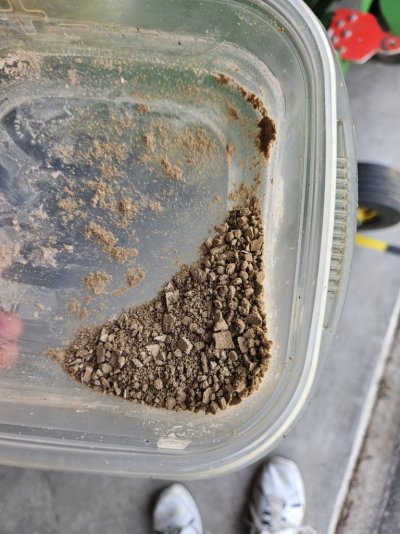

Casting Sand: 6.4 Hemi HD Coolant Filter

Disclaimer: Links on this page pointing to Amazon, eBay and other sites may include affiliate code. If you click them and make a purchase, we may earn a small commission.

Wild one

Senior Member
Joined
Jan 17, 2016
Posts
23,819
Reaction score
54,829
Ram Year
14 Sport
Engine
5.7
Found this thread that's several years old on another forum.

johnny87Discussion starter
266 posts · Joined 2007

#1 · Jan 12, 2010
Hey thought I'd ask and see if many 6.4 owners/operators have installed a coolant filter on their trucks. If so are you finding any sand or other debris? It does not seem to be talked about as much on the 6.4
 

HEMIMANN

Senior Member
Joined
Dec 7, 2020
Posts
9,579
Reaction score
25,202
Location
Minneapolis, MN
Ram Year
2017 2500 Laramie Crew Cab
Engine
6.4L HEMI
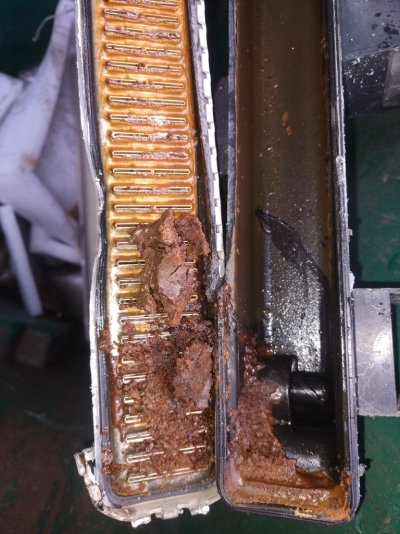
Well, now I'm pretty sure my heater core is clogged.

Started getting less heat last winter, 2017 MY 65K miles.

So, I guess the heater core is the stock coolant filter. :rolleyes:
 

U&A

Senior Member
Joined
Apr 29, 2016
Posts
9,387
Reaction score
18,963
Location
Michigan
Ram Year
2016 3500 SRW
Engine
6.4 HEMI
Well, now I'm pretty sure my heater core is clogged.

Started getting less heat last winter, 2017 MY 65K miles.

So, I guess the heater core is the stock coolant filter. :rolleyes:
Mine was clogged by about 65,000miles, maybe 70,000. I rode it out for 3 full winters with zero heat before getting it done.

Sand is sand. Extremely abrasive in the system.. You should not rely on an additive to remove it.
 

HEMIMANN

Senior Member
Joined
Dec 7, 2020
Posts
9,579
Reaction score
25,202
Location
Minneapolis, MN
Ram Year
2017 2500 Laramie Crew Cab
Engine
6.4L HEMI
Mine was clogged by about 65,000miles, maybe 70,000. I rode it out for 3 full winters with zero heat before getting it done.

Sand is sand. Extremely abrasive in the system.. You should not rely on an additive to remove it.

Did you replace the core or clean it?
 

Sherman Bird

Senior Member
Joined
Jun 28, 2019
Posts
3,115
Reaction score
6,776
Location
Houston, Texas
Ram Year
1998
Engine
5.2
Good for cleaning lime deposits, that I don't see allot in our cooling systems, because we use Distilled water W Hoat/OAT (organic additive technology).
Sand has a significant amount of calcium carbonate, which is dissolved by CLR. I'm just sharing what has WORKED for me more than a few times.
Oxalic acid is THE very best for cleaning a cooling system, but requires EXTREME patience and caution while using it. One must flush with copious amounts of water to neutralize it. It was taken off the market as a product to clean cooling systems several years ago, but can be gotten at a hardware store, because it is used in furniture finishing.

It's too bad that a sacrificial anode rod is no longer used in engines. My 1974 AMC Hornet 232 6-cylinder had one. It ran lengthwise in the water jacket of the block from just behind the thermostat to the rear of the block.
 

R.D.J.

Senior Member
Joined
Oct 1, 2017
Posts
109
Reaction score
100
Ram Year
2018
Engine
6.4 HEMI
I just flushed the cooling system in my 2018 6.4. It has 82,000kms on the odometer.

I pulled the lower rad hose, radiator drain, and block drain on the drivers side. I then isolated the heater core and flushed it separatly. I flushed the rad and block out as best I could with a garden hose.

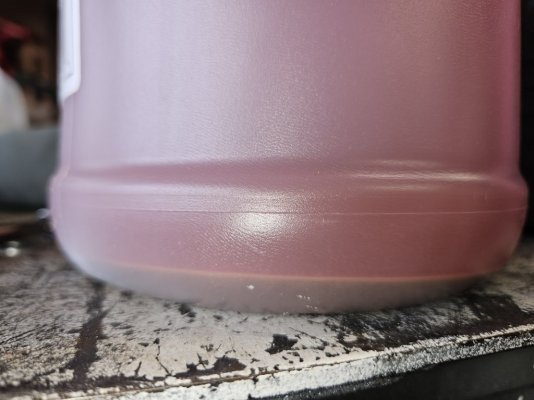
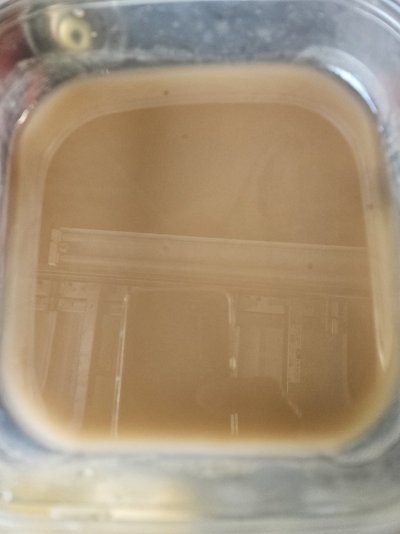
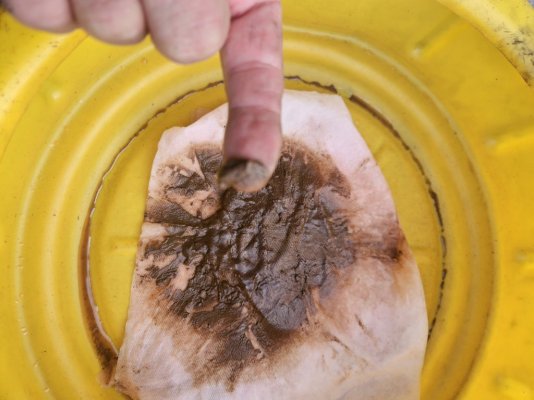
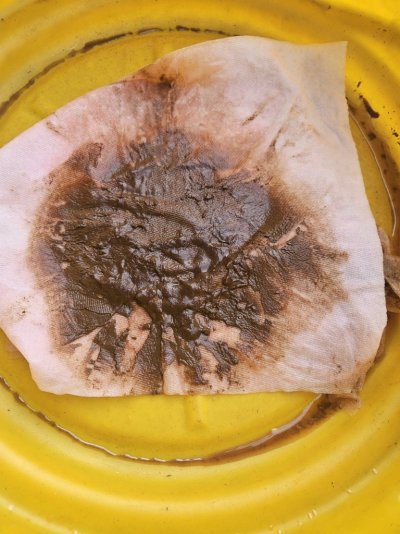
In the pan where I collected the factory coolant, and on the floor of my shop where I flushed it out was a whole bunch of sand. Looks just like the pictures in this thread.

I'm a mechanic by trade, and this was one of the worse sand contaminations I've seen.
 

mdc1990zr1

Senior Member
Joined
Feb 10, 2019
Posts
552
Reaction score
1,169
Location
Conshohocken, PA
Ram Year
2016
Engine
Hemi 5.7
I just flushed the cooling system in my 2018 6.4. It has 82,000kms on the odometer.

I pulled the lower rad hose, radiator drain, and block drain on the drivers side. I then isolated the heater core and flushed it separatly. I flushed the rad and block out as best I could with a garden hose.

In the pan where I collected the factory coolant, and on the floor of my shop where I flushed it out was a whole bunch of sand. Looks just like the pictures in this thread.

I'm a mechanic by trade, and this was one of the worse sand contaminations I've seen.
I know it looks like sand, but I think it is the additives breaking down and forming precipitates. Looking at the pictures some of you guys post, I just can't believe that much sand was left in the block. Calcium, phosphorus, silicone , hard water, organic acid and a little bit of iron oxide in the block will all form some kind of precipitate and settle on the bottom. It will coagulate and look like sand.
 

R.D.J.

Senior Member
Joined
Oct 1, 2017
Posts
109
Reaction score
100
Ram Year
2018
Engine
6.4 HEMI
I think you might be correct. I examined some of what I found, and it does appear to be much finer than sand. Now I didnt take a microscope to it, but there might be some validity to this theory.

That said, would there be a suitable chemical removal procedure that would help flush/break down the deposits?
 

HEMIMANN

Senior Member
Joined
Dec 7, 2020
Posts
9,579
Reaction score
25,202
Location
Minneapolis, MN
Ram Year
2017 2500 Laramie Crew Cab
Engine
6.4L HEMI
Based on what you guys are saying, I'd best get into a shop now with a flusher to see if I can save the heater core.

I don't have a pan big enough to flush a radiator. 1st change I just drained and refilled at home. Thanks to all for bringing this up!
 

HEMIMANN

Senior Member
Joined
Dec 7, 2020
Posts
9,579
Reaction score
25,202
Location
Minneapolis, MN
Ram Year
2017 2500 Laramie Crew Cab
Engine
6.4L HEMI
Can that really be from coolant additives? That's incredible. I've never seen that from an engine cooling system before, and I'm 66 yrs old!
 

ScubaSteve178

Member
Joined
Jun 19, 2021
Posts
47
Reaction score
53
Location
Kansas City
Ram Year
2016
Engine
6.4L Hemi
My mechanic at work has an old Mopar tech buddy that was telling him he believes it to be coolant breakdown...particularly bad in trucks with EGR's as the cooler gets so hot from the exhaust gasses. I've long believed this to be the case, as the material never looked to be coarse enough to be casting sand.

The big thing would be getting it tested to find out exactly what its made of, and that would iron that out.
 
Back
Top