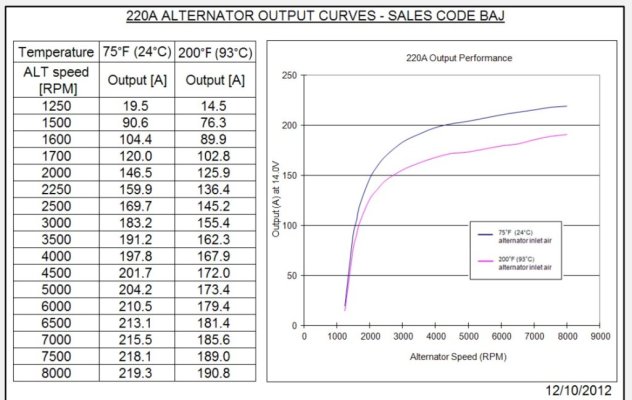
Keep in mind that adding a second battery is the same as installing a bigger gas tank....if you are draining the single battery you will also drain the system with dual batteries, it will just let you use the winch longer before it goes dead. The alternator is what is supplying the electrical power but it doesn't produce enough to power the winch. The extra power the winch requires is then taken from the battery. The winch requires more power the higher the load is on it. It's not an "on or off" situation. For example if you are pulling 6,000 lbs. it is drawing around 300 amps but if you are pulling at the max 12,000 lbs. it requires close to 500 amps. For comparison the typical alternator output on these is around 200 amp max. The alternator output also varies with engine RPM as the faster the engine is running the higher the output. This means that if your alternator is rated at 200 amp that is only at higher RPM ranges. At idle a "200 amp" alternator is probably only producing 100 amps or less. Point being that even at max output most alternators cannot keep up with a winch being used under much load and thus will be draining the battery. Getting the engine at a higher RPM while winching will help
Regarding the comments about isolators, I think there is some misunderstanding or confusion here. You do not NEED an isolator for dual batteries. Directly connecting two batteries together is about the same as installing one big battery. If you install an isolator between the batteries and hook the winch up to the second battery, that's not helping out the original problem listed in this post. You are then only pulling power from one battery and it won't be any different than before. The only reason to do this is so the winch (or other accessories) don't drain the main battery. You don't get any extra power for the winch, it's just so if the winch kills the one battery you still have the other battery to start the truck.