

You are using an out of date browser. It may not display this or other websites correctly.
You should upgrade or use an alternative browser.
You should upgrade or use an alternative browser.
Help with possible trailer purchase. Can I haul it? Wife wants to buy ASAP
- Thread starter Qcman
- Start date
Disclaimer: Links on this page pointing to Amazon, eBay and other sites may include affiliate code. If you click them and make a purchase, we may earn a small commission.
Dean2
Senior Member
- Joined
- Jun 17, 2021
- Posts
- 4,461
- Reaction score
- 8,959
- Location
- Near Edmonton
- Ram Year
- 2021 2500
- Engine
- 6.4
Absolutely true. Especially anything, including trailers, made from 2020 on.I'd be more worried about a PRE PURCHASE INSPECTION ON THE TRAILER! There's some real garbage out there with lipstick on it.
Jas34
Senior Member
Sounds like you're getting a handle on what you might be interested in since the last time I checked in on this. Good that you're looking for something smaller and lighter.
I would suggest narrowing down by brand to one with a decent quality build and a good reputation with its owners. There is so much poor quality stuff out there these days, and the warranty support with RVs is nothing like you would expect with a vehicle. Car dealers look like saints compared to what I've read about RV dealers.
Buying used is a great idea now, with so many people selling their RVs they bought during covid, and likely they got the bugs worked out during their ownership. Just beware of the fine print as many warranties don't transfer to a second owner, unlike cars. If you are used to fixing stuff yourself that's not really a big deal.
I would suggest narrowing down by brand to one with a decent quality build and a good reputation with its owners. There is so much poor quality stuff out there these days, and the warranty support with RVs is nothing like you would expect with a vehicle. Car dealers look like saints compared to what I've read about RV dealers.
Buying used is a great idea now, with so many people selling their RVs they bought during covid, and likely they got the bugs worked out during their ownership. Just beware of the fine print as many warranties don't transfer to a second owner, unlike cars. If you are used to fixing stuff yourself that's not really a big deal.
Last edited:
Jas34
Senior Member
A couple of comments about the towing.
I saw where someone mentioned 10% being the standard tongue weight percentage. There's a reason for that. There's a "standard" engineering towing test that the manufacturers use to rate their vehicles. It uses a "standard trailer" set up with a tongue weight of 10%. Part of the test involves pulling the trailer from a dead stop up a calibrated incline for a minimum # of feet. Increase the load to find the max. This is why the 3.92 axle beats out the 3.21 axle in towing specs.
In the real world, you might be able to have a 10% tongue weight on some trailers, like a boat trailer or a flat bed loaded to get it down there. A travel trailer will always have a higher percentage tongue weight. It needs it to counteract the wind resistance and keep the trailer stable. 15% is a good number for a travel trailer.
Since you're new to towing, the most important thing is to get your weight distribution hitch set up right. Everyone will recommend whatever they're using as the best. There are some really expensive better mouse traps out there, but the simple, old school ones work fine as long as they're set up right. Follow the procedure in the article and embedded video link I'm putting below and you'll be fine.FWIW, I use the same hitch and it works very well and doesn't break the bank. Learn to set up your own hitch. Don't rely on some supposed dealer expert to do it for you. You need to understand how they work and be able to tweak it to work best for your setup.
Some (me included) will recommend air bags for your ram. The purpose really isn't to take out squat. The weight distribution hitch should take most out of the back and put some on the front of the truck already. The air bags will just stiffen up the rear some and help it handle better. Think crappy concrete highways...this type of road sucks due to the proposing action of the truck/trailer combo. A properly set up hitch helps a lot with this and the air bags improve things even better. I previously used Timbrens for about a year and they gave a pretty butt jarring ride under the conditions above. The air bags I'm using now are way better. You could go a step further by replacing your stock shocks with a set of Bilsteins, but at this point you're probably spending a lot to get fairly minor improvements.
Also, I saw it mentioned you need LT rated tires for your truck. With your 20" rims and that tire size you're unlikely to find them (or want them either). They'd ride pretty harsh. I put Michelin Defender LTX-ms2 tires on mine and they're great towing tires. They are not LT rated tires contrary to their name, but they are rated as a heavier duty truck tire than a standard p metric car tire and handle more weight than you could ever put on them with that truck.
 www.rvlifemag.com
I saw where someone mentioned 10% being the standard tongue weight percentage. There's a reason for that. There's a "standard" engineering towing test that the manufacturers use to rate their vehicles. It uses a "standard trailer" set up with a tongue weight of 10%. Part of the test involves pulling the trailer from a dead stop up a calibrated incline for a minimum # of feet. Increase the load to find the max. This is why the 3.92 axle beats out the 3.21 axle in towing specs.
In the real world, you might be able to have a 10% tongue weight on some trailers, like a boat trailer or a flat bed loaded to get it down there. A travel trailer will always have a higher percentage tongue weight. It needs it to counteract the wind resistance and keep the trailer stable. 15% is a good number for a travel trailer.
Since you're new to towing, the most important thing is to get your weight distribution hitch set up right. Everyone will recommend whatever they're using as the best. There are some really expensive better mouse traps out there, but the simple, old school ones work fine as long as they're set up right. Follow the procedure in the article and embedded video link I'm putting below and you'll be fine.FWIW, I use the same hitch and it works very well and doesn't break the bank. Learn to set up your own hitch. Don't rely on some supposed dealer expert to do it for you. You need to understand how they work and be able to tweak it to work best for your setup.
Some (me included) will recommend air bags for your ram. The purpose really isn't to take out squat. The weight distribution hitch should take most out of the back and put some on the front of the truck already. The air bags will just stiffen up the rear some and help it handle better. Think crappy concrete highways...this type of road sucks due to the proposing action of the truck/trailer combo. A properly set up hitch helps a lot with this and the air bags improve things even better. I previously used Timbrens for about a year and they gave a pretty butt jarring ride under the conditions above. The air bags I'm using now are way better. You could go a step further by replacing your stock shocks with a set of Bilsteins, but at this point you're probably spending a lot to get fairly minor improvements.
Also, I saw it mentioned you need LT rated tires for your truck. With your 20" rims and that tire size you're unlikely to find them (or want them either). They'd ride pretty harsh. I put Michelin Defender LTX-ms2 tires on mine and they're great towing tires. They are not LT rated tires contrary to their name, but they are rated as a heavier duty truck tire than a standard p metric car tire and handle more weight than you could ever put on them with that truck.
How to Set Up a Weight Distributing Hitch System | RV Lifestyle Magazine
www.rvlifemag.com
Last edited:
star_deceiver
Senior Member
- Joined
- May 18, 2019
- Posts
- 885
- Reaction score
- 1,871
- Location
- Airdrie, Alberta
- Ram Year
- 2021
- Engine
- 3.6 Pentastar
Knock at least $5k off that stick and tin unit. Check the date codes on the tires and have them replaced at their cost if they’re a day over 5 yrs old. Have them bring out a 12’ ladder and check all the roof dicor. Check the fresh water tank. If the bottom is bulging down have them replace it on their dime. If you can pop the bearing caps and look at the grease, do that. Test everything inside. Open every drawer. Remove the drawer under the fridge and any screwed on panel and check for evidence of mice. If you don’t understand anything that I typed above or what to look for, bring along someone who does. If you know what to look for and how to play hardball you can negotiate yourself a great deal or find things that will make you run fast from that trailer.
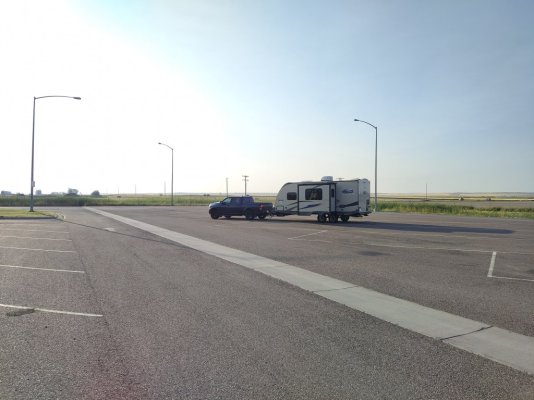
Your 5.7 truck will tow it fine, just get the proper WDH. I’ve got a 21’ classic with the 3.6 and it tows my 223RBS, loaded weight 5500lbs with 930 lbs tongue, just fine.
nlambert182
Senior Member
- Joined
- Dec 28, 2022
- Posts
- 2,657
- Reaction score
- 4,647
- Location
- Huntsville, AL
- Ram Year
- 2018
- Engine
- 6.7 Cummins
Well aware of how it's derived, but that doesn't change what I suggested. What I suggested is the most safe way to plan. It would be rare to find a seasoned RV'er who will disagree with it.This is easy but a VERY conservative estimate and not always accurate or helpful. Trailer GVWR is derived from the axle ratings and overall construction of the trailer. In most cases manufacturers run it pretty close and CCCs (difference between GVWR and dry weight) are a couple thousand pounds. However, sometimes CCC on a trailer is ridiculously high and there's no need to pair the truck to that number if you don't plan to load up to the trailer GVWR.
Years ago I had a Salem travel trailer that weighed around 6000# dry but for whatever reason they put 5000# axles on it and it had a GVWR around 11,000#. There was no reason at all that I'd need a truck capable of carrying/pulling 11,000# if I just planned to put the usual 1500# of things in it.
The problem is that people never plan to load as much as they do, and they run out of capacity a lot sooner than they think, because they get complacent. It's just human nature. No one wants to weigh their rigs every 3 months, so you plan accordingly. I can't count on both hands and feet the number of times we've had discussions with folks at campgrounds who regretted their truck/trailer combo decision based strictly on not realizing how quickly cargo adds up. Heck... Did it myself.
They put 5k axles under it because there will never be a time where 100% of the CCC sits on the axles. It's common on every RV. If the GVWR was 11k, using a 15% estimated tongue weight, that's only 4,675 lbs on each axle. It's well within the axle rating.
nlambert182
Senior Member
- Joined
- Dec 28, 2022
- Posts
- 2,657
- Reaction score
- 4,647
- Location
- Huntsville, AL
- Ram Year
- 2018
- Engine
- 6.7 Cummins
10% ONLY works for flatbeds, boats, etc... It absolutely never works for RVs. On travel trailers, you'll typically see 13-16% tongue weight. That is across the board. On fifth wheels, you'll see anywhere from 18-25% pin weight.Do what's best for you. But don't let people here decide for you...
If you read some the posts... Payload isn't as big deal as some make it out to be. You got one guy who always saying 15%, other saying 13%. The actual standard used is 10%.
But the important number is what Trailer manufacture says. If you get into an accident, the number they say is only one important, not what some random person babbles on website.
No matter what you buy, if you do. Practice around you area before going on long trip. Drive down 401 or depending where you are in Ottawa other large highway.
Have an experienced person setup the WDH for you. When packing the trailer, put as much as you can on the trailer axles.
I've seen many people load up TT's, filling the front of trailer. Truck sags, buy bags for it. When they never needed them in first place.
The standard they use is for marketing just as they always advertise dry weights. It gives the APPEARANCE to a buyer that the trailer is lighter than it is. That opens up the market to more buyers who have undersized trucks. This is why it's important for a buyer to know the numbers.
Payload is a big deal, especially for a newcomer. Can you exceed it? Yes... to a small degree as long as you aren't exceeding rear axle weight ratings but that is a dangerous precedent to set for a newbie. They'll likely see that their rear axle is set for twice the payload but won't factor in that half of that weight is already gone from the truck sitting on top of it. Sizing trailer/trucks is a safety exercise more than anything else.
ppine
Forester
- Joined
- Jun 24, 2022
- Posts
- 534
- Reaction score
- 511
- Location
- Nevada
- Ram Year
- 2022
- Engine
- 6.7 liter diesel
If you are new to towing, why would you start out with a trailer that is close to the max your truck can handle?
Nearly every salesman in the world is going to fill you with hope and tell you your truck will be fine.
Smaller trailer or bigger truck is the right advice.
Nearly every salesman in the world is going to fill you with hope and tell you your truck will be fine.
Smaller trailer or bigger truck is the right advice.


that trailer has a nice layout. the knock for me would be that it is wood framing with metal siding. when we were trailer shopping we eliminated those from our search because we felt they would be more susceptible to wood rot and fading/denting of the siding. because rv's in general are so poorly put together, I know folks who have found maybe 30% of staples and screws in the construction of their trailers missed their mark during construction. even on the azdel welded aluminum trailer we bought, almost every screw in the sheet of diamond plate looking material on the lower front of ours had missed it's mark and I had to redo most of them in the first season of camping. our trailer was 6000# 28' tongue wt. 560#. it towed great behind our '19 laramie 1500 ccsb 4x4 with 5.7 hemi and 3.92 gears. we had the 8hp 8speed with 5.0 first gear and the 33gal tank. I put airbags and Helwig sway bar. ran 15# air when towing and a few more # in the tires. If I stayed under 70 I got 8.5-10 and even 11 once in a while towing. dont overthink it.
Thornback
Member
Once you are committed you need to practice driving on short trips, like day trips, and practice backing the trailer -- Good idea to have your wife drive some so she can see the full picture and be better informed as you will be. It's easy to tell someone what to do when you don't have to do it. Good luck, drive slowly, and happy motoring.
Hobobob
Junior Member
- Joined
- Mar 9, 2018
- Posts
- 13
- Reaction score
- 16
- Location
- Polson, MT
- Ram Year
- 2021 2500 Big Horn
- Engine
- Hemi 6.4
Not to beat a dead horse but.....Towed my Lance 2375 for 3 years with a Ram 1500. Had to install air bags, truck tires, and use a WDH. But....I always danced around my max CCC of about 1400 lbs. You must weigh the truck and trailer on a CAT scale to figure just what you REALLY weigh. Lance advertised my tongue weight at around 700 lbs. Turned out to be near 1000 lbs. I had to decide what I wanted to bring on each trip. You will fill the back of your truck with stuff. BBQ's, Blackstone, air compressor, generator, tubs of misc. stuff, tools, bikes, etc, etc, etc. I towed around 25K miles. No problems but I have a lot of experience towing. Finally, I upgraded to Ram 2500. Went with the Hemi 6.4. OMG, now I had over 3000 lbs of CCC. Short trips I don't even bother with the WDH. Hardly notice the trailer back there. My opinion, get a smaller trailer or move up to a 2500. You do you.
Black1500Ram
Senior Member
- Joined
- Jul 18, 2021
- Posts
- 621
- Reaction score
- 1,047
- Location
- Scottsdale, AZ
- Ram Year
- 2015
- Engine
- 5.7 Hemi
I didn’t read every post so please excuse me if this was already covered; do you still have the stock P series tires?
Another consideration imo. They will be very floaty when loaded down. No issues with rating, but if you plan on keeping the the truck as your tow rig, I’d throw some lt tires on there in the near future.
Another consideration imo. They will be very floaty when loaded down. No issues with rating, but if you plan on keeping the the truck as your tow rig, I’d throw some lt tires on there in the near future.
Last edited:
FAAQ2
Member
- Joined
- May 17, 2021
- Posts
- 44
- Reaction score
- 29
- Location
- Neskowin, OR
- Ram Year
- 2015
- Engine
- 3.0 L Diesel
Since I m not an expert by any means But with a 1500 I would think that the weight is too heavy for the truck. So if you buy the trailer and then discover it is too heavy - than what ? Probably time for the wife to take a chill pill . Do some research before you buy - otherwise this quick purchase could bite you.Hi like it says. I have a 2021 Classic Crew cab with the 5.7 Hemi and 3.21 rear gear. The label on my truck says 1485 lbs of weight capacity for the truck. The trailer is 26' without tongue etc. The trailer is 5795 dry with a tongue weight of 725. The trucks tow capacity seems to be about 8000- 8200 lbs from a chart I found online.
My wife is hammering me hard to buy this ASAP and I'm panicking worrying it is too much for my truck. I've done some research here and elsewhere and it seems its either not a chance or should be fine lol. The trailer gross is 7725 but we aren't the sort of folks to carry a lot of stuff so I'm not too concerned on that end as I would try to keep added weight in the trailer as low as I can. There is only us 2 folks in the truck no other passengers. We are looking at some long hauls as we are retired. Think Ontario, Canada to Florida as the longest range we intend to travel so pretty significant. I do plan to use the stabilizing weight distribution parts with it too.
Can someone tell me I can do this or say that I should not definitively? I can get more vehicle info from door stickers uploaded if that is needed for anyone to see? Please help when my wife gets an idea stuff happens fast!
I am not an expert on towing either. But I have been towing my 25 foot travel trailer for the past 5 years. I had a Ram 1500 that my trailer fell within the specs. I live in California and it really struggled on the hills. I live in the Central Valley and to get anywhere outside of this valley you have steep grades on any route you take. What I learned is to not buy a truck that will just meet or slightly exceed your trailer's weights. Buy a tow vehicle that will really exceed all the specs. You'll be able to tow anywhere you want in comfort and may be able to trade up to something larger. This is exactly why I bought my 3500. That's way overkill for what you want but I have plans to move up to a 5th wheel in a few years and I didn't want to buy another truck. This one will pull anything I could ever imagine.
Qcman
Member
- Joined
- Oct 23, 2024
- Posts
- 53
- Reaction score
- 32
- Location
- Ottawa, Canada
- Ram Year
- 2021
- Engine
- 5.7 liter Hemi
Thx I assume your 3.6 has the higher numerical rear which I think is 3.55 for the v6? We looked at the 2017 and didn’t like how dingey inside it was.Knock at least $5k off that stick and tin unit. Check the date codes on the tires and have them replaced at their cost if they’re a day over 5 yrs old. Have them bring out a 12’ ladder and check all the roof dicor. Check the fresh water tank. If the bottom is bulging down have them replace it on their dime. If you can pop the bearing caps and look at the grease, do that. Test everything inside. Open every drawer. Remove the drawer under the fridge and any screwed on panel and check for evidence of mice. If you don’t understand anything that I typed above or what to look for, bring along someone who does. If you know what to look for and how to play hardball you can negotiate yourself a great deal or find things that will make you run fast from that trailer.
Your 5.7 truck will tow it fine, just get the proper WDH. I’ve got a 21’ classic with the 3.6 and it tows my 223RBS, loaded weight 5500lbs with 930 lbs tongue, just fine. View attachment 553857
Qcman
Member
- Joined
- Oct 23, 2024
- Posts
- 53
- Reaction score
- 32
- Location
- Ottawa, Canada
- Ram Year
- 2021
- Engine
- 5.7 liter Hemi
We looked at another 26’ yesterday that was not stick and tin. The aluminum and fibreglass units are lighter it seems. It had a tongue weight of 600 and dry of 57xx which I thought was more encouraging. We are focusing on these types now to help with keeping the weight as low as possible.that trailer has a nice layout. the knock for me would be that it is wood framing with metal siding. when we were trailer shopping we eliminated those from our search because we felt they would be more susceptible to wood rot and fading/denting of the siding. because rv's in general are so poorly put together, I know folks who have found maybe 30% of staples and screws in the construction of their trailers missed their mark during construction. even on the azdel welded aluminum trailer we bought, almost every screw in the sheet of diamond plate looking material on the lower front of ours had missed it's mark and I had to redo most of them in the first season of camping. our trailer was 6000# 28' tongue wt. 560#. it towed great behind our '19 laramie 1500 ccsb 4x4 with 5.7 hemi and 3.92 gears. we had the 8hp 8speed with 5.0 first gear and the 33gal tank. I put airbags and Helwig sway bar. ran 15# air when towing and a few more # in the tires. If I stayed under 70 I got 8.5-10 and even 11 once in a while towing. dont overthink it.
You mentioned the first gear ratio in the 8 speed being 5.0 to 1 is that different from my 8 speed? I understand what advantages your 3.92 rear adds to towing.
Last edited:
Qcman
Member
- Joined
- Oct 23, 2024
- Posts
- 53
- Reaction score
- 32
- Location
- Ottawa, Canada
- Ram Year
- 2021
- Engine
- 5.7 liter Hemi
Yeah I don’t want a different truck.I am not an expert on towing either. But I have been towing my 25 foot travel trailer for the past 5 years. I had a Ram 1500 that my trailer fell within the specs. I live in California and it really struggled on the hills. I live in the Central Valley and to get anywhere outside of this valley you have steep grades on any route you take. What I learned is to not buy a truck that will just meet or slightly exceed your trailer's weights. Buy a tow vehicle that will really exceed all the specs. You'll be able to tow anywhere you want in comfort and may be able to trade up to something larger. This is exactly why I bought my 3500. That's way overkill for what you want but I have plans to move up to a 5th wheel in a few years and I didn't want to buy another truck. This one will pull anything I could ever imagine.
Qcman
Member
- Joined
- Oct 23, 2024
- Posts
- 53
- Reaction score
- 32
- Location
- Ottawa, Canada
- Ram Year
- 2021
- Engine
- 5.7 liter Hemi
I am doing the research here as you suggest the problem is the advice varies from it’s okay to not a chance. So in the meantime we are not buying anything until we feel comfortable.Since I m not an expert by any means But with a 1500 I would think that the weight is too heavy for the truck. So if you buy the trailer and then discover it is too heavy - than what ? Probably time for the wife to take a chill pill . Do some research before you buy - otherwise this quick purchase could bite you.
Qcman
Member
- Joined
- Oct 23, 2024
- Posts
- 53
- Reaction score
- 32
- Location
- Ottawa, Canada
- Ram Year
- 2021
- Engine
- 5.7 liter Hemi
I have the stock Good Year Wranglers on it which is what I assume you are referring to with a P rating?I didn’t read every post so please excuse me if this was already covered; do you still have the stock P series tires?
Another consideration imo. They will be very floaty when loaded down. No issues with rating, but if you plan on keeping the the truck as your tow rig, I’d throw some lt tires on there in the rear future.
Qcman
Member
- Joined
- Oct 23, 2024
- Posts
- 53
- Reaction score
- 32
- Location
- Ottawa, Canada
- Ram Year
- 2021
- Engine
- 5.7 liter Hemi
What was the size of your trailer? I looked up that trailer it says 775 tongue and 5900 dry. With say 1200 lbs in the trailer your tongue weight would be over 900 easily and I’m trying to find a trailer that is closer to 600 pin weight and that would be 750 pin loaded at least in theory.Not to beat a dead horse but.....Towed my Lance 2375 for 3 years with a Ram 1500. Had to install air bags, truck tires, and use a WDH. But....I always danced around my max CCC of about 1400 lbs. You must weigh the truck and trailer on a CAT scale to figure just what you REALLY weigh. Lance advertised my tongue weight at around 700 lbs. Turned out to be near 1000 lbs. I had to decide what I wanted to bring on each trip. You will fill the back of your truck with stuff. BBQ's, Blackstone, air compressor, generator, tubs of misc. stuff, tools, bikes, etc, etc, etc. I towed around 25K miles. No problems but I have a lot of experience towing. Finally, I upgraded to Ram 2500. Went with the Hemi 6.4. OMG, now I had over 3000 lbs of CCC. Short trips I don't even bother with the WDH. Hardly notice the trailer back there. My opinion, get a smaller trailer or move up to a 2500. You do you.
Last edited:
Similar threads


- Replies
- 0
- Views
- 89

- Replies
- 31
- Views
- 2K

- Replies
- 15
- Views
- 1K


