
Hit a Bump Took a Dump

Disclaimer: Links on this page pointing to Amazon, eBay and other sites may include affiliate code. If you click them and make a purchase, we may earn a small commission.

Joined
Mar 18, 2025
Posts
94
Reaction score
77
Location
Cedar Lake, IN
Ram Year
2014
Engine
3.6
Coming home yesterday on a road I don't use a lot. It's always been a little rough, but geez it's getting bad. Hit a patch of concrete that was like a washboard. Suddenly I hear a ding, look at the dash and see 4 lights on. Check engine and some other crap. Truck loses power, but doesn't die. Giving it about 3/4 of the pedal I was able to maintain around 10 MPH. Pushing pedal down further did no good.

Got it off into a parking lot, look under the hood. Nothing looks amiss. Idling nicely. Shut it off, start it back up and drove home without any further incidents.

Pulled the codes and shut the CEL off. Codes: PO339 Crankshaft sensor intermittent and P1618 DTC definition not found.

I'm thinking maybe I got a loose connection on the crank sensor. Can someone tell me where it's at please? Or if anybody has any other ideas I'd sure like to hear them. Truck is 2014 with Pentastar 3.6.

 

Ken226

Senior Member
Joined
Mar 12, 2017
Posts
2,305
Reaction score
5,971
Location
Washington State
Ram Year
2013
Engine
Hemi
Coming home yesterday on a road I don't use a lot. It's always been a little rough, but geez it's getting bad. Hit a patch of concrete that was like a washboard. Suddenly I hear a ding, look at the dash and see 4 lights on. Check engine and some other crap. Truck loses power, but doesn't die. Giving it about 3/4 of the pedal I was able to maintain around 10 MPH. Pushing pedal down further did no good.

Got it off into a parking lot, look under the hood. Nothing looks amiss. Idling nicely. Shut it off, start it back up and drove home without any further incidents.

Pulled the codes and shut the CEL off. Codes: PO339 Crankshaft sensor intermittent and P1618 DTC definition not found.

I'm thinking maybe I got a loose connection on the crank sensor. Can someone tell me where it's at please? Or if anybody has any other ideas I'd sure like to hear them. Truck is 2014 with Pentastar 3.6.

According to AI: p1618 is an ecm voltage error on the 5v reference voltage bus, internal to the PCM.

Best guess, the 5v on your crank sensor got intermittently shorted to ground while you were Dukes of Hazard'ing. ******.

Grab a flashlight and crawl under. Inspect the wiring and connector, especially anywhere the wires can rub metal parts.

 
OP
OP
HotDamnGotaRam
Joined
Mar 18, 2025
Posts
94
Reaction score
77
Location
Cedar Lake, IN
Ram Year
2014
Engine
3.6
I do try and avoid this activity ->

View attachment 581634

Sorry can't help with the sensor location.
That looks like me in my Chevelle SS after hitting the Kankakee River bridge at 150 mph. Left a 440 Road Runner in the dust, but nearly met my maker. Young and dumb. Good times???
 
OP
OP
HotDamnGotaRam
Joined
Mar 18, 2025
Posts
94
Reaction score
77
Location
Cedar Lake, IN
Ram Year
2014
Engine
3.6
OK, I'll admit been sort of ignoring this since it hasn't happened for a while, but yesterday it happened 3x. Going over moderate bumps. Nothing real bad.

Got under there today to take a look and don't see anything that looks bad. Could it be the sensor itself is going bad or am I just missing something? Plug seems to be on tight and no breaks in the plastic loom. All wiring inside, don't see any bare wires sticking out.
 
OP
OP
HotDamnGotaRam
Joined
Mar 18, 2025
Posts
94
Reaction score
77
Location
Cedar Lake, IN
Ram Year
2014
Engine
3.6
Sometimes we survive despite our best efforts! I once went into a river at 115 MPH.

You got that right. This wasn't my only incident. Blessed, maybe cursed, with dozens of fast cars back when wasn't much more than a teenager it's a wonder I'm still here.

Another time, I'm cooking down a 2 laner doing 90 in a Trans Am, at night. Nobody around. Suddenly some knucklehead turns right out in front of me. Car coming, my only option was hitting the ditch. Thank God it was shallow. Passed the car on the right and popped out of it unscathed. If it was deeper or there was a tree, who knows....

Another time driving like a goober, at night again. In a 400 powered Grand Prix, hit a patch of ice goiing about 50. Right out into a cornfield. There was one break in the treeline and I deftly slipped right through. Luck, not skill. Again no damage to the car or occupants. We did have to crawl out the windows tough and hoof it back to town to find a friend with a 4x4. We were buried in 2' of snow.
 
OP
OP
HotDamnGotaRam
Joined
Mar 18, 2025
Posts
94
Reaction score
77
Location
Cedar Lake, IN
Ram Year
2014
Engine
3.6
Check ALL your ground connections between the engine and frame / body / battery are tight and clean with no corrosion.

Thanks for the idea. hadn't though of that. Wouldn't bad grounds cause other issues too though?

Anybody think it would be smart to just swap out the sensor? I read they have a magnet in them that can get weak with age. I just hate throwing parts at something hoping to get lucky.
 

04fxdwgi

Senior Member
Joined
May 19, 2023
Posts
1,806
Reaction score
3,805
Location
Coastal NE North Carolina
Ram Year
2016 1500 Sport
Engine
5.7 Hemi
Thanks for the idea. hadn't though of that. Wouldn't bad grounds cause other issues too though?

Anybody think it would be smart to just swap out the sensor? I read they have a magnet in them that can get weak with age. I just hate throwing parts at something hoping to get lucky.
Grounds will cause all kinds of odd problems. No way to predict which ones. If the sensor tests bad, then absolutely change it. Intermittent problems are the worst to chase down, especially if you don't have a second set of hands available.
 
OP
OP
HotDamnGotaRam
Joined
Mar 18, 2025
Posts
94
Reaction score
77
Location
Cedar Lake, IN
Ram Year
2014
Engine
3.6
Still working on figuring this out. Had one day when it went into limp 10x. Then the next 4x I drove it, only did it once. So far I've found two obvious grounds on inside of fenders. Cleaned them up real good. I know there's at least 2 or 3 more sneaky ones that haven't found yet. Decided be a good idea to clean battery cables. Pulled them all, cleaned the posts, and connectors, tightened it all back up with a little dielectric grease. Two of the little cables actually moved when I bumped my hand into them, so obviously not that tight. After doing nothing more it seemed good. Now I know it's not fixed, but seems better. Broke down and ordered NGK crank sensor. That's a good one, right? Most everyone seems to think it's that sensor or the plug, so that's what's next. Hope I get lucky. From what I've read the sensors all share the same 5V circuit and if any of them shorts it effects them all.

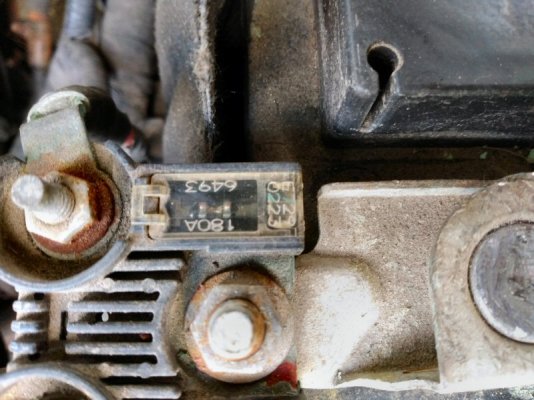
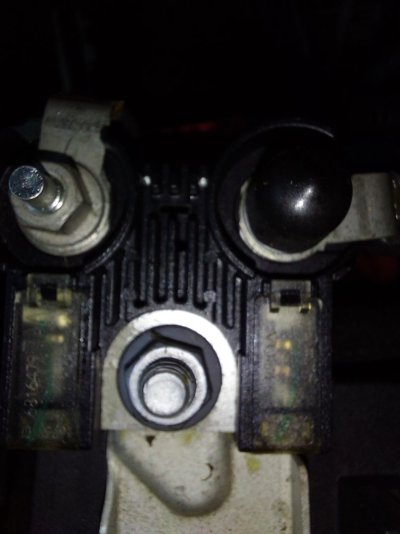
Something else I noticed is what looks like fuses in the battery clamp? Never seen anything like this before. One of them actually looks kinda funky. Could this be part of the problem?
 

Attachments

  • RAM Battery Cable Fuses 02.jpg
    RAM Battery Cable Fuses 02.jpg
    113.3 KB · Views: 0

04fxdwgi

Senior Member
Joined
May 19, 2023
Posts
1,806
Reaction score
3,805
Location
Coastal NE North Carolina
Ram Year
2016 1500 Sport
Engine
5.7 Hemi
Still working on figuring this out. Had one day when it went into limp 10x. Then the next 4x I drove it, only did it once. So far I've found two obvious grounds on inside of fenders. Cleaned them up real good. I know there's at least 2 or 3 more sneaky ones that haven't found yet. Decided be a good idea to clean battery cables. Pulled them all, cleaned the posts, and connectors, tightened it all back up with a little dielectric grease. Two of the little cables actually moved when I bumped my hand into them, so obviously not that tight. After doing nothing more it seemed good. Now I know it's not fixed, but seems better. Broke down and ordered NGK crank sensor. That's a good one, right? Most everyone seems to think it's that sensor or the plug, so that's what's next. Hope I get lucky. From what I've read the sensors all share the same 5V circuit and if any of them shorts it effects them all.

Something else I noticed is what looks like fuses in the battery clamp? Never seen anything like this before. One of them actually looks kinda funky. Could this be part of the problem?
Looking at that pic, those connections need some love. I would consider those "bad" connections and refurb them.

I would not use dielectric grease on the connections because dielectric is an insulating grease.

I use this conductive stuff on all electrical connections / grounds and battery terminals on vehicles and marine equipment / boats and have never had a corrosion / rust problem on connections.. We used it on the -48 VDC, 10,000 amp buss and 750 Kva UPS connections / battery cables in data centers and telecom facilities. Worked like a dream.

1782897049515.png

 
Last edited:

EdGs

Senior Member
Joined
Nov 29, 2020
Posts
5,568
Reaction score
11,816
Location
FL
Ram Year
2015
Engine
Hemi 5.7L
Sometimes, something as simple as unplugging and plugging in a connector is all it takes. They build up a little film right at the connection, and that's it.

I went through and pushed all my fuses back down. I was surprised how many of them made that little creaky sound like they weren't quite seated.

There are also connectors on the bottom of the TIPM, not sure how difficult those are to get at, though.

I also live in FL, so no exposure to road salt, etc.
 
OP
OP
HotDamnGotaRam
Joined
Mar 18, 2025
Posts
94
Reaction score
77
Location
Cedar Lake, IN
Ram Year
2014
Engine
3.6
Yeah, those are the before pics. I cleaned that all up. Are those fuses though? I'm not real sure what I'm looking at. How do they come out? The grease thing I go back and forth on. I know it's actually an insulator, but it seems many connections benefit from it.

Good tip on umplugging sensors. I'll do as many as I can find.

So last two incidents didn't set crankshaft code. Now I got these: P0642 Sensor Reference Voltage A Circuit Low and P1618. Now I'm wondering if it's the crank sensor at all
 

RamDiver

Senior Member
Joined
Jan 23, 2022
Posts
5,728
Reaction score
12,093
Location
Marlborough, Ontario Canada
Ram Year
2021 DS
Engine
Hemi 5.7
Yes, high current fuses.

IIRC, my truck has a 120 A & 180 A fuse.
Likely for things like the starter and alternator.

To my knowledge the fused battery clamp is changed as a unit, at least from Mopar. :cool:

20250330_145829.jpg

.
 

04fxdwgi

Senior Member
Joined
May 19, 2023
Posts
1,806
Reaction score
3,805
Location
Coastal NE North Carolina
Ram Year
2016 1500 Sport
Engine
5.7 Hemi
Yeah, those are the before pics. I cleaned that all up. Are those fuses though? I'm not real sure what I'm looking at. How do they come out? The grease thing I go back and forth on. I know it's actually an insulator, it's but it seems many connections benefit from it.
Why would you even consider putting an insulator on electrical / electronic connections?

The connections seem to benefit due to it sealing water out. The proper use of the stuff is to apply to the part housing that houses the pins, but not the low voltage pis. It is stated many times, do not apply to spark plug connection, just the boot. This keeps water out and keeps boot from sticking to insulator. And never, ever on the battery posts / terminals.

I've been an electrican, electronics and automotive / marine guy for almost 65 years, so been there, done that.... But, you do you...

Direct from AI:
Do not put dielectric grease directly in between metal-to-metal contact points, such as battery terminals or mated connector pins, as it is an electrical insulator. Instead, apply it around the housing or exterior of the connection to seal out moisture and prevent corrosion. [1, 2, 3]
Never use dielectric grease in the following places:

  • Directly between battery posts and cable terminals: Placing it before connecting the battery acts as an insulator, blocking current and potentially causing starting failure. Always make the metal-to-metal connection first, then smear the grease over the outside. [1, 2]
  • Spark plug threads: Applying it here can alter the torque specifications, leading to over-tightening or damage. Modern spark plugs already come with a specialized anti-seize coating. [1]

    • Low-voltage, highly sensitive electronic sensors: On delicate circuits or small pin connections, the grease can be forced into the contact points by the pins, leading to increased resistance, signal loss, or sensor failure. [1, 2, 3]
    • Closed, weatherproof connectors: Modern automotive plugs with tight rubber seals are already protected from the elements; adding grease can attract dirt and may cause the rubber to degrade over time. [1, 2, 3]
    • Moving switches and relays: Because it is thick, it will gum up the internal mechanical components, leading to sluggish or non-working switches. [1]
 
Last edited:
OP
OP
HotDamnGotaRam
Joined
Mar 18, 2025
Posts
94
Reaction score
77
Location
Cedar Lake, IN
Ram Year
2014
Engine
3.6
The reason why I would consider using it and also why I actually do use it is due to widespread recommendations I see pretty much everywhere. As I said though, it never really sounded right, putting something with insulating properties on electrical connections. I can say though it cured a good many light bulb issues on exterior lighting on my older vehicles. I do appreciate your input and will modify my practices.

Here's some further input from AI:

I keep reading online people recommending putting dielectric grease into electrical connections, not just the outside. Are they all wrong?


No, they are not completely wrong, but they are relying on a physical trick called mechanical displacement. [1]


When you pack a multi-pin plug with dielectric grease and snap it together, the tight metal-to-metal pressure of the pins scrapes the grease away at the exact point of contact. The excess grease is squeezed out, surrounding the connection and sealing out air and water.

Why People Do It (The Pros)
  • Complete Sealing: It fills the microscopic air gaps inside the connector plug.
  • Corrosion Prevention: It stops water or salt from entering the plug housing.
  • Easy Disassembly: It prevents the plastic and rubber housings from welding together over time.

The Hidden Risks (Why It Can Fail)
  • Weak Connections: If a pin is slightly loose or has weak spring tension, it won't scrape the grease away. This leaves an insulating layer that causes a bad connection or a circuit failure. [1, 2]
  • Hydraulic Lock: Packing a sealed, weather-tight plug too full can trap the grease. The pressure can push the connector apart or prevent it from clicking securely into place.
  • Dirt Magnet: Exposed excess grease outside the plug acts like glue for road grime and dust.

The Best Practice
For low-voltage, sensitive electronics (like modern car sensors or computer modules), apply it only to the rubber weather seals and plastic bodies, keeping the metal pins clean. For high-vibration, high-moisture environments with strong mechanical connections (like trailer plugs or light bulb sockets), packing the plug is generally safe and highly effective.
 

RamDiver

Senior Member
Joined
Jan 23, 2022
Posts
5,728
Reaction score
12,093
Location
Marlborough, Ontario Canada
Ram Year
2021 DS
Engine
Hemi 5.7
The reason why I would consider using it and also why I actually do use it is due to widespread recommendations I see pretty much everywhere. As I said though, it never really sounded right, putting something with insulating properties on electrical connections. I can say though it cured a good many light bulb issues on exterior lighting on my older vehicles. I do appreciate your input and will modify my practices.

Here's some further input from AI:

I keep reading online people recommending putting dielectric grease into electrical connections, not just the outside. Are they all wrong?


No, they are not completely wrong, but they are relying on a physical trick called mechanical displacement. [1]


When you pack a multi-pin plug with dielectric grease and snap it together, the tight metal-to-metal pressure of the pins scrapes the grease away at the exact point of contact. The excess grease is squeezed out, surrounding the connection and sealing out air and water.

Why People Do It (The Pros)
  • Complete Sealing: It fills the microscopic air gaps inside the connector plug.
  • Corrosion Prevention: It stops water or salt from entering the plug housing.
  • Easy Disassembly: It prevents the plastic and rubber housings from welding together over time.

The Hidden Risks (Why It Can Fail)
  • Weak Connections: If a pin is slightly loose or has weak spring tension, it won't scrape the grease away. This leaves an insulating layer that causes a bad connection or a circuit failure. [1, 2]
  • Hydraulic Lock: Packing a sealed, weather-tight plug too full can trap the grease. The pressure can push the connector apart or prevent it from clicking securely into place.
  • Dirt Magnet: Exposed excess grease outside the plug acts like glue for road grime and dust.

The Best Practice
For low-voltage, sensitive electronics (like modern car sensors or computer modules), apply it only to the rubber weather seals and plastic bodies, keeping the metal pins clean. For high-vibration, high-moisture environments with strong mechanical connections (like trailer plugs or light bulb sockets), packing the plug is generally safe and highly effective.

I once used the same practice and was redirected by the members here. :cool:

.
 
Back
Top