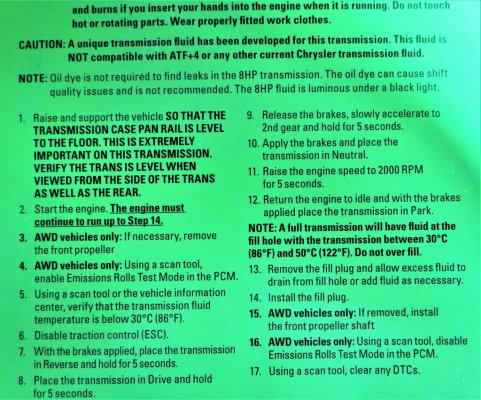
I have a 2015 ram 1500 bighorn w/5.7 hemi 4x4 with aprox 170,000 mi and 8 speed trans, back around 90,000 i had the transmission serviced so today i started looking into having it done again. I called a Ram dealer and the service department told me that being a sealed transmission they didn’t recommend having it done, puzzling to me, so I called another dealership Same answer, with that i called at least 5 different transmission shops, most would do it but several again said they didn’t recommend it, what gives here I thought this was something that should be done every 100k give or so. Should I have it done or not and also should i have the Pan/Filter replaced also ? They are asking anywhere from $850. To 1200. Thanks


Transmission service question
- Thread starter Bacon6
- Start date
Disclaimer: Links on this page pointing to Amazon, eBay and other sites may include affiliate code. If you click them and make a purchase, we may earn a small commission.




Similar threads


Staff online
-
 mikeruSuper Moderator
Members online
- poopsleeve
- seems fishy
- mikezman
- RamDiver
- Jsdoggew
- goldramgb
- George4073
- Bigdave902
- olyelr
- PeteSzRam1500
- Paperboy4828
- Buddy
- Namelama
- Magfan2
- Pull Ya
- Curmudgeon
- northlane1
- Zoe Saldana
- 26 Tungsten
- jeff_rey
- duckman631
- MarshRam
- 7091ram
- RamInfo
- TRK_GANG74
- davesue4b
- DILLIGAF
- djarrett
- Mlarv5
- Fedor Illarionov
- Rusty Nuts
- jws123
- tiger trap
- jmp187
- Craig52
- sammar
- AZRR
- Dean2
- PA Ram
- Bully Hayes
- hdog33
- mikeru
- OldBaldGuy
- Bigmax1209
- Wild one
- azmotley
- MAW201767540
- CamperMike
- Huliodude
- paul30415