Electrical current draw when truck should be completely off?

Disclaimer: Links on this page pointing to Amazon, eBay and other sites may include affiliate code. If you click them and make a purchase, we may earn a small commission.

timothy585

Junior Member
Joined
Jan 8, 2024
Posts
27
Reaction score
22
Location
Cajun Country
Ram Year
2022
Engine
6.7
Just put new batteries in my 2022 2500 Laramie. When the vehicle is completely powered off, I assume there will be a SMALL continuous current draw just to keep critical systems going.

Has anyone put a clamp-on ammeter on the battery leads to measure current load while the vehicle is off? If so, what do you get? I'm getting about 1A and I'm fairly certain that this is way too much and something is either shorting to ground, or not powering off properly. I just don't want to drain a pair of brand-new batteries...
 

Woodsterr

Junior Member
Joined
Jul 14, 2021
Posts
3
Reaction score
0
Location
Phoenix, AZ
Ram Year
2019
Engine
Diesel
I'm having the same problem. On my 4th set of batteries before realizing it's not the batteries. It's at the dealer for the 4th time As the truck drains the batteries dead after sitting for a couple days.
 

dsherman26

Senior Member
Joined
Feb 18, 2023
Posts
108
Reaction score
164
Location
Ohio
Ram Year
2021
Engine
3.6
1 amp will easily kill a battery in just a couple days. I haven't measured mine, but I would expect 100mA or less. Some cars can take half an hour or more before they fully go to the lowest power. I know for certain that I have a hood switch that signals the hood is open; I wouldn't be surprised if you would have to make sure the hood is closed or defeat the hood switch to ensure it really goes to low power mode to measure it accurately.

My FIL just went through having to fix this on his GMC, and it turned out a mouse had gotten in to the fuse box under the hood. Chewed on fuses, corroded fuse terminals, and wrecked a couple relays, but most things still appeared to work. He ended up having to source a whole new fuse box to finally fix it.
 

Dean2

Senior Member
Joined
Jun 17, 2021
Posts
4,393
Reaction score
8,773
Location
Near Edmonton
Ram Year
2021 2500
Engine
6.4
Put your FOB in the house or in a faraday. Once the vehicle is completely asleep, all ddoors closed, lights off etc, it should not draw more than 40 miliamp.

Read through this. Make sure your clamp on AMP Meter can read less than one amp, many cannot, 1 amp is their lowest scale, won't display .4 of an amp let alone .04

 
Last edited:

caulk04

Senior Member
Supporting Vendor
Joined
Mar 24, 2013
Posts
1,096
Reaction score
2,423
Ram Year
2018
Engine
5.7 Hemi
Many new vehicles take a stupid long time to fully sleep. Make sure all the doors are closed or latched while open, hood too.

Let it go for several minutes while watching the current, see if it has a pattern of sleeping and waking or just staying live etc. Once you're aware of whatever pattern it may have, start measuring voltage drop across fuses to see where the load is and follow the path from there.

50mA or less is what you should see.
 

stevenP

Senior Member
Joined
Nov 9, 2014
Posts
890
Reaction score
1,010
Location
northern Indiana
Ram Year
2022 2500 Longhorn
Engine
6.7L Cummins
I always keep my truck on a battery tender rated at 1.25 amps charge rate. One time after I used the remote start feature, and shut the truck back off. I noticed that the tender was staying on charge way too long. Just happened to see inside the cab, and noticed truck still had the illuminated icon on the small screen, that "states push button to start"? This should have timed out after like 3 minutes, it didnt. Just in the small time of a half hour, the batteries were down a lot. Had to pull the battery connections off to reset this glitch. There are a lot of modules running on these Gen5s.
 
OP
OP
T

timothy585

Junior Member
Joined
Jan 8, 2024
Posts
27
Reaction score
22
Location
Cajun Country
Ram Year
2022
Engine
6.7
I always keep my truck on a battery tender rated at 1.25 amps charge rate. One time after I used the remote start feature, and shut the truck back off. I noticed that the tender was staying on charge way too long. Just happened to see inside the cab, and noticed truck still had the illuminated icon on the small screen, that "states push button to start"? This should have timed out after like 3 minutes, it didnt. Just in the small time of a half hour, the batteries were down a lot. Had to pull the battery connections off to reset this glitch. There are a lot of modules running on these Gen5s.
Yep, this happened to mine for about six months. I found a blade fuse that was obviously added to the production line and installed in a ridiculous location. This fuse powers the center console back lighting and the "Push to Start" icon that would not turn off. When this fuse is pulled and re-installed it fixed the issue. I assume this was an electrical modification made "real-time" on the production line since it wasn't installed in the fuse box along with the rest.

Here's a link. The fuse is a PITA to get to, but it fixed the issue. It's the 22A he points to at the end of the video. I suppose you could just pull the battery cable, but if anyone is interested in seeing where this fuse leads to, that would make solving the problem permanently for others a little easier.

2022 2500 fuse to reset center-console power not turning off

Regarding the high current draw today from my original post it was obviously the result of something not powering off immediately after shutting off the vehicle. My new AGM batteries have been holding a constant 12.8V all day today. I will continue to monitor for a few days, but I'm fairly confident the issue is resolved.
 

BossHogg

Senior Member
Navy Badge Law Enforcement
Joined
Feb 23, 2014
Posts
2,412
Reaction score
3,812
Location
Oakland Township, Michigan
Ram Year
2015
Engine
6.7L Cummins
Just put new batteries in my 2022 2500 Laramie. When the vehicle is completely powered off, I assume there will be a SMALL continuous current draw just to keep critical systems going.

Has anyone put a clamp-on ammeter on the battery leads to measure current load while the vehicle is off? If so, what do you get? I'm getting about 1A and I'm fairly certain that this is way too much and something is either shorting to ground, or not powering off properly. I just don't want to drain a pair of brand-new batteries...
It will pull a small amount of current from the battery, but it should not be strictly continuous. The current draw should ramp up and then down periodically as the RF HUB wakes up to sniff for its key fob signal and then goes back to sleep. That could reach up to a couple hundred milliamps. I did test my 2022 once but forgot the numbers. Still, on my once-owned Tahoe, the current draw was 10 milliamps continuous with a peak of 250 milliamps for 10 milliseconds every 250 milliseconds (looking for a FOB signal).

A DC clamp meter doesn't have the accuracy to measure low milliamp current flow. The typical accuracy standard is 2% ± 5 counts. You need to put an in-line current meter on the negative side of the battery.

I retired from automotive in 2017, at that time, the vehicle was required to start after sitting idle for 30 days. I've heard that requirement was changed by some to 20 days but I'm not sure that is accurate.
 

Hagar1

Senior Member
Joined
Aug 9, 2023
Posts
1,115
Reaction score
2,316
Location
Ontario Canada
Ram Year
2012 Ram 1500
Engine
Hemi 5.7
Put your FOB in the house or in a faraday. Once the vehicle is completely asleep, all ddoors closed, lights off etc, it should not draw more than 40 miliamp.

Read through this. Make sure your clamp on can read less than one amp, many cannot, 1 amp is their lowest scale, won't display .4 of an amp let alone .04
I have found that by making a "current multiplier" that I can use a regular meter for those milliamp readings. By taking 10 feet of 14 ga wire and making a loop with 10 turns of the wire, making sure that no wires overlap, then tape that loop so it stay in place. This will make an APPROXIMATE 10 times multiplier. I used a small propane cylinder as the form. Then you can use an inductive amp clap to get a reading. Whatever the reading shows, divide by 10 will get you pretty close.
 

Dean2

Senior Member
Joined
Jun 17, 2021
Posts
4,393
Reaction score
8,773
Location
Near Edmonton
Ram Year
2021 2500
Engine
6.4
I have found that by making a "current multiplier" that I can use a regular meter for those milliamp readings. By taking 10 feet of 14 ga wire and making a loop with 10 turns of the wire, making sure that no wires overlap, then tape that loop so it stay in place. This will make an APPROXIMATE 10 times multiplier. I used a small propane cylinder as the form. Then you can use an inductive amp clap to get a reading. Whatever the reading shows, divide by 10 will get you pretty close.
You can get a digital, Milliamp capable, meter for $60 or so that is very accurate. It has a ten Amp max draw limit, whereas the clamp ons are designed for reading much higher draws. I believe in using the right tool for the job but you method is a work around, though I don't quite understand how you use that with a clamp on meter. Good info though.
 

Dean2

Senior Member
Joined
Jun 17, 2021
Posts
4,393
Reaction score
8,773
Location
Near Edmonton
Ram Year
2021 2500
Engine
6.4
This is the article I wrote that I tried to link in above in my earlier comment.


Below is the post I was referring to on finding parasitic drain.

High heat kills batteries faster than anything else, doesn't matter who makes the battery. AGMs in high heat die almost as fast as Lead Acid. If you have drained a battery dead, using a smart charger with a conditioner function will bring it back to near new, and it will be reliable.
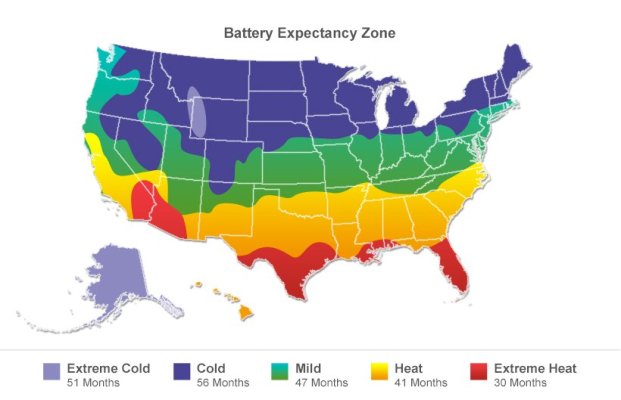

1710255250376-jpeg-jpg.jpg


Post I wrote earlier. Hope it helps.

In addition to high temperatures killing batteries prematurely, leaving cars sit and letting the battery drain down then recharge, dramatically shortens battery life, no matter what kind it is.

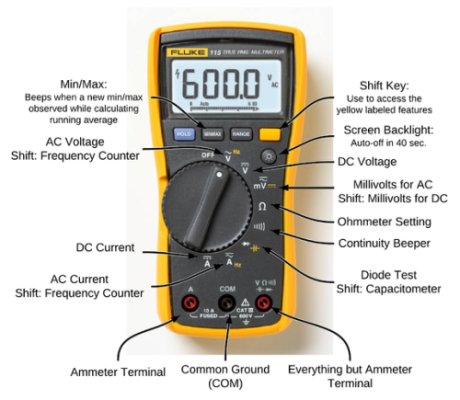
In order to understand how quick this happens on our heavily computerised cars I thought, I would run the test on my 2015 LS460 SWB AWD. I started with a quality Multimeter that has both DC and AC current(AMP) measuring capacity. You put the black lead into the common port, and the Red lead into the 10A port, may also be labelled just AC/DC A on some meter. Having Alligator clips on the end of the probes will make doing this a whole bunch easier.

I shut off the car, put the key FOB in the house in an RFID box, left the doors unlocked, and lifted the hood. My car does not have a hood open warning light so no hood open sensor that needs to be defeated. I disconnected the negative terminal on the battery, clipped the Red Lead to the battery terminal and the black lead to the Negative cable. I then opened and closed the drivers door. Reading popped to 4.8 amps with the interior lights coming on. Closed the drivers door, reading dropped to 2.7 amps and after about 30 seconds started to steadily drop. Within 90 seconds it was down to .7 amp and still dropping. Within three minutes it was reading between .03 and .04 amps, so 30 to 40 Miliamps.

I had read that the FOB being too close would cause the vehicle to wake up so I went in the house and got the FOB. Even right beside the car, not change in .03-.04 AMPs being drawn. Used the FOB to open the trunk, reading popped up to 6 Amps. Closed the Truck with the auto close system using the button on the trunk lid, reading stayed at 5-6 AMPs. As soon as the trunk latched the AMPs dropped to 2.5 and then kept dropping following the same pattern above. I tried a number of different combinations and permutations, including putting the push button start in the run position without stepping on the brake so the car didn't start. Remember, your multimeter is limited to 10 AMPs, if you start the car, or turn on high draw things like Headlights, you will likely pop the fuse that protects the multimeter.

No matter what combinations I tried, the at rest reading dropped back to the 30 to 40 miliamp reading. The only thing I didn't do that I wish I had done, was lock the doors and see if the at rest reading increased with the security system active. Since I park in a secure garage and never lock the car, I didn't think about that till I had it all buttoned up again.

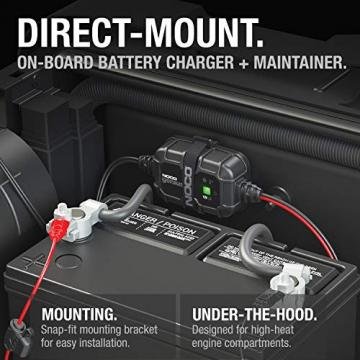
Since the car sits for long periods of time I have attached a NOCO harness to to the battery terminals to make hooking up the trickle charger much easier. This way I can just plug the trickle charger in without having to remove the clips and lift the battery cover each time to attach alligator clips. I have these quick connects on all my vehicles. Even at only 40 Miliamp, a battery will drop below starting voltage in about a month, if it is stored cold it will go flat faster than that. Remember, lead acid batteries do not like to be discharge down to 11 Volts and recharged. They are much happier and last far longer if kept above 12.3 volts and that means a trickle charger is a good idea if you don't drive your car for at least 30 minutes every 3 or 4 days.

Hope this information helps those of you suffering from batteries going flat or dying prematurely.


3c1cb3957b47ba45b29e068e308-ipo-images-jpg-jpg-jpg.jpg


-jpeg-d92e2d27251cc87d6645591182ecdd53-jpg-jpg-jpg.jpg


b-png-6a373eb095c0e80e46803cc8def7fda0-png-png-png.png


Multimeters have a lot of different layouts, this is just for illustration.


b-png-f7687d176aeb92590495baa1b545713d-png-png-png.png


-jpeg-fee513ba69be9614dfd1b16380b7ce5e-jpg-jpg-jpg.jpg


As a followup, Charged the battery to full, after an hour off the charger, read 12.73. July 2023 OEM Lexus battery. After sitting in the garage un-driven for 8 days, battery now reads 12.45. So the constant drain, even though very small, definitely draws down the battery over time. Battery went from 100% to 80% in 8 days. Still lots of juice to start the car. Left parked with no trickle charger, and assuming an even rate of drain the battery will be down to 50% in another 12 or so days.

At 12 Volts it is still enough to start the car but this is NOT what lead acid batteries like and will materially decrease its service life. If you aren't driving the car regularly your battery will last far longer if you put it on a .75 AMP to 2 AMP smart trickle charger like a Noco. The other option is to disconnect the negative battery during storage, but I find it a lot easier just to leave it on the trickle charger.


You can use the quick connect cable on the jump start terminals as well, they don't have to go on the battery itself. The reason I put them on mine was so I don't have to remove any of the under hood covers or the battery cover to hook up alligator clips each time I wanted to put the trickle charger on. On my LS you can't reach the battery terminals without opening the battery cover by the windshield.

Here is a picture of the LS460 Battery location. The panel with the Yellow sticker has to be removed at min to get alligator clips onto the battery.

-jpeg-2916d96083b598aa54f0f27e1412dc42-jpg-jpg-jpg.jpg


-jpeg-3404b27c924ec2dadbafc521c6cf2a3b-jpg-jpg-jpg.jpg


-jpeg-082e47caa5589a78e4ea33687e1754e9-jpg-jpg-jpg.jpg


4_f498888c7170f9819aee8bc0900cbf93ab9f07ee-jpg-jpg.jpg


7_6cc78f02033c4dabc4d9e9bb1d362e902a27b4fa-jpg-jpg.jpg
 

Wild one

Senior Member
Joined
Jan 17, 2016
Posts
23,732
Reaction score
54,512
Ram Year
14 Sport
Engine
5.7
I have found that by making a "current multiplier" that I can use a regular meter for those milliamp readings. By taking 10 feet of 14 ga wire and making a loop with 10 turns of the wire, making sure that no wires overlap, then tape that loop so it stay in place. This will make an APPROXIMATE 10 times multiplier. I used a small propane cylinder as the form. Then you can use an inductive amp clap to get a reading. Whatever the reading shows, divide by 10 will get you pretty close.
Basically an electrical "choke" haven't built one of them since my slotcar days,lol.I'm like Dean though,not sure how you'd use in conjunction with a clamp on amp meter
 

ibike

Senior Member
Navy Badge
Joined
Apr 1, 2023
Posts
273
Reaction score
418
Location
Tennessee
Ram Year
2020
Engine
5.7
Just put new batteries in my 2022 2500 Laramie. When the vehicle is completely powered off, I assume there will be a SMALL continuous current draw just to keep critical systems going.

Has anyone put a clamp-on ammeter on the battery leads to measure current load while the vehicle is off? If so, what do you get? I'm getting about 1A and I'm fairly certain that this is way too much and something is either shorting to ground, or not powering off properly. I just don't want to drain a pair of brand-new batteries...
So all these battery keep coming up not only on this forum but on another one I follow. Got my curiosity up so I bought a dc amp clamp and finally got out there to check it. Of course I had to open the door to pop the hood so I had current draw and not sure if leaving it up long will keep it drawing current, but here’s my results.

It was pulling 6 amps by the time I got the clamp on. It slowly dropped as I watched till it went down to 0. When I say slowly it was 6 amps down to zero amps in less than a minute.

I opened the door to see what happens and it jumped back up to 7 amps and once again slowly dropped to zero amps.
 

Hagar1

Senior Member
Joined
Aug 9, 2023
Posts
1,115
Reaction score
2,316
Location
Ontario Canada
Ram Year
2012 Ram 1500
Engine
Hemi 5.7
Basically an electrical "choke" haven't built one of them since my slotcar days,lol.I'm like Dean though,not sure how you'd use in conjunction with a clamp on amp meter
I guess I didn't explain clearly. I'll try to dig up the one that I made. If you are using something like a VAT 40 or VAT 60 or whatever with an inductive Amp clamp, by putting that loop in series with the electrical load, then put the Amp clamp onto the loop, it will show the current draw in an amplified version. 1 AMP draw will show as 10 Amps on the meter. I've used it a lot of times. It is not as precise as a meter built for the purpose but it will go a long way in helping to solve an issue.
I put an alligator clip on the free ends of the multiplier so I could clamp it on. If I was chasing a mystery current draw, I'd put my little creation between the battery post and clamp with clamp disconnected, with the amp clamp in place, I'd start pulling fuses to see if anything changed the current draw.
 

Hagar1

Senior Member
Joined
Aug 9, 2023
Posts
1,115
Reaction score
2,316
Location
Ontario Canada
Ram Year
2012 Ram 1500
Engine
Hemi 5.7
You can get a digital, Milliamp capable, meter for $60 or so that is very accurate. It has a ten Amp max draw limit, whereas the clamp ons are designed for reading much higher draws. I believe in using the right tool for the job but you method is a work around, though I don't quite understand how you use that with a clamp on meter. Good info though.
I added a bit more info on how to use that creation.
 

Wild one

Senior Member
Joined
Jan 17, 2016
Posts
23,732
Reaction score
54,512
Ram Year
14 Sport
Engine
5.7
I guess I didn't explain clearly. I'll try to dig up the one that I made. If you are using something like a VAT 40 or VAT 60 or whatever with an inductive Amp clamp, by putting that loop in series with the electrical load, then put the Amp clamp onto the loop, it will show the current draw in an amplified version. 1 AMP draw will show as 10 Amps on the meter. I've used it a lot of times. It is not as precise as a meter built for the purpose but it will go a long way in helping to solve an issue.
I put an alligator clip on the free ends of the multiplier so I could clamp it on. If I was chasing a mystery current draw, I'd put my little creation between the battery post and clamp with clamp disconnected, with the amp clamp in place, I'd start pulling fuses to see if anything changed the current draw.
Gotcha,now that i see you're disconnecting the battery cable and using it inline. I used to use PCV pipe to build them,and epoxy the wire strands to the pipe ,then just leave the pipe in place.Made several that way using good old 12/2 or 14/2 household wire with the insulation stripped off
 

dsherman26

Senior Member
Joined
Feb 18, 2023
Posts
108
Reaction score
164
Location
Ohio
Ram Year
2021
Engine
3.6
I have found that by making a "current multiplier" that I can use a regular meter for those milliamp readings. By taking 10 feet of 14 ga wire and making a loop with 10 turns of the wire, making sure that no wires overlap, then tape that loop so it stay in place. This will make an APPROXIMATE 10 times multiplier. I used a small propane cylinder as the form. Then you can use an inductive amp clap to get a reading. Whatever the reading shows, divide by 10 will get you pretty close.
Electrical engineer here, what you described is a a current transformer, which would only work with AC current. No changing magnetic field with DC, so it would be impossible to induce any current in the loop.

A Hall-effect sensor like one of these works with AC or DC:
https://a.co/d/ef4RL0Q
 

Dean2

Senior Member
Joined
Jun 17, 2021
Posts
4,393
Reaction score
8,773
Location
Near Edmonton
Ram Year
2021 2500
Engine
6.4
I guess I didn't explain clearly. I'll try to dig up the one that I made. If you are using something like a VAT 40 or VAT 60 or whatever with an inductive Amp clamp, by putting that loop in series with the electrical load, then put the Amp clamp onto the loop, it will show the current draw in an amplified version. 1 AMP draw will show as 10 Amps on the meter. I've used it a lot of times. It is not as precise as a meter built for the purpose but it will go a long way in helping to solve an issue.
I put an alligator clip on the free ends of the multiplier so I could clamp it on. If I was chasing a mystery current draw, I'd put my little creation between the battery post and clamp with clamp disconnected, with the amp clamp in place, I'd start pulling fuses to see if anything changed the current draw.
Okay, that kind of makes sense but since you use a wine bottle size propane torch cylinder as a form to make the wraps, how do you get an AMP Clamp to close around the loop without crushing the coils, or does a bit of crush make no difference?
 
Last edited:
Back
Top