I had a 24" Mufflex on a stock dual tipped Big horn 1500. 3.92 gears, 545rfe. It droned at the 1600-1800 rpm area, but only when lugging the motor, like towing the boat up a hill. After my engine got a new cam, it was the same. After I got it tuned, the drone was unbearable and put the stock muffler back on. I need to throw a Borla XS muffler on it, if it drones then I will have to find a way to fix it. Add a resonator, change tailpipe lengths and or diameter, non rolled 5" tips etc. The truck is way to quiet and i can feel its not as responsive with that water heater back underneath it. I have been toying with the idea of a moveable exhaust weight of some sort to absorb the drone, some others have tried but maybe a canister with crushed rubber in it or something.
A "J pipe" it might work for you.
CHECK OUT OUR WEBSITE!https://exhaustaddicts.com WANT DYNOMAX RACE BULLETS? CLICK THE LINK BELOW!https://amzn.to/3Qqgy56WANT DUAL STAINLESS STEEL EXHAUST TIP...

www.youtube.com
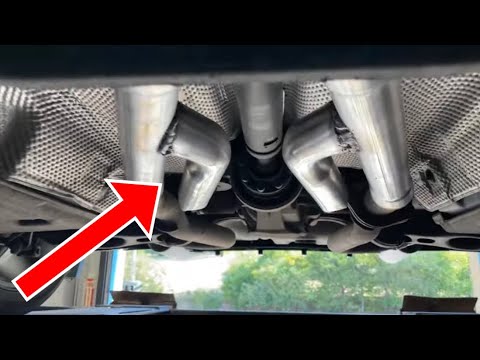
CHECK OUT OUR WEBSITE!https://exhaustaddicts.com WANT 5 INCH BLACK EXHAUST TIPS? CLICK THE LINK BELOW!https://amzn.to/42BD91m**Commission Earned From Associa...
www.youtube.com
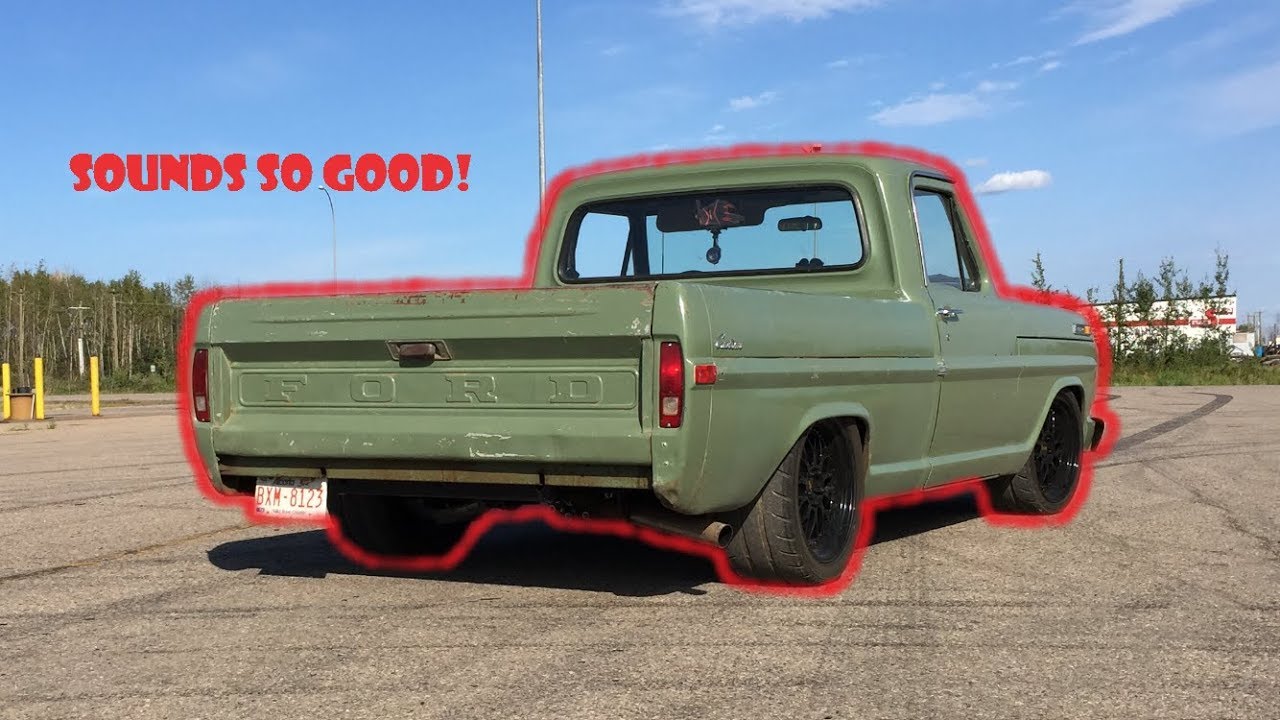
I'm finally happy with the exhaust on my LS Swapped Ford F100. Check it out. No more drone on the highway!Got some new editing software too. Let me know what...
www.youtube.com
Adding a Helmholtz resonator to my center exit exhaust for done reduction. Calculator to design a Helmholtz to solve your own drone problem.

wilhelmraceworks.com
After much research and being bombarded with “You’re crazy. That’s not gonna do anything. That’s a waste of time” when telling older gear heads about j pipes, I got a j pipe made and installed. And......... it freaking works. Math doesn’t lie.
For those who don’t know what a j pipe is, also called a quarter wavelength pipe, (a helmholtz resonator is a bit different, but from what I see it is used synonymously with j pipe, which imo it shouldn’t) a j pipe is a closed off exhaust pipe with a 90 degree bend at one end which is welded to your truck’s exhaust pipe. The idea is that different RPMs have different frequencies, and with a correct length j pipe the sound waves will bounce off the closed end, travel back down the pipe and cancel out the frequency, eliminating the drone.
But you may ask, if the drone is so bad why don’t you change the muffler? Why don’t you just put the stock exhaust back on? Why don’t you just suck it up and deal with the drone? Because you can keep the exhaust note you love and cut out the headache inducing drone at the cost of a new muffler (that may or may not even be better!)
Your j pipe needs to be the same material, gauge, and size as your exhaust system. I bought a 90 and a 48” straight tube from Summit Racing. The 90 cost $35 and the straight tube cost $60.
I opted to make it a DIY project rather than take it to a muffler shop. If you want to pay someone to do it you may have to shop around because not everyone really grasps this concept, despite its simplicity.
To calculate what length your j pipe needs to be, you have to decide what RPM the drone is the worst. For me, my 2020 Ram 1500 (with a 5.7 hemi) droned the most at 1500 rpm. Next would be 500-700 rpm (idle.) The drone will occur at double the revs both ways, so this is true for 3000 rpm and 750 rpm as well. How noticeable it is will depend on your setup. (i.e. muffler(s) and pipes).
I have a Rough Country catback exhaust kit. It’s 3 inch, 16 gauge 409 stainless steel. The muffler is two-chambered. Some gears were worse than others, but if you were trying to maintain speed on the interstate at 65+ mph, go up hill, or otherwise drive under load then the drone was horrible.
Here is the calculation excel sheet I used:
To pick your frequency, you can measure with an app or use the basic chart provided on a different page in the excel sheet. I felt the app didn’t work well for me, (I probably just didn’t know how to use it) so I just went with the basic universal chart. 1500 RPM for an 8 cylinder is 100 hz.
Next you will need to measure your exhaust’s operating temperature. After driving around for awhile, I used an infrared digital thermometer aimed inside the tailpipe. Your results may vary widely, as mine would be anywhere from 130 F to 170 F. The muffler would be a consistent 200 F. I guestimated 170 would be the operating temp while driving.
Then you just match up your temperature on the left hand column with the frequency (in Hz) on the top row and you will have the number of inches your j pipe needs to be. My result was 37.15. The total length includes the bend. I made it an even 37 inches.
I saw a youtube video of excellent results from a guy with a 5thgen whose j pipe was 36 inches, and he only changed his muffler. He had stock exhaust pipes and resonators. It is possible this drone is universal at this RPM for our trucks regardless of the aftermarket exhaust system, but let me know if that is not true.
Fabricating the pipe you will need to weld obviously, and a metal-cutting hole saw in the diameter of your pipe. I got a Milwaukee 3” hole saw from Home Depot for $23. The hole saw was to cut (using a drill press) a circle off each side of one end of the 90 bend so it would fit more flush on the perpendicular exhaust pipe on the truck. You can use one of the circles you cut out as the end cap for your j pipe after some flattening and trimming.
The pipe can really fit on either side of your exhaust, whether on the driveshaft side or frame side. Sure, it would be “safer” to have it frame side but there’s lots more room to work with on the driveshaft side so that’s what I went with. Use a sharpie to trace exactly where you want your pipe to be so you don’t have to try welding under the truck. In my situation I don’t have a lift. Use your hole saw to cut out a hole where your traced for your j pipe to go. Tac weld first, then test fit again.
Also, make sure your flange bracket is on the front of the pipe where it should be BEFORE you weld your j pipe on. Don’t ask how I know this to be pertinent information. Also, I angled my j pipe upwards slightly so water won’t pool in there.
The cherry-on-top aspect about a j pipe is that, in actuality a perfectly straight and perpendicular pipe is most effective for targeting a specific RPM drone. Obviously that is not feasible on a vehicle. But the bend in the pipe actually helps with dampening drone at a wider range. About 250 RPM +/- will also go away. So for me, my 1500 RPM and 750 RPM drone is gone, and with the +/- 250 rpm my 500 rpm idle drone is gone too.
It is so much quieter in the cab yet you still retain the sound of your exhaust. Cannot recommend enough. More people need to know about this!
UPDATE: After a week and a half, everything is going great. I noticed I still have some drone at 2800ish RPM. Not bad because it’s only when I want the exhaust to be loud and it only drones for a second. Overall worth every penny. I am going to add some sort of bracket to my exhaust pipe for the end of the j pipe to rest on so the welds don’t crack later on.
After much research and being bombarded with “You’re crazy. That’s not gonna do anything. That’s a waste of time” when telling older gear heads about j pipes, I got a j pipe made and installed. And......... it freaking works. Math doesn’t lie.
For those who don’t know what a j pipe is, also called a quarter wavelength pipe, (a helmholtz resonator is a bit different, but from what I see it is used synonymously with j pipe, which imo it shouldn’t) a j pipe is a closed off exhaust pipe with a 90 degree bend at one end which is welded to your truck’s exhaust pipe. The idea is that different RPMs have different frequencies, and with a correct length j pipe the sound waves will bounce off the closed end, travel back down the pipe and cancel out the frequency, eliminating the drone.
But you may ask, if the drone is so bad why don’t you change the muffler? Why don’t you just put the stock exhaust back on? Why don’t you just suck it up and deal with the drone? Because you can keep the exhaust note you love and cut out the headache inducing drone at the cost of a new muffler (that may or may not even be better!)
Your j pipe needs to be the same material, gauge, and size as your exhaust system. I bought a 90 and a 48” straight tube from Summit Racing. The 90 cost $35 and the straight tube cost $60.
I opted to make it a DIY project rather than take it to a muffler shop. If you want to pay someone to do it you may have to shop around because not everyone really grasps this concept, despite its simplicity.
To calculate what length your j pipe needs to be, you have to decide what RPM the drone is the worst. For me, my 2020 Ram 1500 (with a 5.7 hemi) droned the most at 1500 rpm. Next would be 500-700 rpm (idle.) The drone will occur at double the revs both ways, so this is true for 3000 rpm and 750 rpm as well. How noticeable it is will depend on your setup. (i.e. muffler(s) and pipes).
I have a Rough Country catback exhaust kit. It’s 3 inch, 16 gauge 409 stainless steel. The muffler is two-chambered. Some gears were worse than others, but if you were trying to maintain speed on the interstate at 65+ mph, go up hill, or otherwise drive under load then the drone was horrible.
Here is the calculation excel sheet I used: