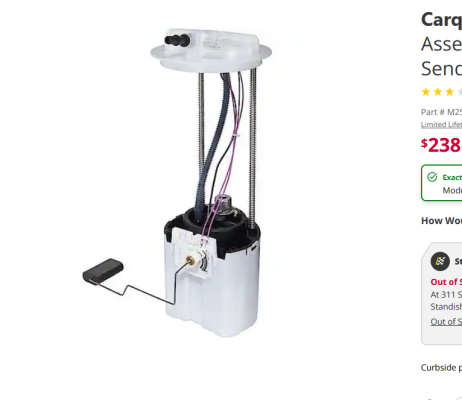
Okay but your information on how automotive fuel pumps works is...faulty. Not sure if this will let me post the pic of a Ram fuel pump but I'll give it a go.
View attachment 544277
See that assembly? The canister at the bottom houses the pump, and it's a 2-stage pump. It rests on the bottom of the fuel tank, and the springs on the tall shafts push it against the bottom a bit. Basically ALL automotive pumps are this way today.
One stage of the pump brings fuel into the canister via an inlet on the bottom of the canister that is covered by the prefilter screen. This fills the canister and keeps cool fuel around the outside of the fuel pump. This fuel is constantly replenished as the second stage does its job.
The second stage of the pump sends fuel from inside the canister up that black hose and out the top cover plate to the fuel line on the frame rail. That silver thing is a pressure regulator to keep fuel pressure from building up too high.
That's it. That's how modern fuel pumps work. Cavitation on modern pumps is almost NEVER an issue unless the pump housing is damaged. The pumps don't get to run hot because they are ALWAYS sitting in fuel that is constantly flowing past them unless you run the tank dry. It's how they stay cool and run for a LONG time.
Now, yes, they're electrical components, and some will fail sooner than others. But it isn't because they 'run hot,' it's a fault of mass-production. Some will get a bearing that is too tight or too loose, the motor coils might be too tight or too loose, hard to say, but the vast majority will function as intended for a LONG time without giving any issues.