How To: 4 Ohm Resistor Upgrade For Aftermarket Dash Speakers

Disclaimer: Links on this page pointing to Amazon, eBay and other sites may include affiliate code. If you click them and make a purchase, we may earn a small commission.

Matts175

Senior Member
Joined
Feb 10, 2019
Posts
299
Reaction score
225
Location
Michigan
Ram Year
2015
Engine
Hemi 5.7

bchap05

Senior Member
Joined
Feb 24, 2017
Posts
824
Reaction score
542
Ram Year
2017
Engine
5.7
Got it done. Huuuuge difference. Sounds amazing now.

Also realize how horrible the stock rear speakers sound now
 
Last edited:

mtnrider

Senior Member
Joined
Sep 25, 2014
Posts
3,541
Reaction score
4,310
Location
Georgia
Ram Year
2016
Engine
6.7 Cummins
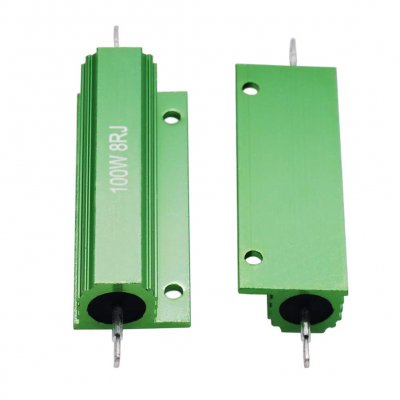
Any disadvantageous to running a aluminum chassis wire wound resistor over a ceramic in this situation?


51gB39znnWL._SL1001_.jpg
 

Dpressed1

Senior Member
Joined
Jun 21, 2017
Posts
135
Reaction score
77
Location
Houston
Ram Year
2017
Engine
Hemi 5.7
I installed 4ohm-20w ceramic resistors on my polk 3.5s. Did help by reducing the in your face sound from the dash speakers. Also like many mentioned, i was able to adjust the eq to my liking and audio is more balanced. And I was also able to turn up the bass. Only thing now is that it seems like i have to turn up the volume more. Like before i would be able to cruise listening to music at a 20-25 level. Now i have to turn it up to 30-32 to be able to hear it the same as before the resistor mod. Anyone else have that issue??
 

NETim

Senior Member
Joined
Feb 22, 2020
Posts
684
Reaction score
1,365
Location
Nebraska
Ram Year
2022
Engine
5.7L
Any disadvantageous to running a aluminum chassis wire wound resistor over a ceramic in this situation?


View attachment 198491

I would be very hesitant to use wire wound resistors in an audio application. They could conceivably add impedance (AC resistance) to the circuit. The higher the frequency, the higher the impedance.

Best to stick to plain old carbon resistors in this situation.
 

Matts175

Senior Member
Joined
Feb 10, 2019
Posts
299
Reaction score
225
Location
Michigan
Ram Year
2015
Engine
Hemi 5.7
I would be very hesitant to use wire wound resistors in an audio application. They could conceivably add impedance (AC resistance) to the circuit. The higher the frequency, the higher the impedance.

Best to stick to plain old carbon resistors in this situation.

The rest of us are using wire wound resistors with zero issues... for almost a year now.
 

kylant

Junior Member
Joined
Jan 4, 2019
Posts
15
Reaction score
4
Location
Bend
Ram Year
2018
Engine
Cummins
Almost forgot about this. The 6.2 ohm resistor ended up working out great for me.

would you suggest going with the 6.2 ohm from the get go?
I am about to purchase new Kicker speakers for the doors and the dash.
Thanks
 

Matts175

Senior Member
Joined
Feb 10, 2019
Posts
299
Reaction score
225
Location
Michigan
Ram Year
2015
Engine
Hemi 5.7
would you suggest going with the 6.2 ohm from the get go?
I am about to purchase new Kicker speakers for the doors and the dash.
Thanks

It's probably a matter of personal preference, more than anything. In my case, I still thought there was too much treble, even though I had the radio set at "flat".

What you could do, since they are so cheap, is buy both sets, try the 4 ohms first and see what you think. You could put the speakers back in the holes and just not bolt them down and listen to them for a little while. If they are too bright, swap the resistors out. That way you only pay for shipping once.

IDK. Could be just me though. The rest of these guys were happy with the 4 ohms.
 

Steve_OS

Junior Member
Joined
Jul 13, 2022
Posts
6
Reaction score
2
Location
USA
Ram Year
2015
Engine
Hemi 5.7
The system sounds much better. The most surprising thing, though, is that I can turn the volume up much, much higher and not get distortion. The max I dared to turn up the volume before the resistors was to about 24. At that level I could sense my brain didn’t want to listen to the music—there was something grating and raw about it. I can now go to 30 and not get the grating, harsh, “

I think the resistor install worked wonders to bring down the prominence and reduce the harshness of the dash tweeters. The system sounds better overall. There is less distortion. I can play the music louder. The front door speakers are more noticeable. All in all, a worthy mod.


Mine isn’t as neat as yours but the sound is now amazing! After upgrading my speakers the front tweeters took over the audio. I was pulling my hair out. Thankfully I found this post. Thank you a million times over!
 

SkylarMelo

Member
Joined
Jan 16, 2017
Posts
59
Reaction score
24
Location
British Columbia, Canada
Ram Year
2011
Engine
Hemi 5.7
Just did this mod, could definitely tell there was a volume difference between one with and one without the resistor, but not as much as I was expecting. Nonetheless, I definitely prefer this over what I had before, and now I'm less worried about distortion or overly loud highs. Also, as someone else said, now I realize how crap my rears are. Need to upgrade those soon!
 

Attachments

  • MicrosoftTeams-image (6).jpg
    MicrosoftTeams-image (6).jpg
    61.7 KB · Views: 4
  • MicrosoftTeams-image (3).jpg
    MicrosoftTeams-image (3).jpg
    59.7 KB · Views: 4

aronbrtn

Junior Member
Joined
Oct 6, 2021
Posts
26
Reaction score
9
Location
florida
Ram Year
2014
Engine
5.7
(Continued from previous post)

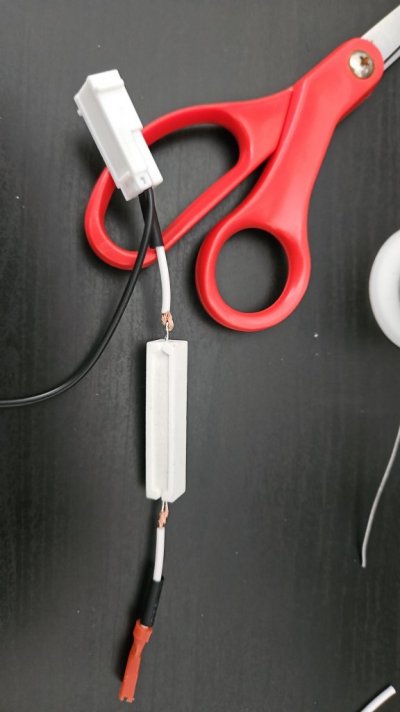
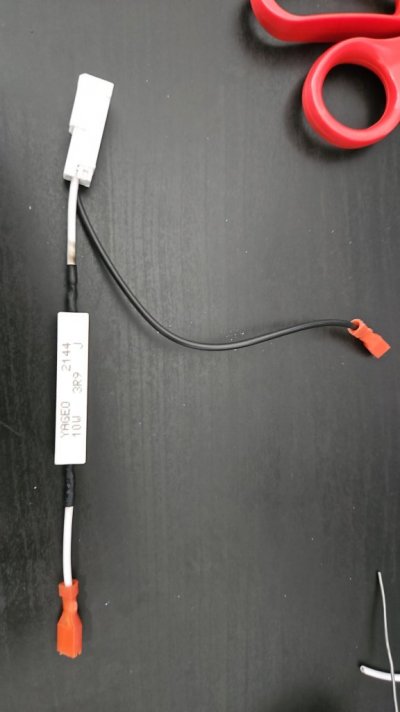
8. Repeat the process (steps #2 through #7) on the other end of the resistor and the other section of the positive wire.

View attachment 139003


View attachment 139004


The Preliminary Results

I removed one speaker and connected the resistor/harness assembly to it. I connected this dash speaker to my truck. I did not completely install the speaker, I laid its magnet on top of the dashboard. I now had one speaker with the 4 ohm resistor installed and one speaker without the 4 ohm resistor. Was there a difference in the sound output between the two dash speakers? Yes, but not as much as I thought there would be. I set the fader to fully front speakers and while playing music at a volume setting of 20 I moved the fader from left to right, and from right to left noting any difference in volume levels. The speaker with the resistor was not as loud as the resistor-less speaker but I expected more of a difference.


I put the fader back in the center position and played a couple of songs at volume setting of 20. This is a moderately loud setting. I fiddled with the equalizer. Played sections of songs I knew would be “treble heavy”. I suppose I did this for 10 minutes or so.


I wanted to see how hot the 4 ohm resistor would get. I cautiously reached for it and gently pinched it with my thumb and index finger….and….it was not hot, it was not even warm. In fact, it was basically the same temperature as the ambient air around it. That was a good result, I thought. That meant I could confidently crank up the stereo with no worries of this resistor getting blisteringly hot underneath my dashboard. The 4 ohm resistor wasn't hot because it was rated at 10 watts. Be sure to get 4 ohm resistors with a 10 watt power rating.


I installed the speaker with the resistor on the wiring harness, screwed it in place and replaced the cover grill. I then did the other wiring harness, installed it on the other dash speaker and replaced that speaker. I now had both speakers with 4 ohm resistors installed and in place.


The Results

I played some songs I knew were from good source material and had some dynamic range. “So Far Away” “ and “Money for Nothin’” by Dire Straits; “Abacab” by Genesis; “December” by Collective Soul, “Everyday is a Winding Road” by Sheryl Crow (Jeez, I’m dating myself…)


I kept adjusting the equalizer to tune the songs into what I perceive as good sounding. I noticed I was turning down the bass and turning up the treble. Here are my before and after settings on the equalizer, before resistors and after resistors. (Disclosure: I have an 8” powered subwoofer installed)


Bass
Before: +4
After: +2


Midrange
Before: 0
After: +1


Treble
Before: -4
After: 0 or +1 (depends on the album/song)


The system sounds much better. The most surprising thing, though, is that I can turn the volume up much, much higher and not get distortion. The max I dared to turn up the volume before the resistors was to about 24. At that level I could sense my brain didn’t want to listen to the music—there was something grating and raw about it. I can now go to 30 and not get the grating, harsh, “something just isn’t right” feeling. Now, at 30, it’s just too loud for my (old) ears!


I think the resistor install worked wonders to bring down the prominence and reduce the harshness of the dash tweeters. The system sounds better overall. There is less distortion. I can play the music louder. The front door speakers are more noticeable. All in all, a worthy mod.
Thanks for the tips as im doing this now on the new truck, what about adding bass blockers as well? Or is that important?
 
Back
Top