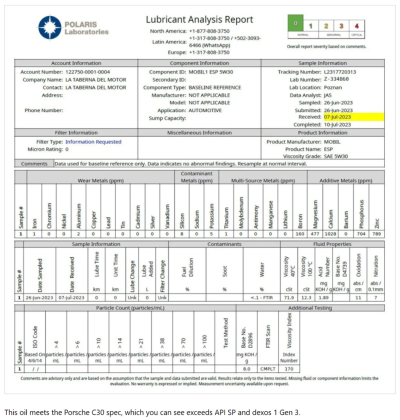
Correct me if I'm wrong, but I think that Mobil1 ESP X3 0w40 was the recommended oil for GM truck owners switch to in order to correct the recent fiasco with lifter failures. Am I right?
Considering that engine architecture is similar to the HEMI (single cam, pushrod V8) and we knew about this whole "thinner oils / lifter failure" issue, shouldn't we also recommend the same oil to everyone in the forum?
First, the GM V8 architecture is conventional, the Chrysler Hemi is not, that's why it uses the trademarked name "Hemi".
Hemi stands for hemispherical cylinder head, which was needed to reorient the valves across from each other, rather than in line with the cylinder bank like all other V8 engines did. So why do this? At high rpm (above 5,000 rpm), the airflow dynamics are such that airflow ACROSS the cylinder head retains higher flow rate than a conventional inline valve cylinder head.
So what? So, that means higher airflow means more power ABOVE 5,000 rpm, where NASCAR racers run. The Hemi was made for NASCAR RACING. It was so dominant that NASCAR banned it the 2nd year, then reinstated it the 3rd year after a bunch of lobbying.
And so - the marketeers marketed the NASCAR engine to the mass public, most of which did not race - it was all marketing. There is ZERO advantage to a Hemi engine below 5,000 rpm, and only negatives.
What are the negatives - in order to reach the outboard exhaust valves the camshaft has to move UP in the engine block. So what? So, splash oil-lubricated camshafts receive less oil at low rpm (idle). What does that mean? Lifter roller scuffing and failures. Oopsies!
Worse, adding VVT big cam phaser wheel for EPA-MANDATED fuel economy regulations made it worse - the cam moved up in the block again, reducing the splash oiling of the cam further.
The original Chrysler 0W-40 was mandated for racing apps - not street apps. They carried it over. The 40 wt is for high LOADS. Viscosity is load-dependent, and also heat. So, racing or towing or hot regions are where higher vis is needed. GM had a manufacturing defect - they outsourced their crankshaft machining and the cheapo vendor didn't meet spec and GM didn't inspect, and released hundreds of thousands of V8 engines with out of spec crankshafts.