adrianp89
Senior Member
- Joined
- Sep 3, 2015
- Posts
- 3,179
- Reaction score
- 1,277
- Location
- Tampa Bay, FL
- Ram Year
- 2019
- Engine
- Hemi 5.7
No need for LOC or remote line with the Pioneer.


Disclaimer: Links on this page pointing to Amazon, eBay and other sites may include affiliate code. If you click them and make a purchase, we may earn a small commission.

No need for LOC or remote line with the Pioneer.
If you have or have access to a decent multimeter I'd double check the wiring to make sure it's 2 ohms. Simple enough test. Just hook the meter to the pos and neg of the set up before you hook it to the amp and the multimeter on ohms resistance and you'll know what you have. That way you know and you don't either get less power to them than you expected or blow an amp because it's too low a resistancefor the amp.
Make sure you set your gains correctly. If anything, you'll probably want to set the gain on the side of caution versus aggressively. Those Type S subs are pretty efficient and don't take much power to make noise....even in a sealed application. Best of luck
If you have dual coil coil subs and they're both wires for 2 ohms I'd stick to the 1ohm set up. Just crank the volume till your mid to high level speakers start to distort on something with heavy bass and set you subwoofer gain up until it starts to distort and then turn it back till it doesn't. What are the power ratings for the subs RMS and is the pioneer 1200 peak or RMS? I only ask because whenever I've ran more power than my subs could handle it sounded good and I couldn't resist turning it up until I melted the voice coils. Never took me long.
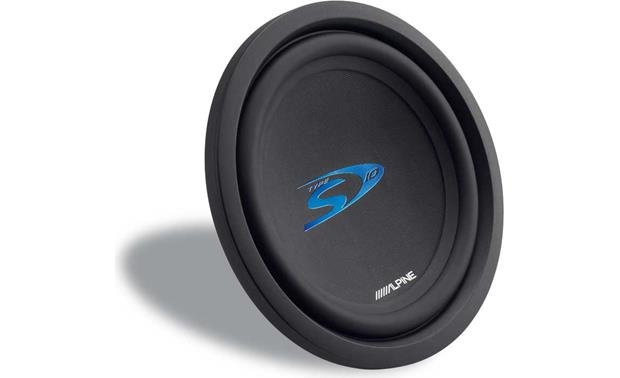
I agree with a few exceptions...I do not like relying on 1ohm power...if an amp is "underpowered"in 4ohm applications, but I can get that extra power in 1ohm...I will go with a higher powered amp @ 4ohms versus relying on 1ohm power. Some amps are 1ohm stable but it adds extra stress and heat to the amp which is never good. I like keeping all equipment comfortable. Amps get hot and I get that...but it may be my conservative nature. I am all about overhead power. Im running 365 watts to my 100 watt rated midbass...but its at 40hms, there's zero distortion, and my midbass speakers are always happy and never uncomfortable. Sub frequencies are very dynamic, can hit very hard with gobs of power outta no where...I personally would try to keep the amp load @ 4ohms for those type S subs....300-500 watts will make those subs pound (i have owned type S 12's in the past....gave them 300 watts each with great success)Always run lowest ohm so you have overhead power.
I agree with a few exceptions...I do not like relying on 1ohm power...if an amp is "underpowered"in 4ohm applications, but I can get that extra power in 1ohm...I will go with a higher powered amp @ 4ohms versus relying on 1ohm power. Some amps are 1ohm stable but it adds extra stress and heat to the amp which is never good. I like keeping all equipment comfortable. Amps get hot and I get that...but it may be my conservative nature. I am all about overhead power. Im running 365 watts to my 100 watt rated midbass...but its at 40hms, there's zero distortion, and my midbass speakers are always happy and never uncomfortable. Sub frequencies are very dynamic, can hit very hard with gobs of power outta no where...I personally would try to keep the amp load @ 4ohms for those type S subs....300-500 watts will make those subs pound (i have owned type S 12's in the past....gave them 300 watts each with great success)
Also, let's face it....the Pioneer amp the OP bought is not the highest end of amplifier out there....it offers great power for a great price...but that amp will be more comfortable pushing from a 4ohm load.....which may sound better than a stressed, overheated 1ohm with cut gains. Just my opinion of course


