That is true, thats a sporatic blow off release due to too much pressure on a hot day stuck in traffic scenerio.Mostly to save the compressor reeds.Older compressors did that and they'd leave a wet greasy spot under the hood ,over the compressor.After the Montreal Accord that was not okay anymore.I saw a few compressors in the 90's,leak at the gaskets or orings,and if it was detected you had to remove the freon,and tag it,until it was repaired[ People did not like that and all they wanted was a recharge,could not care less if there was a small leak...noone wants to be HOT]..Same with r134a,during that time frame.ALL the r12 and r134a freon had to be accounted for.Recycling freon became the norm.You had to keep records and if you got caught doing something that would release CFC's you could lose your licence(likely the same today,for licenced CFC techs)
If you were low on freon and there were no leaks that was usually the reason...blow off.
That was what I learned taking HVAC/CFC licence, it wasn't specific to any manufacturer.They had all been designed that way in the 50's through early 90's.
After the ozone layer developed a hole in the ,atmosphere, compressors weren't allowed to do that because of the release of CFC's.That is why in the 90's they gradually changed from R12 to R134a,in the first place.BUT,it wasn't as efficient as r12.
An interesting fact ,next time your at a Cocktail party,Some of the older big American cars like Caddys etc.,had big enough A/C units they could cool a house,back in the day.






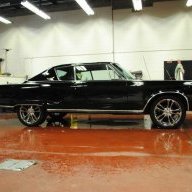
 someone stole.