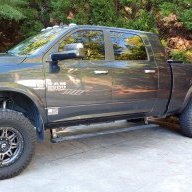

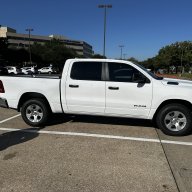
2500 Payload - Gas vs Diesel - something doesn’t add up

Disclaimer: Links on this page pointing to Amazon, eBay and other sites may include affiliate code. If you click them and make a purchase, we may earn a small commission.

Sandevino

Senior Member
Joined
Apr 18, 2020
Posts
1,315
Reaction score
1,849
Location
North Texas
Ram Year
2023
Engine
HEMI 5.7 eTorque
Many of the RV forums I frequent have touted diesel as the preferred fuel type for towing travel trailers, both bumper pull and fifth wheel. Diesel used to have significantly higher payload than the equivalent gas powered truck so this made sense. I now see a trend toward Gas over Diesel as the 2500 GVWR’s are 10,000 pounds and trucks aren’t getting lighter.

Fast forward to today... they payload capacities of comparably equipped trucks have switched to favor gas over diesel. What gives?

Diesel - 2020 Ram 2500 Tradesman 4x4 6’4” bed - 2350 pound payload
Gas - 2020 Ram 2500 Tradesman 4x4 6’4” bed - 3146 pound payload

796 pound difference between the two models, favoring Gas. The payloads decrease as trim levels increase.

Diesel is used to pull heavier loads, but how is this being done legally as in not being over-weight per the payload sticker in the driver door jamb?

What am I missing? Do operators not care, not know or a combination of both? Is ignorance bliss?

What are your thoughts?
 

smurfs_of_war

Senior Member
Joined
Oct 29, 2013
Posts
2,116
Reaction score
1,267
Location
Swift Current, Saskatchewan
Ram Year
2020
Engine
Hemi 6.4
Many of the RV forums I frequent have touted diesel as the preferred fuel type for towing travel trailers, both bumper pull and fifth wheel. Diesel used to have significantly higher payload than the equivalent gas powered truck so this made sense.

Fast forward to today... they payload capacities of comparably equipped trucks have switched to favor gas over diesel. What gives?

Diesel - 2020 Ram 2500 Tradesman 4x4 6’4” bed - 2350 pound payload
Gas - 2020 Ram 2500 Tradesman 4x4 6’4” bed - 3146 pound payload

796 pound difference between the two models, favoring Gas. The payloads decrease as trim levels increase.

Diesel is used to pull heavier loads, but how is this being done legally as in not being over-weight per the payload sticker in the driver door jamb?

What am I missing? Do operators not care, not know or a combination of both? Is ignorance bliss?

What are your thoughts?
The gas engine is much lighter for starters. Todays gas engines are brutes. That said, the only real reason the payload in a diesel 2500 is so light is because of the class restriction of the 2500. 10K I think? If it were 12K for example you would see both types increase accordingly.

As to why so many do or do not care- well- who knows. The legality of that payload sticker is not as binding as some believe depending on where you are. For example where I am, I can register my weight on my 2500 to whatever I think my combined load will be when I put my plates on it. I have my 2500 registered to 20,000lbs roughly. I am legal no matter what as long as my combined load of truck and trailer does not exceed 20,000lbs. This weight is well above my tow rating and would put my truck over GVWR, but they don't care about that sticker. They check your registered weight and tire ratings if anything at all on vehicles that are not registered as commercial. Those that are commercial are scrutinized closer, but the same applies. This is straight from the mouth of the highway enforcement so it's not my interpretation. If they look at your load and feel it's unsafe, then common sense kicks in and they may cite you on certain items- but the payload sticker isn't one of them.
 

392DevilDog

Senior Member
Joined
Aug 25, 2019
Posts
1,954
Reaction score
2,957
Location
Glasgow, Pennsylvania
Ram Year
2015
Engine
392 Hemi
The gas engine has always had more payload than a Diesel.

It is 970lbs on a 4th Gen and I believe it is a bit more on the 4.5 Gen

When you read the fine print...the 6.4l HEMI has the payload max and a 6.7l Cummins has the towing max.

Been that way since 1994.

Well I lie...i forgot there is a time in 2010 to 2013 when a 5.7l HEMI only had a GVWR of 9000 and the diesel had a GVWR of 10000...forgot about those years. So yes...comparing a 5.7l Hemi truck to the Cummins truck...the diesel and it were similar. Sorry, after getting my 6.4l I forgot all about the 5.7l...except when I drive my 03...then I remember why i forgot about it lol.

The 6.4l is a game changer. It really closed the Gap in the 2500 trucks...and can even get a pretty good name in the 3500.

I love my 6.4l
 
Last edited:

dhay13

Senior Member
Joined
Apr 12, 2015
Posts
3,443
Reaction score
3,194
Ram Year
2018
Engine
2500 6.4L Hemi 4.10's 'Off-Road'
The gas engine is much lighter for starters. Todays gas engines are brutes. That said, the only real reason the payload in a diesel 2500 is so light is because of the class restriction of the 2500. 10K I think? If it were 12K for example you would see both types increase accordingly.

As to why so many do or do not care- well- who knows. The legality of that payload sticker is not as binding as some believe depending on where you are. For example where I am, I can register my weight on my 2500 to whatever I think my combined load will be when I put my plates on it. I have my 2500 registered to 20,000lbs roughly. I am legal no matter what as long as my combined load of truck and trailer does not exceed 20,000lbs. This weight is well above my tow rating and would put my truck over GVWR, but they don't care about that sticker. They check your registered weight and tire ratings if anything at all on vehicles that are not registered as commercial. Those that are commercial are scrutinized closer, but the same applies. This is straight from the mouth of the highway enforcement so it's not my interpretation. If they look at your load and feel it's unsafe, then common sense kicks in and they may cite you on certain items- but the payload sticker isn't one of them.
You may be right as far as the traffic enforcement is concerned but I can about promise you that if there is a serious accident the insurance companies will bring all this up.

As far as the gas vs diesel...I doubt most know. I think most that have diesels think they can tow a house so that's all they care about. My son works with a guy that has a 2016 2500 Duramx that tows a 38' 5th wheel with 6 slide outs. I'm guessing he is probably a couple thousand over payload.

There is a law in PA that specifically calls out payload and includes anything being towed as counting. Can't say about other states though
 
OP
OP
Sandevino

Sandevino

Senior Member
Joined
Apr 18, 2020
Posts
1,315
Reaction score
1,849
Location
North Texas
Ram Year
2023
Engine
HEMI 5.7 eTorque
There is a law in PA that specifically calls out payload and includes anything being towed as counting. Can't say about other states though

Texas goes off of GCVWR. If you’re an ounce over 26,000 pounds you’d better have a Class A license. Otherwise the fine is $10-15 PER POUND.....depending on jurisdiction.
 

smurfs_of_war

Senior Member
Joined
Oct 29, 2013
Posts
2,116
Reaction score
1,267
Location
Swift Current, Saskatchewan
Ram Year
2020
Engine
Hemi 6.4
You may be right as far as the traffic enforcement is concerned but I can about promise you that if there is a serious accident the insurance companies will bring all this up.

As far as the gas vs diesel...I doubt most know. I think most that have diesels think they can tow a house so that's all they care about. My son works with a guy that has a 2016 2500 Duramx that tows a 38' 5th wheel with 6 slide outs. I'm guessing he is probably a couple thousand over payload.

There is a law in PA that specifically calls out payload and includes anything being towed as counting. Can't say about other states though
That's PA, not where I am from which is why I explicity stated that in my post. As far as insurance goes here, as well, if my vehicle weight is registered to 20,000lbs, then I am fine for insurance as well. I am married to a commercial broker who has dealt with this for 20 years.

They don't call out payload stickers HERE. Maybe there where litigation seems to be a career path, but not here.

However, crossing 10,000KG- you need either a G endorsement or a commercial license. I have the latter.
 
OP
OP
Sandevino

Sandevino

Senior Member
Joined
Apr 18, 2020
Posts
1,315
Reaction score
1,849
Location
North Texas
Ram Year
2023
Engine
HEMI 5.7 eTorque
@smurfs_of_war understood and appreciate your input. My interest is more toward the weekend warrior’s lack of understanding rather than the commercial license holders.

Some of the old guys joke about taking a crap before rolling the interstate scales. They’re joking....or are they...
 

chri5k

Senior Member
Supporting Member
Joined
May 24, 2019
Posts
2,170
Reaction score
3,542
Location
USA
Ram Year
2016
Engine
Diesel
The 6.4 Hemi has 429 Ft/Lb of torque and 410 Hp. The 6.7 Cummins has 850 Ft/Lb and 370 Hp. Torque is force at a certain distance (i.e. how hard the piston pushes down on the rod journal x length of the crank journal offset from the center line of the crank) and horsepower is torque x RPM or how "fast" the torque can be applied. The Cummins has double the torque and can apply it almost as "fast" as the Hemi. This why the diesel is better at towing heavy loads since it has more toque to get the load moving and can accelerate the load faster. Imho, if you plan to tow less than 9000 Lbs or so then the Cummins is overkill. It is kind of a gray area between about 9000 - 11000 Lbs. Hit 12000 Lbs or more and the diesel is the preferred choice.
 
Last edited:
OP
OP
Sandevino

Sandevino

Senior Member
Joined
Apr 18, 2020
Posts
1,315
Reaction score
1,849
Location
North Texas
Ram Year
2023
Engine
HEMI 5.7 eTorque
@chri5k understood and thank you. I’m interested in understanding why 2500 CTD owners roll overloaded given their payload. Whether they can move it is irrelevant. We all know they can...
 

mtnrider

Senior Member
Joined
Sep 25, 2014
Posts
3,538
Reaction score
4,304
Location
Georgia
Ram Year
2016
Engine
6.7 Cummins
@chri5k understood and thank you. I’m interested in understanding why 2500 CTD owners roll overloaded given their payload. Whether they can move it is irrelevant. We all know they can...

Who said they are rolling overloaded? Payload and towing weight are 2 different things? I would be over if I was towing a 20K trailer but I can haul within my payload with a properly balanced 12-15K trailer all day long? On top of that most heavy haulers use a 3500, 3500 dually any ways.


.
 

smurfs_of_war

Senior Member
Joined
Oct 29, 2013
Posts
2,116
Reaction score
1,267
Location
Swift Current, Saskatchewan
Ram Year
2020
Engine
Hemi 6.4
@smurfs_of_war understood and appreciate your input. My interest is more toward the weekend warrior’s lack of understanding rather than the commercial license holders.

Some of the old guys joke about taking a crap before rolling the interstate scales. They’re joking....or are they...
Haha, maybe. I make sure I take a leak before I head to the elevator with the triaxle... just in case.
 
OP
OP
Sandevino

Sandevino

Senior Member
Joined
Apr 18, 2020
Posts
1,315
Reaction score
1,849
Location
North Texas
Ram Year
2023
Engine
HEMI 5.7 eTorque
Who said they are rolling overloaded? Payload and towing weight are 2 different things? I would be over if I was towing a 20K trailer but I can haul within my payload with a properly balanced 12-15K trailer all day long? On top of that most heavy haulers use a 3500, 3500 dually any ways..

GVWR and payload capacity says many are rolling overloaded.

Payload is NOT the same as towing capacity. Let’s not confuse the two.

2020 2500’s have 2350 pound payload in CC Tradesman short bed 4x4 trim.

If you’re rolling a 2500 CTD Laramie with 1800# payload towing a 10000# 5W with a 2000# pin weight, plus the family, gear and the dog, you’re overweight.

Im not here to debate whether or not the truck does it. I’m curious why owners are oblivious.
 

WmHBonney

Junior Member
Joined
Jul 29, 2020
Posts
19
Reaction score
14
Location
Upstate NY
Ram Year
2020
Engine
5.7 Hemi eTorque
It seems that some folks are confusing payload with towing. As some have said, these are two different ratings. Payload is basically what weight you put directly on your truck. It includes fuel, passengers and whatever you put in the bed AND either tongue weight or pin weight depending on what type of trailer you are towing. This is why 1/2 tons are often overloaded when towing a fifth wheel. Even though the trailer falls within the tow rating, the pin weight puts the total payload over the payload rating. That being said, the diesel engine is heavier than the gas which would explain some of the difference.
 

chri5k

Senior Member
Supporting Member
Joined
May 24, 2019
Posts
2,170
Reaction score
3,542
Location
USA
Ram Year
2016
Engine
Diesel
@Sandevino I suspect it is because the 2500 CTD has a front GAWR of 6,000 Lbs and a rear GAWR of 6,500 Lbs. However, the vehicle has GVWR of 10,000 Lbs which keeps it in the light truck Class 2 range. This is important for businesses like plumbers, electricians, lawn care, etc. that use the truck for business won't have to hire someone with a CDL to operate it. Requiring a CDL to operate the vehicle for business purposes would greatly limit its sales to that segment of the market.

Here is my rationale, since the truck is essentially "derated" for registration purposes, I don't feel unsafe going a bit over the payload or GVWR numbers as long as I am below the GAWR and GCWR numbers and the GAWR numbers are not grossly out of whack front to rear. I weighed my truck on a CAT scale in its' fully loaded configuration. After adjusting the location of a few items, I am able to get it about 400 Lbs over the payload number but well below GAWR and GCWR numbers. I use airbags to level the truck to maintain proper steering geometry and help the back end feel solid. This is just my personal setup and risk assessment. Each person needs to make their own decision but weigh the combination and make that decision based on accurate facts.

I think weighing the entire rig on an accurate scale that gives front axle, rear axle and trailer weights is very important to knowing how well it is balanced and making sure you don't go over the GAWR and GCWR numbers. Going over GAWR can cause issues with component life and keeping an appropriate balance between front and rear axles numbers maintains control. Staying under GCWR ensures the brakes can handle stopping the whole combination.

Hopefully this provides some view into your question on why.
 
Last edited:
OP
OP
Sandevino

Sandevino

Senior Member
Joined
Apr 18, 2020
Posts
1,315
Reaction score
1,849
Location
North Texas
Ram Year
2023
Engine
HEMI 5.7 eTorque
This video sums it up perfectly, complete with CAT scale proof.


Elkman

Senior Member
Joined
Aug 21, 2018
Posts
679
Reaction score
336
Location
Monterey
Ram Year
2019
Engine
V6
The manufacturers calculate the payload based on how the truck is configured when it leaves the factory with the factory rear axle, factory springs, and the factory tires. My 2500 diesel from the factory had 2800 lb payload rating. I added SuperSprings and changed out the tires to get it to where it safely supported a 4000 lb payload in the bed for my slide-in camper.

Go to a dealer's lot and check out the payload ratings of the 3500 trucks and you will see that it changes based on the cab size and number of passengers that will fit inside and the wheels and tires that were ordered with the truck. Each passenger seat subtracts 150 lbs from the payload capacity. Low profile tires can cost you more than 1000 lbs in payload capacity.

With all 2500 and 3500 trucks sharing the same frame since 2014, and same rear axle, the only payload differentiator is the tires and the number of tires (DRW). My 2500 can manage a 5th wheel up to 16,000 lbs gross weight but I would not tow anything heavier than 13,500 lbs with a light pickup. At a certain point something like a F-450 or even M2 Freightliner makes more sense.

In addition to the stronger frame with the 2500/3500 trucks is the tires that are commonly used that have a much greater load capacity that what is put on 1500 trucks that are barely more than passenger tires. The 1500 is engineered for very light duty use and this is not a problem if people understand the limitations and ignore the marketing.
 

dhay13

Senior Member
Joined
Apr 12, 2015
Posts
3,443
Reaction score
3,194
Ram Year
2018
Engine
2500 6.4L Hemi 4.10's 'Off-Road'
Your payload cannot change...no matter what springs etc you add. It is what it is and all it ever will be. It may support the load better but your trucks legal payload is what is what it is. And adding heavier parts will take away from that. And your payload has nothing to do with how many people can fit in the truck. Your GVWR minus your specific trucks curb weight is your payload. That's why a crew cab has less payload than a regular cab, because the extra 3' or so of sheetmetal adds to the curb weight. If your truck came off the assembly line at 7500lbs and your registered GVWR is 10,000 then your payload is 7500. Add bigger tires, heavier wheels, running boards, case of beer, etc, now your payload may only be 2000lbs. Add whatever springs or brakes you want and the payload is still the same. Point being, your truck cannot weigh more than the GVWR. I'd be surprised if your 2500 Cummins has 2800lbs payload. If it's a Tradesman or a regular cab then it might. My 6.4 has 2973lbs payload. My same truck with a Cummins would have about 2100lbs payload just because the Cummins weighs about 800lbs more than the 6.4.
Tires have nothing to do with payload capacity from a payload aspect but you do want to be sure you have tires capable of and designed for heavier loads.
 

Firetruck41

Senior Member
Joined
Jul 4, 2019
Posts
383
Reaction score
401
Location
Washington State
Ram Year
2010
Engine
2500 Mega Cab Hemi 5.7
@Sandevino I suspect it is because the 2500 CTD has a front GAWR of 6,000 Lbs and a rear GAWR of 6,500 Lbs. However, the vehicle has GVWR of 10,000 Lbs which keeps it in the light truck Class 2 range. This is important for businesses like plumbers, electricians, lawn care, etc. that use the truck for business won't have to hire someone with a CDL to operate it. Requiring a CDL to operate the vehicle for business purposes would greatly limit its sales to that segment of the market.

Here is my rationale, since the truck is essentially "derated" for registration purposes, I don't feel unsafe going a bit over the payload or GVWR numbers as long as I am below the GAWR and GCWR numbers and the GAWR numbers are not grossly out of whack front to rear. I weighed my truck on a CAT scale in its' fully loaded configuration. After adjusting the location of a few items, I am able to get it about 400 Lbs over the payload number but well below GAWR and GCWR numbers. I use airbags to level the truck to maintain proper steering geometry and help the back end feel solid. This is just my personal setup and risk assessment. Each person needs to make their own decision but weigh the combination and make that decision based on accurate facts.

I think weighing the entire rig on an accurate scale that gives front axle, rear axle and trailer weights is very important to knowing how well it is balanced and making sure you don't go over the GAWR and GCWR numbers. Going over GAWR can cause issues with component life and keeping an appropriate balance between front and rear axles numbers maintains control. Staying under GCWR ensures the brakes can handle stopping the whole combination.

Hopefully this provides some view into your question on why.
These are my thoughts as well, just expressed better than I could do it! :waytogo:
 

Farmer Fran

Senior Member
Joined
Jul 28, 2013
Posts
1,835
Reaction score
1,997
Location
Earth
Ram Year
2025 Limited Longhorn
Engine
SST H.O.
Many of the RV forums I frequent have touted diesel as the preferred fuel type for towing travel trailers, both bumper pull and fifth wheel. Diesel used to have significantly higher payload than the equivalent gas powered truck so this made sense. I now see a trend toward Gas over Diesel as the 2500 GVWR’s are 10,000 pounds and trucks aren’t getting lighter.

Fast forward to today... they payload capacities of comparably equipped trucks have switched to favor gas over diesel. What gives?

Diesel - 2020 Ram 2500 Tradesman 4x4 6’4” bed - 2350 pound payload
Gas - 2020 Ram 2500 Tradesman 4x4 6’4” bed - 3146 pound payload

796 pound difference between the two models, favoring Gas. The payloads decrease as trim levels increase.

Diesel is used to pull heavier loads, but how is this being done legally as in not being over-weight per the payload sticker in the driver door jamb?

What am I missing? Do operators not care, not know or a combination of both? Is ignorance bliss?

What are your thoughts?
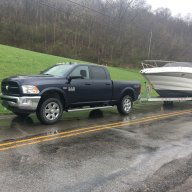
Each class of vehicle has a GVWR, The max weight of the vehicle and all things on it, in etc.. including passengers, cell phones, crap in the console. Once you start adding weight the payload goes down. Sunroof, steps, fancy radios, bed covers, everything takes away from Payload.
 
Last edited:
Back
Top