Lifter Failure / Hot Oil / Better Cooling etc.

Disclaimer: Links on this page pointing to Amazon, eBay and other sites may include affiliate code. If you click them and make a purchase, we may earn a small commission.

Wild one

Senior Member
Joined
Jan 17, 2016
Posts
23,817
Reaction score
54,820
Ram Year
14 Sport
Engine
5.7
An lines came in today… holy huge lines

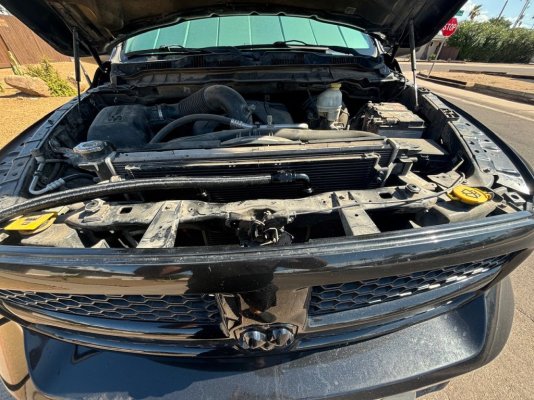
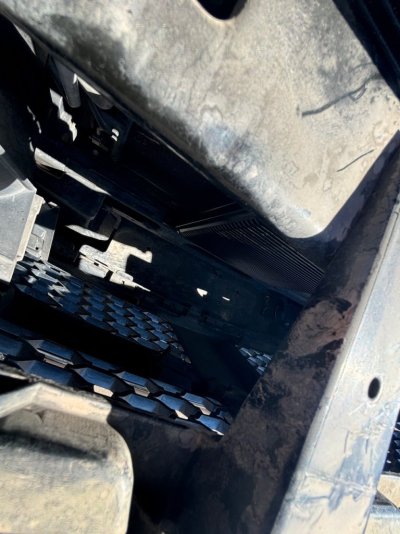
Debating if I want to mount the cooler in front of the radiator or make a bracket to mount it behind the bumper between the metal posts that come down from the frame where the tow hooks mount to. Thought is multiple heat exchangers competing for air flow.

If I go that route I would cut the middle of the bumper insert between the tow hooks and put some mesh to allow airflow.

Will see when the cooler gets here to mock up. These 90’s may be come 45’s depending on final location.
View attachment 545163
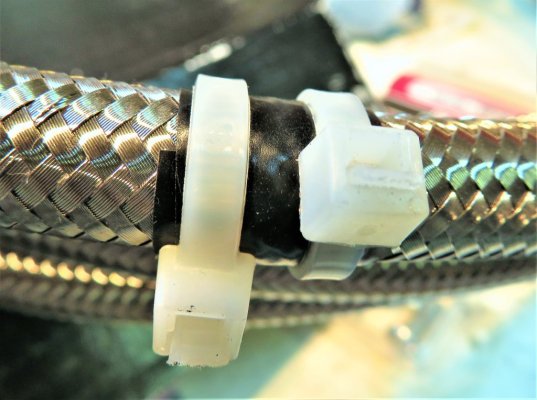
If you end up having to make your own lines,i wrap the braid with black tape as tight as possible,then use 2 small zipties on each side of where i'm going to cut,then i use a thin zip disc / cut-off disc in an angle grinder to make the cut. A set of proper A/N vise jaws makes a world of differance for installing the fittings.
 

Attachments

  • IMG_4397 (2).JPG
    IMG_4397 (2).JPG
    135.5 KB · Views: 5
OP
OP
Black1500Ram

Black1500Ram

Senior Member
Joined
Jul 18, 2021
Posts
620
Reaction score
1,047
Location
Scottsdale, AZ
Ram Year
2015
Engine
5.7 Hemi
If you end up having to make your own lines,i wrap the braid with black tape as tight as possible,then use 2 small zipties on each side of where i'm going to cut,then i use a thin zip disc / cut-off disc in an angle grinder to make the cut. A set of proper A/N vise jaws makes a world of differance for installing the fittings.
Yeah it’s 10 ft line I already put the ends on. So much easier than stainless an lines
 
OP
OP
Black1500Ram

Black1500Ram

Senior Member
Joined
Jul 18, 2021
Posts
620
Reaction score
1,047
Location
Scottsdale, AZ
Ram Year
2015
Engine
5.7 Hemi
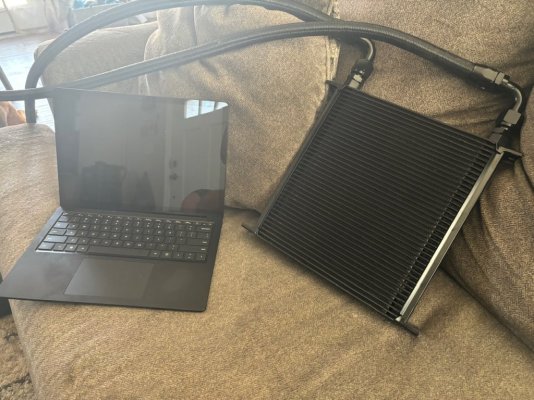
Small oil cooler arrived today… 13” laptop size comparison
IMG_0967.jpeg

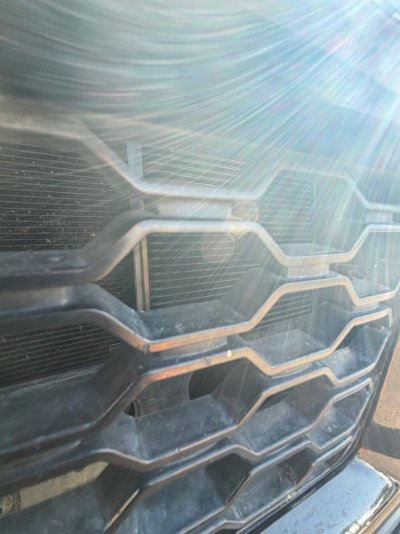
Kind of hard to see how I’m planning on mounting… will take better pics on actual install with the grill off

Decided against locating it behind the bumper as I have sunk that in mud before.
Lines will route down under the radiator along the frame rail to the filter location.

Most likely going to get a 4 row radiator also… I know this is over kill and unnecessary but #Phoenix
 

Attachments

  • IMG_0961.jpeg
    IMG_0961.jpeg
    222.8 KB · Views: 7
  • IMG_0965.jpeg
    IMG_0965.jpeg
    119.4 KB · Views: 8
  • IMG_0963.jpeg
    IMG_0963.jpeg
    137.5 KB · Views: 8

Wild one

Senior Member
Joined
Jan 17, 2016
Posts
23,817
Reaction score
54,820
Ram Year
14 Sport
Engine
5.7
Small oil cooler arrived today… 13” laptop size comparison
View attachment 545458

Kind of hard to see how I’m planning on mounting… will take better pics on actual install with the grill off

Decided against locating it behind the bumper as I have sunk that in mud before.
Lines will route down under the radiator along the frame rail to the filter location.

Most likely going to get a 4 row radiator also… I know this is over kill and unnecessary but #Phoenix
Have you thought about a thermostat for the cooler.

 
OP
OP
Black1500Ram

Black1500Ram

Senior Member
Joined
Jul 18, 2021
Posts
620
Reaction score
1,047
Location
Scottsdale, AZ
Ram Year
2015
Engine
5.7 Hemi
Have you thought about a thermostat for the cooler.

I did, my sandwich plate is thermostatic.
 
OP
OP
Black1500Ram

Black1500Ram

Senior Member
Joined
Jul 18, 2021
Posts
620
Reaction score
1,047
Location
Scottsdale, AZ
Ram Year
2015
Engine
5.7 Hemi
Just had a duh realization… I switched oils along with the noticed increase of oil temps when I went on my trip to Flag two weeks ago.

I went from Mobil 1 FS 0w40 with lubeguard which starts at 13.8/78.3 cst at the respective hot / cold temps, lubeguard (5/35 cst) brings it down a touch but not much as it’s only ~12% of the fluid.

The new oil, Valvoline Extended Protection 5w30 is 11 /64 cst so duh it’s going to absorb more heat. Which in theory is good as it’s pulling that extra energy out of the block.
 
Last edited:

HEMIMANN

Senior Member
Joined
Dec 7, 2020
Posts
9,577
Reaction score
25,198
Location
Minneapolis, MN
Ram Year
2017 2500 Laramie Crew Cab
Engine
6.4L HEMI
Actually, it's the inverse - the hotter the engine, the more power / pressure it produces. Top Fuel Hemis run so hot they melt the spark plug leads by the end of the 1/4 mile race.

Physics: PV=nRT, or P=T for any given chemical reaction.

The reason for 'cold' air intake is that it provides denser air with more oxygen available to combust more fuel - that is NOT the same as a 'cold' engine. A cold engine consumes more fuel and produces less power. Top Fuel Hemis run an SAE 70 grade viscosity oil - the extreme loads need high viscosity oil to keep the parts moving, regardless of the extra viscous drag of the oil - it is more than offset by the high pressure and rpm combustion.

I've always been confused why guys want to run their engines colder with low temp coolant thermostats.
 
OP
OP
Black1500Ram

Black1500Ram

Senior Member
Joined
Jul 18, 2021
Posts
620
Reaction score
1,047
Location
Scottsdale, AZ
Ram Year
2015
Engine
5.7 Hemi
Hey @HEMIMANN glad you chimed in.

I guess my thinking is the increased thermal efficiency of the fluid (oil).

And then the trade off between absolute power and engine longevity. Sure hot engines make more power but at what expense to longevity?

I.e. will a 240° avg temp engine (reaching as high as 260°) with fully synthetic oil of course, have as much longevity as 200° avg temp engine? For the same use case.

Essentially my thinking is to keep my engine between 195-240° under all circumstances. I’d even be willing to bump that 195 up to 203 or whatever stock tstat temp was.
 
Last edited:

HEMIMANN

Senior Member
Joined
Dec 7, 2020
Posts
9,577
Reaction score
25,198
Location
Minneapolis, MN
Ram Year
2017 2500 Laramie Crew Cab
Engine
6.4L HEMI
Yeah, it's complex because a number of physical phenomena occur simultaneously - it's tough not to just pick one attribute and say, "see! this is the answer!" without all the others.

Durability is affected by the loads (torque) and viscosity of the oil. As load goes up, temperature goes up, as must the viscosity of the oil to keep the moving parts separated. That's why the extreme loads of a top fuel drag engine requires extreme viscosity grade engine oil.
Yes, the higher oil viscosity adds viscous drag to the moving parts, but they would wear out quickly otherwise, negating the use of thinner oil!

It is also true that lower viscosity oil absorbs more heat - but the oil doesn't do the bulk of heat rejection - for an average engine, 1/2 of the heat goes out the exhaust, 1/3 out the coolant, and the remainder radiated, if memory serves. Something like that, without googling (used to have this memorized 20 years ago).

Yes, engine temp is limited by oil longevity, really. I published the exponential oxidation rate of oil with increasing temperature some time back. Not gonna re-look it up again. Something like 220-230 degrees F is optimal for a synthetic oil for 5,000 miles OCI's like we need to do to keep engine hydraulic orifices clean.

I don't understand why anyone would run a 180 degree stat. You shouldn't be running oil that long in this drama queen motor in the 1st place, and it lowers your fuel efficiency too.

 
OP
OP
Black1500Ram

Black1500Ram

Senior Member
Joined
Jul 18, 2021
Posts
620
Reaction score
1,047
Location
Scottsdale, AZ
Ram Year
2015
Engine
5.7 Hemi
Thanks again @HEMIMANN for your input and confirming my understandings. Looks like a 203° tstat will go back in when I switch out my rad

My oil sandwich plate currently has a 180° tstat, already inquired about a 200° tstat.

Living in Phoenix I never see <185° oil temps after warm up, but I do frequent lower climate areas and then I wouldn’t want 180° oil temps.

I’m kind of in the same boat with my trans temps with the caulk heater bypass… normally it’s fine at 150° but when I visit places with <32° ambient, it’s usually ~110°
 
Last edited:

Sillygoose

Senior Member
Joined
Sep 30, 2014
Posts
289
Reaction score
302
Location
NY
Ram Year
2011
Engine
5.7
i thought the lower stats were to prevent spark knock/timing retard, particularly in hot ambient temps under load or when advancing timing
 

Wild one

Senior Member
Joined
Jan 17, 2016
Posts
23,817
Reaction score
54,820
Ram Year
14 Sport
Engine
5.7
Yeah, it's complex because a number of physical phenomena occur simultaneously - it's tough not to just pick one attribute and say, "see! this is the answer!" without all the others.

Durability is affected by the loads (torque) and viscosity of the oil. As load goes up, temperature goes up, as must the viscosity of the oil to keep the moving parts separated. That's why the extreme loads of a top fuel drag engine requires extreme viscosity grade engine oil.
Yes, the higher oil viscosity adds viscous drag to the moving parts, but they would wear out quickly otherwise, negating the use of thinner oil!

It is also true that lower viscosity oil absorbs more heat - but the oil doesn't do the bulk of heat rejection - for an average engine, 1/2 of the heat goes out the exhaust, 1/3 out the coolant, and the remainder radiated, if memory serves. Something like that, without googling (used to have this memorized 20 years ago).

Yes, engine temp is limited by oil longevity, really. I published the exponential oxidation rate of oil with increasing temperature some time back. Not gonna re-look it up again. Something like 220-230 degrees F is optimal for a synthetic oil for 5,000 miles OCI's like we need to do to keep engine hydraulic orifices clean.

I don't understand why anyone would run a 180 degree stat. You shouldn't be running oil that long in this drama queen motor in the 1st place, and it lowers your fuel efficiency too.
First mod that comes with Ma Mopars hi-po performance kits is a 180 thermostat.If that's the first mod supplied by Chrysler ,there must be some advantage to running the block cooler,lol
 

HEMIMANN

Senior Member
Joined
Dec 7, 2020
Posts
9,577
Reaction score
25,198
Location
Minneapolis, MN
Ram Year
2017 2500 Laramie Crew Cab
Engine
6.4L HEMI
First mod that comes with Ma Mopars hi-po performance kits is a 180 thermostat.If that's the first mod supplied by Chrysler ,there must be some advantage to running the block cooler,lol

Should ask. Heck Cummins tried to make an engine with no coolant at all, in the 1980s. They called it the Adiabatic Engine. Fancy thermodynamic term for no cooling.
They got it to run but had no durability because they had to use high temp materials that had no fatigue life.
It was another Cummins science fair, but interesting anyway. Stockholders probably didn't appreciate it though.
You can Google it and read about it
 

ramffml

Senior Member
Joined
Jul 12, 2019
Posts
3,648
Reaction score
7,613
Location
ramforum
Ram Year
2019
Engine
hemi 5.7
Yeah, it's complex because a number of physical phenomena occur simultaneously - it's tough not to just pick one attribute and say, "see! this is the answer!" without all the others.

Durability is affected by the loads (torque) and viscosity of the oil. As load goes up, temperature goes up, as must the viscosity of the oil to keep the moving parts separated. That's why the extreme loads of a top fuel drag engine requires extreme viscosity grade engine oil.
Yes, the higher oil viscosity adds viscous drag to the moving parts, but they would wear out quickly otherwise, negating the use of thinner oil!

It is also true that lower viscosity oil absorbs more heat - but the oil doesn't do the bulk of heat rejection - for an average engine, 1/2 of the heat goes out the exhaust, 1/3 out the coolant, and the remainder radiated, if memory serves. Something like that, without googling (used to have this memorized 20 years ago).

Yes, engine temp is limited by oil longevity, really. I published the exponential oxidation rate of oil with increasing temperature some time back. Not gonna re-look it up again. Something like 220-230 degrees F is optimal for a synthetic oil for 5,000 miles OCI's like we need to do to keep engine hydraulic orifices clean.

I don't understand why anyone would run a 180 degree stat. You shouldn't be running oil that long in this drama queen motor in the 1st place, and it lowers your fuel efficiency too.


It doesn't really lower fuel efficiency for individuals, I haven't noticed a difference. Perhaps corporate averages there is something close to < 1 %?

Running 180 gives me breathing room. I now tow at 107C which is where I used to sit unloaded. This means peak temps are reduced when climbing grades as well, I only hit 110 (230F) instead of 120 (250F).

I'd say that's a win; no measurable difference in MPG, much cooler temps all around, and also reduced pinging (even on 91 octane).

I don't understand what the downside is, reduced power? Ok, but again nothing I can feel seat of the pants. My truck doesn't feel any faster hot vs cold, before or after the 180 tstat. What am I losing, 5 hp, 10?

I never even considered the 180 WRT oil life, wasn't something I'm worried about as I change at 7000ish miles.

To be honest your post confused the heck out of me (doesn't take much, lol); I thought you would favour engine reliability/life over some tiny reduction in hp and/or mpg, but maybe I'm missing something.
 

ramffml

Senior Member
Joined
Jul 12, 2019
Posts
3,648
Reaction score
7,613
Location
ramforum
Ram Year
2019
Engine
hemi 5.7
Not is you use higher octane gasoline.

Unfortunately even with 91 mine still pings. The hotter it gets, the more likely it is to ping. I rarely if ever hear it ping when cold but that may be just a selection thing since I don't really get on it all that often unless it's warmed up somewhat first.
 

Cum_in_s

Junior Member
Joined
Jun 25, 2024
Posts
2
Reaction score
2
Location
Il
Ram Year
2022
Engine
I6 360
I hate to burst your bubbles, but unfortunately, the higher temperature is on any engine currently produces not for power or efficiency. It is for emissions only. The reason we run a 195F thermostats is so the engine is hot enough to burn as much fuel as possible it’s not for performance or efficiency. It is for emissions only. 99% of a cars is because of emissions. If you look at cars that were built before emissions had a play in how they were built 170° thermostat was the best options for power and performance with enough heat to warm the cab.
As with any mechanical part, the hotter it runs the shorter it will run for. if you could cool an engine to 170°. It will last a lot longer than that 220°.
 

HEMIMANN

Senior Member
Joined
Dec 7, 2020
Posts
9,577
Reaction score
25,198
Location
Minneapolis, MN
Ram Year
2017 2500 Laramie Crew Cab
Engine
6.4L HEMI
I hate to burst your bubbles, but unfortunately, the higher temperature is on any engine currently produces not for power or efficiency. It is for emissions only. The reason we run a 195F thermostats is so the engine is hot enough to burn as much fuel as possible it’s not for performance or efficiency. It is for emissions only. 99% of a cars is because of emissions. If you look at cars that were built before emissions had a play in how they were built 170° thermostat was the best options for power and performance with enough heat to warm the cab.
As with any mechanical part, the hotter it runs the shorter it will run for. if you could cool an engine to 170°. It will last a lot longer than that 220°.

Uh, burning as much fuel as possible produces more power.

I hate to burst your lack of physics bubble.
If you want to make the case that maximum cylinder pressure is achieved by combusting past BDC, you can make that argument, however, the better case is boosting to provide sufficient oxygen for all the fuel you can combust.

An engine will not last any long if designed for correct lubrication and in fact, some colder engines don't last as long due to carboning.
 

HEMIMANN

Senior Member
Joined
Dec 7, 2020
Posts
9,577
Reaction score
25,198
Location
Minneapolis, MN
Ram Year
2017 2500 Laramie Crew Cab
Engine
6.4L HEMI
It doesn't really lower fuel efficiency for individuals, I haven't noticed a difference. Perhaps corporate averages there is something close to < 1 %?

Running 180 gives me breathing room. I now tow at 107C which is where I used to sit unloaded. This means peak temps are reduced when climbing grades as well, I only hit 110 (230F) instead of 120 (250F).

I'd say that's a win; no measurable difference in MPG, much cooler temps all around, and also reduced pinging (even on 91 octane).

I don't understand what the downside is, reduced power? Ok, but again nothing I can feel seat of the pants. My truck doesn't feel any faster hot vs cold, before or after the 180 tstat. What am I losing, 5 hp, 10?

I never even considered the 180 WRT oil life, wasn't something I'm worried about as I change at 7000ish miles.

To be honest your post confused the heck out of me (doesn't take much, lol); I thought you would favour engine reliability/life over some tiny reduction in hp and/or mpg, but maybe I'm missing something.

I prize both efficiency and longevity. Again - this is a balance of load, temperature, and lubrication.

Fatigue life is a function of load and number of cycles......which is a function of engine design. You're thinking about my posts about the Hurricane engine - or perhaps the the EcoBoost engine, where they didn't get the combination right - they ran it TOO hot for it's displacement and it cooked the turbo bearing oil and the compressor blades form the PCV oil mist.

That doesn't mean the solution is a 100F thermostat. Nor a 180F thermostat. That means the engine wasn't designed right - they learned from "customer field testing".

Anytime you push a spark engine past pressure and temp limits, you shorten the life.
 

Wild one

Senior Member
Joined
Jan 17, 2016
Posts
23,817
Reaction score
54,820
Ram Year
14 Sport
Engine
5.7
I prize both efficiency and longevity. Again - this is a balance of load, temperature, and lubrication.

Fatigue life is a function of load and number of cycles......which is a function of engine design. You're thinking about my posts about the Hurricane engine - or perhaps the the EcoBoost engine, where they didn't get the combination right - they ran it TOO hot for it's displacement and it cooked the turbo bearing oil and the compressor blades form the PCV oil mist.

That doesn't mean the solution is a 100F thermostat. Nor a 180F thermostat. That means the engine wasn't designed right - they learned from "customer field testing".

Anytime you push a spark engine past pressure and temp limits, you shorten the life.
That'd be great if the block was machined at 220+ degrees,but they aren't,so the higher the block temperature,the more distortion it under goes,and ring seal starts to become an issue,along with main bearing alignment. Alot of the higher end builders do circulate hot water through the block and use high quality torque plates when doing final cylinder wall honing,but as far as i know the standard 5.7 and 6.4 blocks are machined cold,and only the Hellcat versions are honed with torque plates.
 
Back
Top